
Abhishekam Service · Hyderabad
Kalashabhishekam in Hyderabad
Kalashabhishekam is a traditional Hindu abhishekam performed using sacred water from one or more kalashas, which are ritually prepared and sanctified with mantras before the abhishekam. The number of kalashas and the detailed procedure can vary according to the sampradayam, occasion and ritual requirements.
Anugraha Siddhi provides Kalashabhishekam services in Hyderabad with experienced Vedic Purohits. Language support is available in Telugu and English.
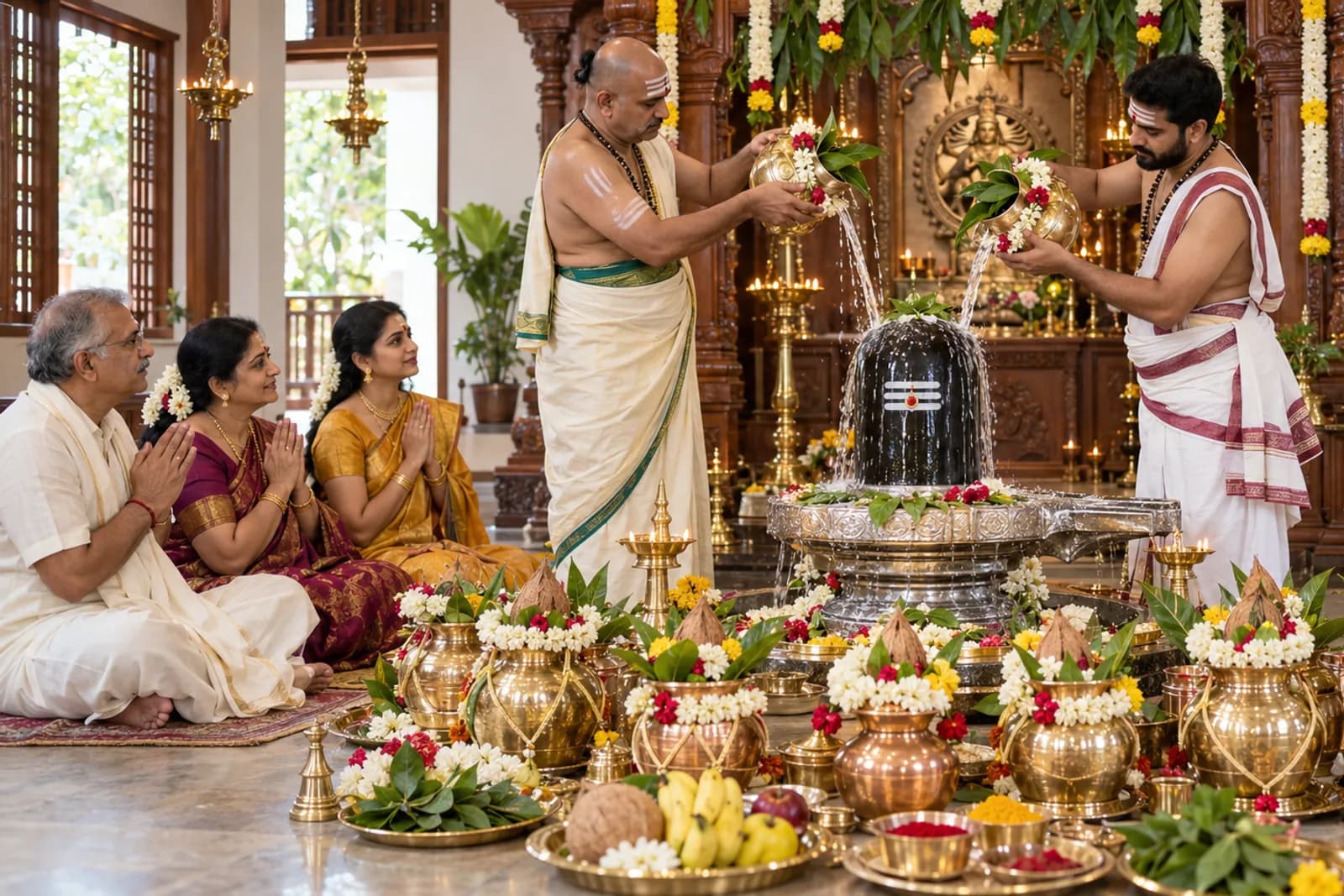
Kalashabhishekam Service in Hyderabad
Kalashabhishekam is a traditional form of abhishekam in which water kept in consecrated kalashas is used during the ritual. It may be arranged for:
- Temple-related occasions
- Special deity worship
- Family sankalpam
- Religious and devotional observances
- Special abhishekam requirements
- Other occasions where Kalashabhishekam is prescribed according to the tradition
The exact number of kalashas, mantras, abhishekam materials, duration, pooja sequence and additional rituals may vary according to the selected vidhanam and family or temple tradition.
Quick Overview
| Detail | Information |
|---|---|
| Service | Kalashabhishekam |
| Ritual type | Abhishekam using sanctified kalasha water |
| Main element | Consecrated water in kalashas |
| Deity | Depends on the selected worship tradition |
| Kalasha count | Depends on the ritual and sampradayam |
| Common occasions | Special pooja, temple occasions, family sankalpam and devotional observances |
| Location | Hyderabad |
| Service mode | As arranged according to requirement |
| Experience | 5+ years of Pooja and Vedic ritual service experience |
| Languages | Telugu and English |
| Samagri | Depends on the selected ritual or package |
What Is Kalashabhishekam?
Kalashabhishekam is a traditional Hindu ritual in which water contained in one or more kalashas is sanctified through prescribed mantras and used for abhishekam.
The number of kalashas, materials, mantras and sequence can differ according to the deity, occasion, sampradayam and ritual vidhanam.
The kalasha is a sacred vessel commonly used in Hindu rituals. A traditional kalasha may contain water and may be decorated with items such as mango leaves and a coconut.
Our editorial policy explains how traditional practices are described on this site.
Why Is Kalashabhishekam Performed?
Devotees may arrange Kalashabhishekam as part of traditional worship for:
- Special prayers to a chosen deity
- Religious and devotional observances
- Temple-related ceremonies
- Family sankalpam
- Auspicious occasions
- Special abhishekam requirements
- Traditional prayers for spiritual wellbeing
- Observances prescribed by a particular sampradayam
The purpose and procedure should be understood according to the specific ritual tradition, rather than assuming one universal purpose.
When Is Kalashabhishekam Performed?
The suitable date depends on the type of Kalashabhishekam being arranged. It may be performed:
- On an auspicious day selected according to the Panchangam
- During a festival or religious observance
- For a temple occasion
- During a special family sankalpam
- On a date recommended according to the relevant tradition
The date, muhurtham and procedure can vary according to:
- Deity being worshipped
- Family tradition
- Sampradayam
- Occasion
- Purohit guidance
- Panchangam considerations
Confirm the appropriate date and procedure with the Purohit before booking.
How Is Kalashabhishekam Performed?
The exact Kalashabhishekam procedure can vary depending on the ritual. A typical arrangement may include the following stages.
Preparation of the Worship Area
The pooja area is cleaned and prepared, the deity or vigraha is arranged for worship, and the required pooja materials are kept ready.
Kalasha Preparation
One or more kalashas are prepared according to the selected vidhanam. Water and other prescribed materials may be placed in the kalashas, and mango leaves, coconut and other traditional items may be used depending on the procedure.
Sankalpam
The Purohit performs the sankalpam. The devotee’s relevant details and the intention of the ritual are included according to the prescribed procedure.
Preliminary Pooja
A preliminary worship sequence may be performed before the main abhishekam. Depending on the vidhanam, this may include Ganapathi Pooja, Kalasha Pooja, invocation of the relevant deities and other preliminary prayers.
Mantra and Kalasha Consecration
The kalashas are sanctified through the prescribed mantras and ritual procedure. Traditional Kalasha Sthapana procedures include specific mantras associated with preparing and consecrating the kalasha.
Kalashabhishekam
The sanctified water from the kalashas is used for the abhishekam of the deity according to the selected ritual procedure.
The number of kalashas can vary. Special forms such as Sahasra Kalasabhishekam use a much larger number of vessels — in the region of 1,008.
Alankaram and Archana
After the abhishekam, the deity may be cleaned and decorated, Alankaram may be performed, and Archana may be offered according to the selected vidhanam.
Naivedyam and Aarti
The ritual may conclude with Naivedyam, Aarti, prayers and prasadam. The exact inclusions depend on the selected service.
Importance of Kalashabhishekam
The kalasha has an important place in Hindu ritual traditions. Traditionally:
- The kalasha is treated as an auspicious sacred vessel.
- Water in the kalasha is ritually sanctified through mantras.
- The kalasha is used in many Hindu ceremonies and worship practices.
- Kalasha water may be used during abhishekam and other ritual procedures.
The meaning and symbolism associated with the kalasha can vary between traditions. Kalashabhishekam therefore combines the traditional symbolism of the kalasha with the devotional practice of abhishekam.
Kalashabhishekam Service Benefits
The traditional benefits associated with Kalashabhishekam may include:
- Providing a structured form of devotional worship
- Supporting prayers directed toward the chosen deity
- Creating an opportunity for family members to participate in a traditional ritual
- Supporting special religious observances
- Following a prescribed abhishekam procedure under Purohit guidance
- Offering a dedicated setting for family sankalpam and prayer
- Supporting temple or special ceremonial worship where Kalashabhishekam is appropriate
These are religious and devotional associations. They are not guaranteed solutions, and are not guaranteed material, health or financial outcomes.
Kalashabhishekam and Abhishekam
Kalashabhishekam is a type of abhishekam in which sanctified water from kalashas plays an important role.
| Kalashabhishekam | General abhishekam |
|---|---|
| Uses water from one or more ritually prepared kalashas | May use different prescribed liquids or materials |
| Kalasha preparation is an important part of the ritual | Kalasha preparation may or may not be central |
| Mantras are used to sanctify the kalasha according to the tradition | Mantras depend on the deity and type of abhishekam |
| Number of kalashas may vary | Materials and procedure vary according to the abhishekam |
| May be arranged as a special or larger ritual | Can range from simple to elaborate deity worship |
The exact ritual should be confirmed before booking.
Where the abhishekam is defined by what is offered rather than what it is offered from, that is arranged as a Panchamrutha Abhishekam.
Kalashabhishekam and Kumbhabhishekam
These terms can sometimes cause confusion.
Kalashabhishekam generally refers to abhishekam performed using sanctified water from kalashas.
Kumbhabhishekam, particularly in temple contexts, can refer to a much larger consecration ceremony associated with establishing or renewing the ritual sanctity of a temple.
| Kalashabhishekam | Kumbhabhishekam |
|---|---|
| Abhishekam using sanctified kalasha water | Temple consecration or reconsecration ceremony in relevant traditions |
| Can be arranged for special worship | Generally associated with temple consecration |
| Scope depends on the selected ritual | Usually involves an elaborate sequence of temple rituals |
| Can be a family or religious observance | Typically a temple-level ceremony |
Temple consecration ceremonies involve elaborate procedures and should not automatically be treated as the same service as a family Kalashabhishekam.
Kalashabhishekam Samagri
The exact samagri depends on the deity, ritual procedure and selected package. Common items may include:
- Kalashas
- Water
- Mango leaves
- Coconut
- Turmeric
- Kumkum
- Akshata
- Flowers
- Sandalwood
- Incense
- Deepam
- Fruits
- Naivedyam
- Vastra, where applicable
- Other materials prescribed by the Purohit
The kalashas themselves are in the vessels section of the Pooja Store, which is the first thing to check against what your family already owns.
Lamp oil, ghee, wicks and camphor are grouped separately in the deepam section.
Not every item is required for every Kalashabhishekam.
Samagri may be arranged by Anugraha Siddhi or by the customer, depending on the selected service package and requirement. Confirm exact requirements with the Purohit before purchasing or preparing the materials, and see the general Pooja Samagri Store for everything else.
What to Confirm Before Booking
| Requirement | What to confirm |
|---|---|
| Occasion | Reason for arranging Kalashabhishekam |
| Date | Preferred date and suitable muhurtham |
| Venue | Home, temple or other suitable location |
| Deity | Deity for whom the abhishekam is being performed |
| Family tradition | Relevant sampradayam or customary procedure |
| Participants | Family members and devotees participating |
| Samagri | Items required and who will arrange them |
| Additional rituals | Ganapathi Pooja, Archana or other rituals, if required |
| Language | Telugu or English |
| Purohit | Confirm availability and ritual requirements |
Kalashabhishekam Cost in Hyderabad
The Kalashabhishekam cost in Hyderabad depends on the specific ritual requirements. Factors that may affect the cost include:
- Number of kalashas
- Type of abhishekam
- Deity being worshipped
- Ritual procedure
- Number of Purohits required
- Samagri arrangements
- Venue and location
- Additional poojas or rituals
- Duration and scale of the ceremony
There is no single fixed price applicable to every Kalashabhishekam. Contact Anugraha Siddhi for current package details.
Why Choose Anugraha Siddhi for Kalashabhishekam?
Anugraha Siddhi has 5+ years of experience in Pooja and Vedic ritual services, with guidance based on the selected ceremony and traditional requirements.
- Experienced Vedic Purohits
- Personalised guidance for ritual arrangements
- Telugu and English language support
- Hyderabad service availability
- Flexible samagri arrangements depending on the selected package
- Guidance regarding the ceremony, date and preparation requirements
Specific ritual inclusions, samagri arrangements and additional services should be confirmed before booking. Other ceremonies of this kind are listed under Abhishekams.
Frequently Asked Questions
What is Kalashabhishekam?
Kalashabhishekam is a traditional abhishekam performed using water from one or more kalashas that have been ritually prepared and sanctified according to the relevant tradition.
Why is Kalashabhishekam performed?
It may be performed as part of special deity worship, family sankalpam, temple occasions and other religious observances.
How many kalashas are required for Kalashabhishekam?
There is no single number applicable to every ceremony. The number depends on the specific ritual, sampradayam and selected vidhanam.
What is placed inside a kalasha?
A kalasha commonly contains water and may include other prescribed items depending on the ritual. Mango leaves and a coconut are also traditionally used in many kalasha arrangements.
Is Kalashabhishekam the same as Abhishekam?
Kalashabhishekam is a form of abhishekam where sanctified kalasha water is used. General abhishekam can involve different materials depending on the deity and ritual.
Is Kalashabhishekam the same as Kumbhabhishekam?
Not necessarily. Kalashabhishekam refers to abhishekam using kalasha water, while Kumbhabhishekam can refer to an elaborate temple consecration ceremony in relevant traditions.
Can Kalashabhishekam be performed at home?
Depending on the specific ritual, Kalashabhishekam may be arranged at home. The space, deity, procedure and samagri requirements should be confirmed with the Purohit.
When can Kalashabhishekam be performed?
The suitable date depends on the purpose, deity, family tradition and Panchangam considerations. A Purohit can help confirm the appropriate date based on the selected ritual.
What samagri is required for Kalashabhishekam?
Requirements vary according to the ritual. Kalashas, water, mango leaves, coconut, flowers, turmeric, kumkum, akshata, deepam and other pooja materials may be required.
Does Kalashabhishekam include Homam?
Not automatically. Homam is a separate ritual unless it is specifically included in the selected service arrangement.
Can additional Poojas be performed along with Kalashabhishekam?
Additional rituals may be arranged depending on the requirement and selected package. Confirm the exact inclusions before booking.
Can a Purohit perform Kalashabhishekam?
Yes. Anugraha Siddhi can help arrange Kalashabhishekam with experienced Vedic Purohits, subject to availability and ritual requirements.
Does Anugraha Siddhi provide Kalashabhishekam in Telugu?
Yes. Telugu and English language support is available, subject to the selected service and Purohit availability.
Can Anugraha Siddhi arrange the samagri?
Samagri arrangements depend on the selected package. Some packages may allow Anugraha Siddhi to arrange the required materials, while in other cases the customer may arrange them.
What information should I provide when booking?
You can provide your preferred date, location, deity, occasion, family tradition if applicable, number of participants and any additional ritual requirements. The Purohit can then confirm the applicable procedure and preparations.
Related Abhishekams and Services
Book Kalashabhishekam in Hyderabad
If you are planning Kalashabhishekam in Hyderabad, Anugraha Siddhi can help arrange the ceremony according to the selected ritual, occasion and traditional requirements. Share your preferred date, location, deity and ceremony requirements with the team for further guidance.