
Homam Service · Hyderabad
Subramanya Homam in Hyderabad
Arrange Subramanya Homam with an experienced Purohit and personalised Vedic ritual guidance from Anugraha Siddhi. This sacred fire ceremony is dedicated to Lord Subramanya, also known as Skanda, Kartikeya, Kumara and Murugan.
Guidance is available in Telugu or English, subject to the selected service, date and Purohit availability.
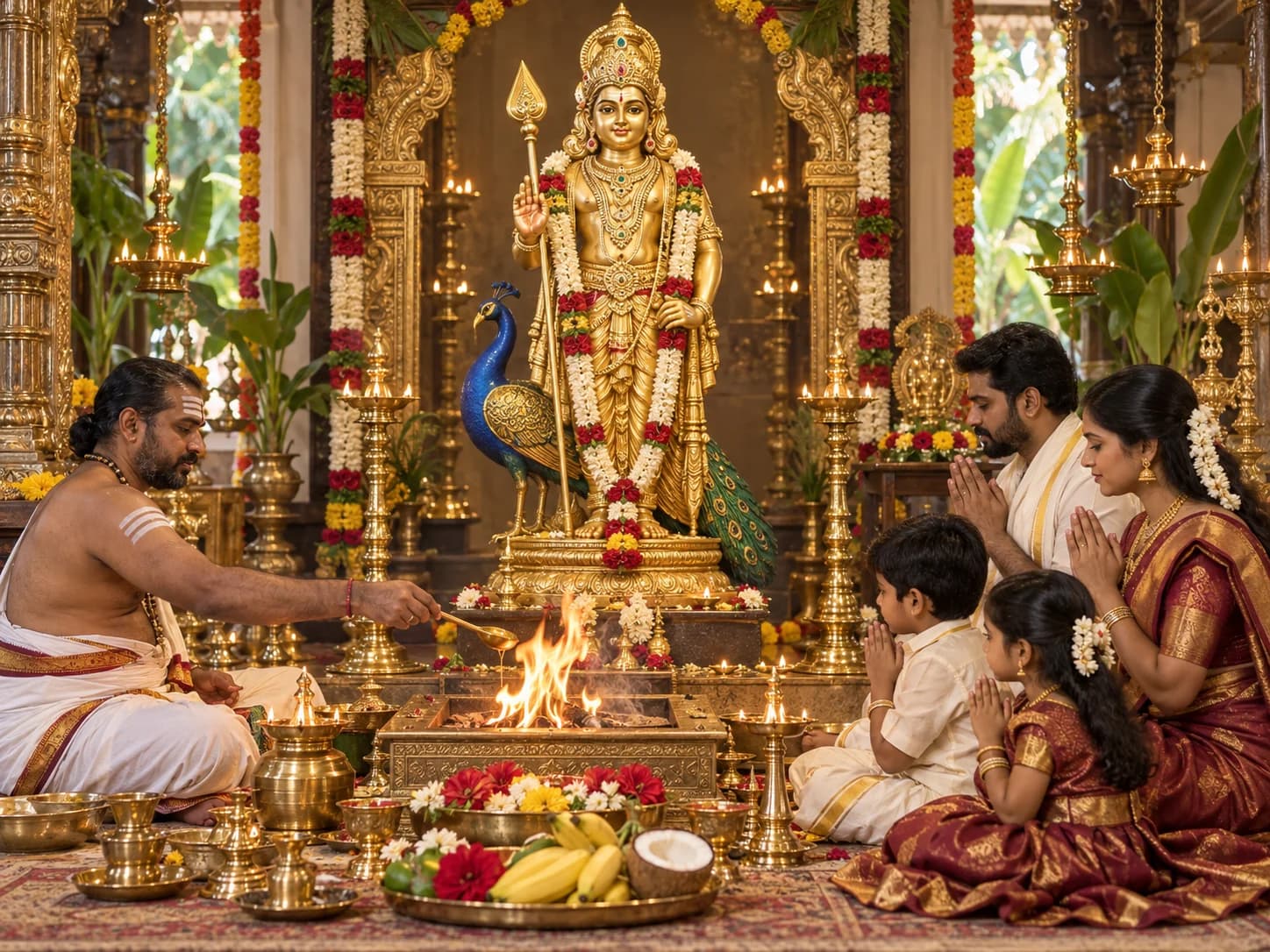
Subramanya Homam Service in Hyderabad
Subramanya Homam is a traditional fire ceremony performed in devotion to Lord Subramanya, the son of Lord Shiva and Goddess Parvati. Families may arrange it on Shashti Tithi, during Skanda Shashti or for another devotional occasion.
The ceremony may include Sankalpam, Ganapathi Pooja, Kalasha Sthapana, Subramanya Avahanam, mantra recitation, sacred fire offerings and Poornahuti.
Its Vidhanam, mantra count, duration and Samagri depend on the Sankalpam, family tradition and selected package.
What Is Subramanya Homam?
Subramanya Homam is a sacred fire ritual dedicated to Lord Subramanya, who is also worshipped as Skanda, Kartikeya, Kumara and Murugan.
During the ceremony, a Purohit invokes the deity, recites prescribed Subramanya mantras and offers Ghee and other sacred materials into the Homam fire.
Lord Subramanya is traditionally represented with the Vel and peacock and is associated with courage, wisdom, disciplined action and spiritual strength.
Names, mantras, offerings and customary practices may differ between Telugu, Tamil and other regional traditions. Mention your family's tradition and preferred deity name at the enquiry.
This ceremony is a devotional observance. It is not a guaranteed remedy for personal, health, marital, astrological or financial concerns.
Why Is Subramanya Homam Performed?
Devotees may perform Subramanya Homam for spiritual intentions such as:
- Worshipping Lord Subramanya with devotion and gratitude
- Observing Shashti Tithi or Skanda Shashti
- Praying for courage, discipline and spiritual strength
- Beginning an important personal or family undertaking
- Continuing a family or Sampradayam-based religious practice
- Marking a significant milestone or devotional occasion
- Seeking traditional guidance after reviewing a specific astrological concern
- Performing Subramanya worship as advised by family elders or a Purohit
Some traditions associate Lord Subramanya worship with Naga or Sarpa-related observances. However, Subramanya Homam is not a universal Sarpa Dosha remedy.
If the ceremony is being considered for a horoscope-related reason, the stated condition and proposed ritual should first be explained clearly. Different families may follow Subramanya worship, Naga Pooja, Japam, temple observances or another practice.
Traditional Significance of Lord Subramanya
Lord Subramanya is traditionally worshipped as the divine commander and the son of Lord Shiva and Goddess Parvati.
His Vel represents wisdom and the power to overcome ignorance, while the peacock is associated with dignity, courage and control over pride.
Devotees worship Lord Subramanya under several regional names, including Skanda, Kartikeya, Kumara, Shanmukha and Murugan. The preferred name, deity form, mantras and offerings may vary according to the family's language, region and Sampradayam.
Subramanya Homam provides a structured occasion for prayer, family participation and reflection on courage, discipline and responsible action.
These traditional meanings should not be interpreted as guaranteed outcomes.
Who Can Perform Subramanya Homam?
Subramanya Homam may be performed by:
- Individuals and families devoted to Lord Subramanya
- Families observing Shashti Tithi
- Devotees participating in Skanda Shashti observances
- People beginning an important personal or professional undertaking
- Families continuing an established regional tradition
- Devotees advised to consider Subramanya worship after a consultation
- People wishing to combine Pooja and Homam according to their Sampradayam
The Purohit may request the participants' names, Gotram and Nakshatram when known. If the ceremony is connected with an astrological recommendation, clarify the exact reason and ritual format before booking.
When Is Subramanya Homam Performed?
Subramanya Homam may be considered on:
- Shashti Tithi
- Skanda Shashti
- Subramanya Shashti
- Tuesdays, according to family tradition
- Krittika Nakshatram, where followed by the family's Sampradayam
- A family festival or devotional occasion
- An auspicious date recommended for the Sankalpam
There is no single Muhurtham suitable for every family. The preferred date may depend on the Panchangam, Tithi, Nakshatram, location, Sankalpam and regional tradition.
Check the Panchangam and confirm the final date and Muhurtham with the Purohit before making arrangements.
How Is Subramanya Homam Performed?
The exact procedure may differ according to the selected Vidhanam. A typical Subramanya Homam may include the following stages:
Preparation of the Pooja Area
The venue is cleaned, and the Lord Subramanya image or idol, Kalasham, lamps, flowers, Homam Kundam and required Samagri are arranged. A clean, properly ventilated and fire-safe space is required.
Sankalpam and Ganapathi Pooja
The ceremony begins with Sankalpam, during which the participants' details and devotional purpose are stated. Ganapathi Pooja and other preliminary prayers may be performed according to tradition.
Kalasha Sthapana and Subramanya Avahanam
The sacred Kalasham is established, and Lord Subramanya is invoked through prescribed prayers. Deity worship may be performed according to the selected Vidhanam.
Subramanya Mantra Recitation
The Purohit recites the agreed Subramanya Mantra, Stotram or Namavali. The selected mantra and number of recitations depend on the family's Sampradayam and ceremony format.
Mantra Ahutis into the Sacred Fire
Ghee and prescribed Homam Dravyam are offered into the consecrated fire while Subramanya mantras are recited.
Poornahuti and Harathi
The Homam concludes with Poornahuti, concluding prayers, Harathi and Prasadam distribution.
[Subramanya Swamy Pooja](/poojas/subrahmanya-swamy-pooja), Skanda Shasti Pooja, Subramanya Abhishekam, Japam, Naga Pooja or other related rituals are not automatically included. Confirm all additional requirements before finalising the package.
Subramanya Homam and Related Rituals
These ceremonies may involve the worship of Lord Subramanya but differ in purpose and procedure.
| Ceremony | General distinction |
|---|---|
| Subramanya Homam | A sacred fire ritual with prescribed Subramanya mantras and offerings |
| Subramanya Swamy Pooja | Direct deity worship without Homam as the central ritual |
| Skanda Shasti Pooja | A Shashti observance that may include fasting, Archana and Stotram recitation |
| Subramanya Abhishekam | Ceremonial bathing of the deity with prescribed Dravyam |
| Subramanya Japam | Repetition of an agreed Subramanya Mantra without necessarily performing a Homam |
| Sarpa-related observance | A separate recommendation that should be selected only after the concern and proposed practice are properly explained |
Background on the condition itself is covered separately under Naga Dosha.
Fasting and Family Traditions
Fasting practices differ between families and regional traditions.
Some devotees may observe a complete or partial fast on Shashti, while others may follow a simple Satvik diet. There is no universal fasting requirement for every Subramanya Homam.
Children, pregnant women, elderly participants and people with medical conditions should give priority to their health and dietary needs.
Families may follow suitable guidance from elders or the conducting Purohit. Any special rules concerning food, clothing or preparation should be confirmed before the ceremony.
Subramanya Homam Samagri
Materials commonly used may include:
- Lord Subramanya image or idol
- Kalasham and clean water
- Turmeric and Kumkum
- Sandalwood paste
- Vibhuti when prescribed
- Flowers and garlands
- Fruits and coconuts
- Betel leaves and betel nuts
- Rice and Akshatalu
- Lamps, oil or Ghee and cotton wicks
- Incense and camphor
- Ghee for the Homam
- Samidha
- Homam Dravyam
- Grains, herbs and prescribed offerings
- Naivedyam and Prasadam ingredients
- Cloth and sacred threads when prescribed
The exact list varies according to the Vidhanam, mantra count, regional tradition, venue and additional rituals. Anugraha Siddhi or the customer may arrange the Samagri depending on the selected package. Required materials may be checked through the Pooja Samagri Store, and fire offerings are listed separately under Homam Dravyam.
Confirm exact requirements with the Purohit before purchasing or preparing the materials.
What to Confirm Before Booking
| Booking detail | What to confirm |
|---|---|
| Service requirement | Subramanya Homam and the required ceremony format |
| Sankalpam | Devotional occasion or clearly explained traditional purpose |
| Date and timing | Preferred date and applicable Muhurtham |
| Location | Home or another suitable venue |
| Language | Telugu or English |
| Family tradition | Sampradayam, regional customs and preferred deity name |
| Participant details | Names, Gotram and Nakshatram when known |
| Samagri | Customer-arranged or included in the selected package |
| Mantra requirements | Agreed mantra and number of recitations |
| Additional rituals | Pooja, Abhishekam, Japam or another ceremony |
| Astrological reason | Confirm the stated concern and recommended ritual when applicable |
| Venue safety | Ventilation, Homam space and applicable fire-safety requirements |
Booking after an astrological consultation elsewhere? Say what was recommended and why, so the ritual format can be confirmed rather than assumed.
Subramanya Homam Price in Hyderabad
The cost of Subramanya Homam may depend on:
- Selected Vidhanam
- Number of Purohits required
- Ceremony duration
- Mantra or Japam count
- Type and quantity of Samagri
- Additional Poojas, Abhishekams or Homams
- Venue and travel requirements
- Family or Sampradayam-based requirements
- Whether materials are customer-arranged or included in the package
Package requirements differ between ceremonies, so a single fixed price should not be assumed. For current package details, contact Anugraha Siddhi.
Why Choose Anugraha Siddhi?
Anugraha Siddhi has more than five years of experience in Pooja and Vedic ritual services. Families can receive:
Purohit arrangements are made for the applicable Vedic ceremony.
Personalised guidance is available for selecting the appropriate ritual format.
Assistance is available with the Vidhanam and preparation requirements.
Communication is available in Telugu or English, subject to availability.
Samagri arrangements are based on the selected package.
Guidance is available for selecting an appropriate date and Muhurtham, with clear confirmation of additional rituals before booking.
Explore other traditional Homam services available through Anugraha Siddhi.
Office address
Metro Pillar No: A689, Dr Atmaram Estates,3rd Floor, Nizampet X Roads,
beside Sri Bhramaramba Theatre, near Jntu Metro Station,
Hyderabad, Telangana 500072
Frequently Asked Questions
What is Subramanya Homam?
Subramanya Homam is a sacred fire ritual dedicated to Lord Subramanya. It generally includes Sankalpam, deity invocation, mantra recitation, fire offerings and Poornahuti.
Are Subramanya, Skanda, Kartikeya and Murugan the same deity?
These names refer to Lord Subramanya in different regional and religious traditions. The preferred name, deity form and customary practices may vary.
What are the traditional benefits of Subramanya Homam?
Devotees traditionally perform it as a prayer for courage, discipline, wisdom and spiritual strength. These are faith-based beliefs and not guaranteed material outcomes.
Can Subramanya Homam be performed at home?
Yes. It may be performed at home when sufficient space, ventilation and fire-safety arrangements are available. Confirm the venue requirements with the Purohit.
Which day is suitable for Subramanya Homam?
Shashti Tithi, Skanda Shashti, Subramanya Shashti, Tuesdays and Krittika Nakshatram may be considered according to tradition. Confirm the final date using the Panchangam.
Is Subramanya Homam the same as Skanda Shasti Pooja?
No. Subramanya Homam centres on sacred fire offerings. Skanda Shasti Pooja is a Shashti observance that may include Archana, fasting and Stotram recitation.
Is Subramanya Homam a universal remedy for Sarpa Dosha?
No. Sarpa Dosha-related practices vary, and Subramanya Homam should not automatically be recommended for every person. The stated concern and proposed ritual should first be explained clearly.
Is Subramanya Swamy Pooja included?
Not automatically. Subramanya Swamy Pooja or another additional ritual is included only when it is specifically selected and confirmed.
What details are required for the Sankalpam?
The Purohit may request the participants' names, Gotram, Nakshatram and purpose of the ceremony. Mention during the enquiry if any details are unknown.
Who arranges the Samagri?
Anugraha Siddhi or the customer may arrange the materials depending on the selected package. Confirm the final list and responsibilities before purchasing anything.
How long does Subramanya Homam take?
The duration depends on the selected Vidhanam, mantra count, number of Purohits and additional rituals. Ask for an estimate after finalising the ceremony.
Is fasting compulsory?
There is no universal rule. Follow your family tradition, personal health requirements and the guidance of the conducting Purohit.
Can the ceremony be conducted in Telugu or English?
Guidance may be provided in Telugu or English, subject to the selected service, date and Purohit availability.
Can Abhishekam or Japam be added?
Additional rituals may be arranged when requested in advance. Their availability, duration, Samagri and package requirements should be confirmed separately.
How can I book Subramanya Homam?
Share your preferred date, venue, participant details, family tradition and ceremony requirements with Anugraha Siddhi. Availability and applicable package details can then be confirmed.
Related Subramanya Services
Book Subramanya Homam in Hyderabad
Share your preferred date, Hyderabad locality and ceremony requirements with Anugraha Siddhi.