
Vastu Consultation · Hyderabad
Hindu Temple Vastu Shastra Consultation in Hyderabad
Planning to construct, renovate or review a Hindu temple in Hyderabad? Hindu Temple Vastu Shastra Consultation in Hyderabad provides traditional Vastu-based guidance for understanding the orientation, layout, entrance, sanctum area and other important spaces of a temple.
Temple architecture has its own traditional considerations, and the planning of a temple can differ from that of a residential or commercial building. A proper consultation can consider the intended deity, site characteristics, temple layout and practical requirements.
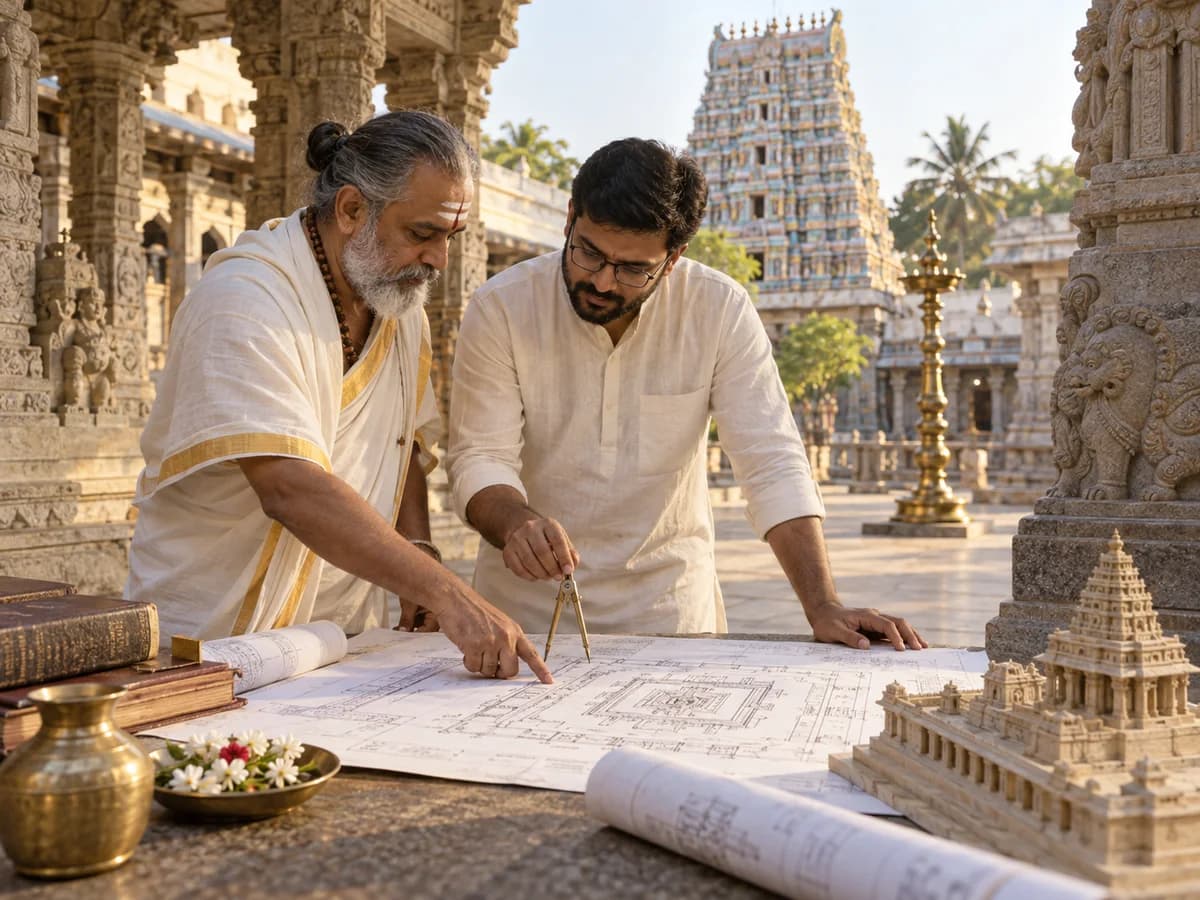
Hindu Temple Vastu Shastra Consultation Service in Hyderabad
Anugraha Siddhi provides traditional Temple Vastu guidance based on the specific temple project and its requirements. Our Vastu consultant with 5+ years of experience can provide guidance in Telugu and English.
Call or WhatsApp us at 9032022323 for Temple Vastu Consultation in Hyderabad.
Quick Overview
| Details | Information |
|---|---|
| Service | Hindu Temple Vastu Shastra Consultation |
| Primary Focus | Temple planning and traditional Vastu guidance |
| Consultation Type | Temple Vastu Consultation |
| Guidance By | Vastu consultant with 5+ years of experience |
| Location | Hyderabad, Telangana |
| Suitable For | Hindu temples, temple construction and renovation planning |
| Approach | Layout-based traditional Vastu guidance |
| Language Support | Telugu and English |
What Is Hindu Temple Vastu Shastra?
Hindu Temple Vastu Shastra refers to traditional principles used in planning and arranging spaces associated with Hindu temple architecture.
Unlike a regular residential building, a temple is a sacred space intended for worship and devotional practices. Traditional temple planning may therefore consider factors such as the site, orientation, entrance, temple layout, sanctum area and other functional or devotional spaces.
The exact principles and architectural practices can vary according to the temple tradition, deity, regional customs and architectural system being followed.
What Is Temple Vastu?
Temple Vastu focuses on the traditional spatial and directional considerations associated with a Hindu temple.
Depending on the project, a consultation may consider:
- Temple site
- Direction and orientation
- Main entrance
- Temple structure
- Sanctum area
- Deity placement
- Prayer and worship areas
- Circumambulatory space
- Supporting rooms
- Open areas
- Temple surroundings
- Devotee movement
The actual recommendations should be based on the specific temple design and tradition rather than applying one general rule to every temple.
Importance of Hindu Temple Vastu Shastra
Traditional Vastu has an important place in many approaches to Hindu temple planning.
A temple is not simply treated as a building. It is traditionally designed as a sacred environment for worship, prayer and devotional activities.
Hindu Temple Vastu Shastra may therefore be considered during the early planning stage so that the site and proposed temple layout can be reviewed before construction begins.
A consultation may help in understanding:
- Site orientation
- Temple placement
- Entrance planning
- Sanctum location
- Internal movement
- Supporting spaces
- Overall site arrangement
- Traditional spatial considerations
These principles are part of traditional religious and architectural practices and should not be presented as guarantees of specific spiritual, financial, health or other outcomes.
Why Consider Vastu for Temple?
A temple project may involve significant planning because it can include several different spaces and functions.
Traditional Vastu for Temple may be considered when:
- Selecting a temple site
- Planning a new temple
- Preparing an initial temple layout
- Reviewing an existing temple
- Planning temple renovation
- Expanding a temple complex
- Reviewing entrance arrangements
- Planning supporting spaces
Early consultation can allow traditional considerations to be discussed before major construction decisions are finalized.
Temple Vastu: Important Areas to Consider
1. Temple Site Selection
The site is one of the first aspects that can be reviewed during a Temple Vastu Consultation.
The consultation may consider:
- Location of the site
- Plot orientation
- Shape of the property
- Dimensions
- Roads around the site
- Surrounding structures
- Available open space
- Ground levels
- Access to the temple
The practical suitability of the site should also be considered along with legal permissions, accessibility, drainage, utilities and construction requirements.
2. Temple Direction and Orientation
Direction and orientation are important aspects of traditional Temple Vastu Shastra.
The orientation of the temple may be reviewed in relation to:
- Site boundaries
- Main entrance
- Sanctum
- Deity placement
- Devotee movement
- Other temple structures
Specific traditional practices may differ according to the temple tradition and deity, so the project should be assessed individually.
3. Main Temple Entrance
The temple entrance is an important part of the overall layout.
During Vastu for Temple consultation, the entrance may be reviewed in relation to:
- Site direction
- Road access
- Temple orientation
- Devotee movement
- Internal temple layout
- Entry and exit arrangements
For larger temples, practical crowd movement and accessibility should also be considered.
4. Sanctum or Garbhagriha
The sanctum is one of the most important spaces in a Hindu temple.
Traditional temple architecture gives significant attention to the sanctum and its relationship with the overall temple structure.
A Temple Vastu Consultation may consider the planned position and orientation of the sanctum as part of the overall temple layout.
The exact design should follow the applicable temple tradition and the guidance of qualified temple architects or traditional authorities where required.
5. Deity Placement
The deity and sanctum are central to temple planning.
The appropriate placement and orientation can vary according to:
- Deity
- Temple tradition
- Architectural system
- Regional practice
- Religious requirements
For this reason, deity-specific recommendations should not be generalized without understanding the particular temple project.
6. Devotee Movement
A temple needs to accommodate devotees in a safe and practical manner.
The layout may therefore consider:
- Main entry
- Prayer areas
- Darshan movement
- Exit routes
- Circumambulation space
- Waiting areas
- Open spaces
- Supporting facilities
Traditional Vastu considerations can be discussed alongside practical accessibility and crowd-management requirements.
7. Temple Open Spaces
Open areas around the temple can be considered as part of the overall site planning.
Depending on the temple project, these may include:
- Courtyard
- Open prayer areas
- Devotee gathering spaces
- Pathways
- Gardens
- Supporting structures
The availability and use of open space should be considered according to the actual site and temple requirements.
8. Supporting Temple Areas
Larger temples may contain several supporting spaces.
Depending on the project, these may include:
- Pooja-related spaces
- Storage
- Office
- Priest-related areas
- Devotee facilities
- Kitchen or food preparation areas
- Utility areas
- Additional worship spaces
The exact spaces vary from one temple to another.
Temple Vastu for New Temple Construction
If you are planning a new Hindu temple, it is useful to consider Temple Vastu during the initial design stage.
A consultation may begin with the site and then consider the proposed temple layout.
The process may include:
- Understanding the temple requirement
- Reviewing the site
- Checking orientation and direction
- Understanding the plot dimensions
- Reviewing roads and access
- Understanding the intended deity and temple tradition
- Reviewing the proposed layout
- Considering the entrance
- Reviewing the sanctum area
- Considering supporting spaces
- Discussing practical construction limitations
The final architectural design should be coordinated with the appropriate architect, structural engineer and temple-related experts.
Temple Vastu for Existing Temples
A Temple Vastu Consultation can also be considered for an existing temple.
Existing temples may have limitations because the structure has already been constructed.
In such situations, consultation may focus on understanding the existing layout and identifying practical areas for consideration.
This may include:
- Existing entrance
- Temple orientation
- Sanctum area
- Deity placement
- Supporting spaces
- Internal movement
- Open areas
- Existing structures
- Renovation possibilities
Major structural modifications should not be undertaken solely on the basis of a Vastu recommendation. They should be evaluated by qualified architectural and engineering professionals.
Temple Vastu for Renovation
Temple renovation can involve different levels of work, from minor improvements to significant structural changes.
Before renovation, a Temple Vastu Consultant may review the existing layout and understand the proposed changes.
Depending on the project, the consultation may consider:
- Existing temple orientation
- Proposed additions
- Entrance changes
- Sanctum-related areas
- Supporting rooms
- Internal movement
- Open spaces
- New structures
The exact recommendations depend on the existing temple and the scope of renovation.
Hindu Temple Vastu for Different Temple Types
Temple requirements can vary significantly depending on the deity and religious tradition.
Examples may include temples dedicated to:
- Lord Shiva
- Lord Vishnu
- Lord Ganesha
- Goddess Durga
- Goddess Lakshmi
- Lord Hanuman
- Other Hindu deities
The planning principles should not automatically be assumed to be identical for every deity or temple.
The temple's specific tradition, religious requirements, architectural approach and local practices should be understood before making detailed recommendations.
Temple Vastu Shastra and Traditional Architecture
Temple Vastu Shastra is closely associated with traditional Indian approaches to sacred architecture.
Traditional temple architecture can involve concepts related to:
- Site planning
- Orientation
- Proportion
- Spatial organization
- Sanctum
- Temple entrances
- Movement
- Sacred and functional spaces
Different architectural and religious traditions may use different terminology and methods.
Therefore, detailed temple construction should be coordinated with appropriate traditional and professional experts.
Temple Vastu Consultation: What Is Considered?
A Temple Vastu Consultation may include an assessment of:
- Temple site
- Plot direction
- Plot shape
- Plot dimensions
- Ground level
- Road position
- Main entrance
- Temple orientation
- Sanctum area
- Deity placement
- Devotee movement
- Supporting spaces
- Open areas
- Existing structures
- Proposed construction or renovation
The exact consultation scope depends on the temple, site, design stage and requirements.
What Information Should You Share for Temple Vastu Consultation?
For a more useful consultation, it is helpful to provide accurate information about the temple project.
Depending on the requirement, you may be asked to share:
- Site plan
- Plot dimensions
- Direction information
- Location of the property
- Site photographs
- Site videos
- Existing building plan
- Proposed temple layout
- Entrance location
- Information about the deity
- Temple construction requirements
- Renovation details, if applicable
For an existing temple, photographs and the current floor plan can help in understanding the available layout.
Temple Vastu Without Major Structural Changes
Not every temple project allows major structural modifications.
Some temples may operate from existing buildings or established premises where extensive changes are not practical.
In such situations, consultation may focus on areas that can realistically be reviewed, such as:
- Entrance arrangement
- Internal space usage
- Supporting areas
- Furniture or movable elements
- Storage
- Devotee movement
- Available open spaces
The feasibility of any structural change should always be checked with an architect or qualified engineer.
Hindu Temple Vastu Shastra Consultation in Hyderabad
If you are looking for Hindu Temple Vastu Shastra Consultation in Hyderabad, Anugraha Siddhi provides traditional Vastu guidance for temple-related projects based on the individual site and requirements.
Consultation may be considered for:
- New Hindu temples
- Existing temples
- Temple renovation
- Temple expansion
- Temple site selection
- Temple layout planning
- Residential temple spaces
- Community temple projects
Our Vastu consultant with 5+ years of experience can provide guidance based on traditional Vastu principles.
Consultation is available in Telugu and English.
Service availability is subject to requirement and consultation scope.
Temple Vastu in Hyderabad
Hyderabad has a wide range of residential, commercial and community developments, and temple projects can have different site and planning requirements.
A temple site should be reviewed individually rather than applying the same Vastu recommendations to every property.
Common Hyderabad areas include Kukatpally, Miyapur, KPHB, Nizampet, Bachupally, Hitech City, Gachibowli, Kondapur, Manikonda and Madhapur, subject to availability and requirement.
Hindu Temple Vastu Shastra Consultation: Practical Considerations
Traditional Vastu should be considered alongside practical requirements for temple construction.
Before construction or renovation, it is advisable to independently consider:
- Property ownership and title
- Local permissions
- Building approvals
- Land-use requirements
- Structural safety
- Fire safety
- Electrical safety
- Accessibility
- Drainage
- Water requirements
- Parking and access
- Devotee movement
- Construction budget
Vastu consultation does not replace architectural, structural, legal, safety or other professional advice.
Hindu Temple Vastu Shastra Consultation Benefits
Traditional Vastu is a system of architectural and spatial guidance. Hindu Temple Vastu Shastra Consultation in Hyderabad may help you:
- Understand traditional Vastu considerations for a temple site
- Review a proposed temple layout
- Consider direction and orientation
- Review entrance placement
- Consider the sanctum area
- Examine the relationship between different temple spaces
- Plan supporting areas
- Review an existing temple layout
- Consider traditional principles before renovation
- Discuss practical options within an existing site
These are traditional Vastu considerations and should not be understood as guarantees of spiritual outcomes, health benefits, financial results or any other specific result.
Why Choose Anugraha Siddhi for Temple Vastu Consultation?
At Anugraha Siddhi, Temple Vastu Consultation focuses on the individual temple project rather than applying exactly the same recommendation to every site.
You can expect:
- Temple-specific Vastu guidance
- Traditional Vastu-based consultation
- Consideration of the individual site
- Guidance for new temple planning
- Guidance for existing temple layouts
- Support for renovation-related Vastu considerations
- Consultation from a Vastu consultant with 5+ years of experience
- Consultation in Telugu and English
The consultation focuses on helping you understand traditional Vastu considerations while recognizing the practical requirements of the temple project.
Frequently Asked Questions
1. What is Hindu Temple Vastu Shastra?
Hindu Temple Vastu Shastra refers to traditional Vastu principles associated with the planning and arrangement of Hindu temple spaces. It may consider the site, direction, entrance, sanctum and other areas of the temple.
2. What is Temple Vastu?
Temple Vastu applies traditional Vastu considerations to temple sites and layouts. It may include orientation, entrance, sanctum, deity placement, movement and supporting spaces.
3. What does Vastu for Temple include?
Vastu for Temple may consider the temple site, orientation, entrance, sanctum, deity-related areas, supporting spaces, open areas and devotee movement.
The exact considerations depend on the temple's tradition and requirements.
4. Is Temple Vastu different from house Vastu?
Temple planning can involve different traditional requirements from residential planning because a Hindu temple is a sacred space designed for worship and devotional activities.
The applicable principles can also vary according to the temple tradition.
5. Can Temple Vastu be checked before construction?
Yes. A Temple Vastu Consultation can be considered during the early planning stage so that the site and proposed layout can be reviewed before construction begins.
6. Can Vastu be checked for an existing temple?
Yes. An existing temple can be reviewed based on its current orientation, layout, sanctum, entrance, supporting spaces and other characteristics.
7. Does Temple Vastu apply to all Hindu temples in the same way?
Not necessarily. Temple planning can vary according to the deity, religious tradition, architectural system, regional practices and project requirements.
8. Can Temple Vastu be considered during renovation?
Yes. Existing temple layouts can be reviewed before renovation. The consultation can focus on the existing structure and the proposed changes.
9. Can a temple be planned on a residential or private property?
The feasibility depends on the property, intended use, applicable permissions and project requirements. Traditional Vastu considerations can be discussed separately as part of the planning process.
10. Does Temple Vastu guarantee spiritual benefits?
No. Traditional Vastu should not be presented as a guarantee of specific spiritual, health, financial or other outcomes.
11. What information is needed for Temple Vastu Consultation?
Depending on the project, useful information may include the site plan, dimensions, direction, photographs, videos, existing layout, proposed temple plan and information about the intended deity and temple requirements.
12. Can I get Temple Vastu Consultation in Telugu?
Yes. Anugraha Siddhi provides consultation support in Telugu and English.
13. Is Temple Vastu Consultation available in Hyderabad?
Yes. Anugraha Siddhi provides Hindu Temple Vastu Shastra Consultation in Hyderabad, subject to availability and requirement.
14. How can I contact Anugraha Siddhi for Temple Vastu?
You can call or WhatsApp Anugraha Siddhi at:
9032022323
Share the available site or temple details to discuss your consultation requirement.
Planning a Hindu Temple in Hyderabad?
Before beginning construction or renovation, understand the traditional Vastu considerations related to your temple site and proposed layout.
Whether you are planning a new temple, reviewing an existing temple or considering renovation, Anugraha Siddhi provides traditional Temple Vastu Shastra guidance based on your individual project.
Call or WhatsApp Anugraha Siddhi: 9032022323
Hindu Temple Vastu Shastra Consultation in Hyderabad — traditional Vastu guidance for your temple project.
Email: anugrahasiddhi@gmail.com