Homam Service · Hyderabad
Mrityunjaya Homam in Hyderabad
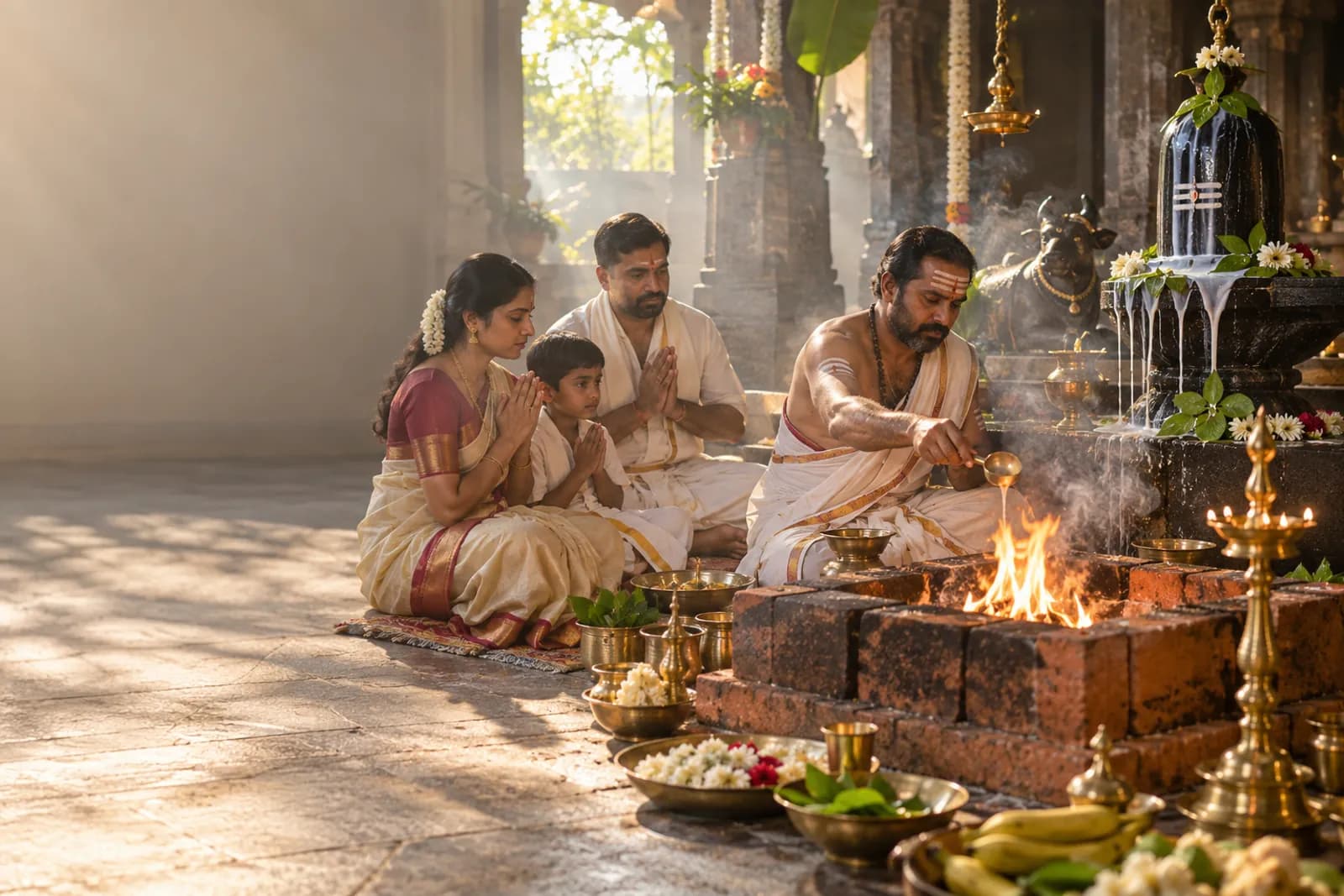
Mrityunjaya Homam is a traditional Vedic fire ritual dedicated to Lord Shiva in the form of Mrityunjaya, the one associated with victory over death. The homam is traditionally performed with the chanting of the Maha Mrityunjaya Mantra and offerings into the sacred fire.
Devotees may choose this homam as part of their spiritual practice when seeking prayers for health, longevity, protection, courage, peace and overall wellbeing.
Anugraha Siddhi helps families arrange Mrityunjaya Homam in Hyderabad with appropriate ritual guidance, sankalpam, samagri planning and muhurtham coordination.
Quick Overview
| Detail | Information |
|---|---|
| Homam name | Mrityunjaya Homam |
| Principal deity | Lord Shiva in the Mrityunjaya form |
| Primary mantra | Maha Mrityunjaya Mantra |
| Ritual type | Vedic homam / fire ritual |
| Traditional purpose | Prayers for health, longevity, protection and wellbeing |
| Suitable for | Individuals, couples and families |
| Location | Hyderabad and surrounding areas |
| Venue | Home or suitable venue, subject to arrangements |
| Muhurtham | Confirmed according to the ritual and occasion |
| Samagri | Based on the prescribed ritual |
| Languages | Telugu, Hindi and English |
| Booking | Advance booking recommended |
What Is Mrityunjaya Homam?
Mrityunjaya Homam is a Shiva-oriented Vedic fire ritual centred on the chanting of the Maha Mrityunjaya Mantra. The Sanskrit term Mrityunjaya is traditionally understood as referring to victory over death.
In Hindu spiritual practice, the Maha Mrityunjaya Mantra is associated with Lord Shiva and is recited as a prayer for protection, wellbeing and liberation from fear.
The homam incorporates mantra chanting and prescribed offerings into the sacred fire. The exact procedure, mantra count and offerings can vary according to the Vedic tradition, sampradaya and ritual requirements.
Why Do People Perform Mrityunjaya Homam?
Devotees traditionally perform Mrityunjaya Homam for spiritual intentions connected with:
- Health and wellbeing
- Longevity
- Protection from fear
- Peace of mind
- Strength during difficult periods
- Prayers for recovery
- Protection during challenging circumstances
- Auspicious family observances
- Spiritual purification
- Seeking Lord Shiva's blessings
It is particularly associated with prayers for long life and protection, although these are traditional religious beliefs and should not be presented as guaranteed medical or life outcomes.
Mrityunjaya Homam: Traditional Intentions
From a traditional Hindu devotional perspective, devotees may perform Mrityunjaya Homam with the following intentions.
The Mrityunjaya tradition is strongly associated with prayers for longevity and wellbeing.
Devotees may perform the homam as a spiritual practice when experiencing fear, uncertainty or difficult circumstances.
Families may choose the homam when praying for the wellbeing of a family member.
Mantra chanting, prayer and participation in a traditional homam can provide a structured spiritual setting for devotion and reflection.
Families may perform the homam collectively as part of a prayer or sankalpam for the wellbeing of a family member or the household.
The ceremony provides an opportunity to perform traditional worship dedicated to Lord Shiva through mantra, fire offerings and prayer.
Important: Mrityunjaya Homam is a religious ritual and should not be considered a substitute for medical diagnosis, treatment or professional healthcare.
Who Can Mrityunjaya Homam Be Arranged For?
Mrityunjaya Homam can be arranged for:
- Individuals
- Couples
- Families
- Children, when performed as a family prayer
- Elderly family members
- Someone going through a challenging period
- Individuals seeking traditional prayers for longevity and wellbeing
For health-related situations, the homam can be performed as a spiritual and devotional practice alongside appropriate medical care.
When Should Mrityunjaya Homam Be Performed?
The appropriate timing depends on the purpose of the homam and the family's tradition. A suitable date may be considered based on:
Mrityunjaya Homam may be performed as part of a specific prayer or on an auspicious date selected with the guidance of a knowledgeable Pandit. Rather than assuming that one particular day is universally mandatory, the muhurtham should be confirmed for the individual ceremony.
Mrityunjaya Homam Procedure
The exact Mrityunjaya Homam procedure varies according to the tradition and ritual format. A typical ceremony may include the following stages.
Preparation
The homam area is cleaned and the required pooja materials, homa kundam and other ritual items are arranged.
Sankalpam
The devotees participate in the sankalpam, stating the intention of performing the homam. Relevant details such as name, gotra, nakshatra and the purpose of the prayer may be included according to the ritual tradition.
Ganapathi Worship
Ganapathi is traditionally worshipped at the beginning of many Hindu ceremonies to seek an auspicious beginning.
Kalasha Sthapana
A kalasha may be established as part of the prescribed ritual arrangement.
Invocation of Lord Shiva
The relevant forms of Shiva are invoked through prescribed mantras and ritual procedures.
Maha Mrityunjaya Mantra Japa
The Maha Mrityunjaya Mantra is chanted according to the prescribed count for the chosen ritual.
Mrityunjaya Homam
The prescribed offerings are made into the sacred fire while the relevant mantras are recited.
The number of mantra repetitions and ahutis can vary depending on the form of homam being performed, so confirm the intended count when booking.
Poornahuti
The principal fire ritual concludes with poornahuti, the final offering.
Aarti and Prasadam
The ceremony concludes with prayers and aarti, followed by prasadam where applicable.
Mrityunjaya Homam Samagri
The exact Mrityunjaya Homam samagri should be confirmed with the performing Pandit, because the requirements can vary according to the ritual format and tradition. Common categories may include:
- Homam kundam
- Kalasha
- Coconut
- Flowers
- Fruits
- Betel leaves
- Betel nuts
- Turmeric
- Kumkum
- Akshata
- Rice
- Ghee
- Homa dravyam
- Samidha
- Camphor
- Incense
- Cotton wicks
- Oil
- Naivedyam
- Sacred water
- Other prescribed materials
A complete samagri list should be provided before the ceremony so the family knows which items need to be arranged. Individual ritual items are available through the Homam Dravyam section of the Pooja Store.
Do not assume that every Mrityunjaya Homam uses exactly the same samagri.
How to Prepare for Mrityunjaya Homam
Before the ceremony:
- Confirm the date and time
- Provide the required sankalpam details
- Keep gotra and nakshatra details available if applicable
- Confirm the venue
- Arrange a clean ritual space
- Confirm the samagri requirements
- Ensure adequate ventilation if the homam is performed indoors
- Keep combustible materials away from the homa kundam
- Confirm the number of participating family members
- Follow the Pandit's instructions regarding any pre-homam observances
Mrityunjaya Homam at Home
Families can choose to perform Mrityunjaya Homam at home in Hyderabad, provided the location is suitable for a fire ritual. A suitable home setup should provide:
- Adequate ventilation
- Sufficient space around the homa kundam
- Stable placement for the ritual fire
- Seating for participants
- Space for the Pandit
- Safe distance from curtains, furniture and other combustible materials
For apartments, residents should also check building or community rules regarding homams and fire rituals.
Mrityunjaya Homam for Health and Wellbeing
Mrityunjaya Homam is traditionally associated with prayers for health, longevity and protection. Families may choose the ritual when praying for:
- Recovery and wellbeing
- Strength during illness
- An elderly family member
- A family member undergoing treatment
- Protection during a difficult period
- Peace and spiritual support
However, it is important to distinguish traditional spiritual belief from medical treatment. Mrityunjaya Homam should be understood as a religious practice and should not replace consultation with doctors, prescribed medicines, surgery or other appropriate medical care.
Mrityunjaya Homam for Longevity
The association between Mrityunjaya worship and longevity comes from the traditional understanding of the Maha Mrityunjaya Mantra and Lord Shiva's Mrityunjaya form. Devotees may perform the homam as a prayer for:
- Long life
- Good health
- Protection
- Family wellbeing
- Freedom from fear
- Spiritual strength
The intention is devotional rather than a guarantee of a particular lifespan or health outcome.
Mrityunjaya Homam Muhurtham
The appropriate Mrityunjaya Homam muhurtham should be determined according to the purpose and tradition followed for the ceremony. Depending on the family's requirements, the Pandit may consider:
If the homam is being performed specifically for an individual, provide the required birth details to the Pandit when requested.
Arranging the homam for a family member who is unwell? Mention the circumstances at the enquiry so the sankalpam and timing are prepared appropriately.
Mrityunjaya Homam Cost in Hyderabad
The Mrityunjaya Homam cost is not necessarily fixed, because the ceremony can vary considerably in scale. The final cost may depend on:
- Number of Pandits
- Ritual duration
- Mantra count
- Samagri
- Venue
- Travel
- Additional poojas
- Special sankalpam requirements
- Date and ceremony requirements
Contact Anugraha Siddhi for a quotation based on your preferred date, location and ritual requirements.
Mrityunjaya Homam in Hyderabad
Anugraha Siddhi provides Vedic ritual services for families across Hyderabad and surrounding areas, including:
- Kukatpally
- Miyapur
- KPHB
- Nizampet
- Bachupally
- Hitech City
- Gachibowli
- Kondapur
- Manikonda
- Madhapur
For locations outside the regular service area, contact Anugraha Siddhi to confirm availability.
Office address
Metro Pillar No: A689, Dr Atmaram Estates,3rd Floor, Nizampet X Roads,
beside Sri Bhramaramba Theatre, near Jntu Metro Station,
Hyderabad, Telangana 500072
Why Choose Anugraha Siddhi for Mrityunjaya Homam?
The ceremony can be arranged according to the prescribed ritual procedure and the family's requirements.
The sankalpam can be prepared based on the relevant devotee and family details.
The preferred date can be reviewed according to the ritual requirements.
The required materials can be clarified before the ceremony.
Families in Hyderabad can enquire about arranging the homam at home, subject to suitability and availability.
Customers can discuss their requirements in their preferred supported language.
Anugraha Siddhi serves families looking for traditional Hindu poojas and homams in Hyderabad and surrounding areas.
Frequently Asked Questions
What is Mrityunjaya Homam?
Mrityunjaya Homam is a Vedic fire ritual dedicated to Lord Shiva in the Mrityunjaya form. It traditionally involves chanting the Maha Mrityunjaya Mantra and making prescribed offerings into the sacred fire.
What is Mrityunjaya Homam performed for?
Devotees traditionally perform it as a prayer for health, longevity, protection, peace, courage and overall wellbeing.
What is the Maha Mrityunjaya Mantra?
The Maha Mrityunjaya Mantra is a traditional Shiva mantra associated with Lord Mrityunjaya. It forms an important part of Mrityunjaya-oriented worship and homam.
Can Mrityunjaya Homam be performed at home?
Yes. It can be performed at home when adequate space, ventilation and safe arrangements are available.
Can Mrityunjaya Homam be performed for someone who is ill?
Yes, families may perform it as a spiritual prayer for the wellbeing of someone who is unwell. However, it should not replace medical treatment or professional healthcare.
What are the benefits of Mrityunjaya Homam?
Traditionally, devotees associate the homam with prayers for longevity, health, protection, peace and spiritual strength. These are religious beliefs and should not be presented as guaranteed outcomes.
When should Mrityunjaya Homam be performed?
The appropriate date and time depend on the purpose of the ritual, family tradition and muhurtham considerations. A Pandit can help determine the suitable timing.
What samagri is required for Mrityunjaya Homam?
The samagri varies according to the ritual procedure. The final list should be confirmed with the performing Pandit before the ceremony.
How much does Mrityunjaya Homam cost in Hyderabad?
The price depends on the number of Pandits, duration, mantra count, samagri, venue and other requirements. Contact Anugraha Siddhi for a quotation based on your specific requirements.
What is the difference between Mrityunjaya Homam and Maha Mrityunjaya Homam?
Both are Shiva-oriented rituals connected with the Mrityunjaya tradition, but the exact procedure, mantra count, duration and scale can differ. They are offered as separate services, so confirm which one you need when booking. See Maha Mrityunjaya Homam for that arrangement.
Related Mrityunjaya and Shiva Services
Book Mrityunjaya Homam in Hyderabad
Planning a Mrityunjaya Homam for yourself or a family member? Share your preferred date, location and purpose of the ceremony with Anugraha Siddhi. The team can help you understand the ritual requirements, muhurtham and arrangements before confirming the booking.