
Abhishekam & Vedic Ritual Services · Hyderabad
Navagraha Abhishekam in Hyderabad
Navagraha Abhishekam is a traditional Hindu devotional ritual performed as worship of the nine Navagrahas. The nine planetary deities are traditionally associated with different aspects of Hindu astrology and religious practice.
Devotees may perform Navagraha Abhishekam as part of their prayers, family traditions, or as a traditional spiritual practice connected with Navagraha worship.
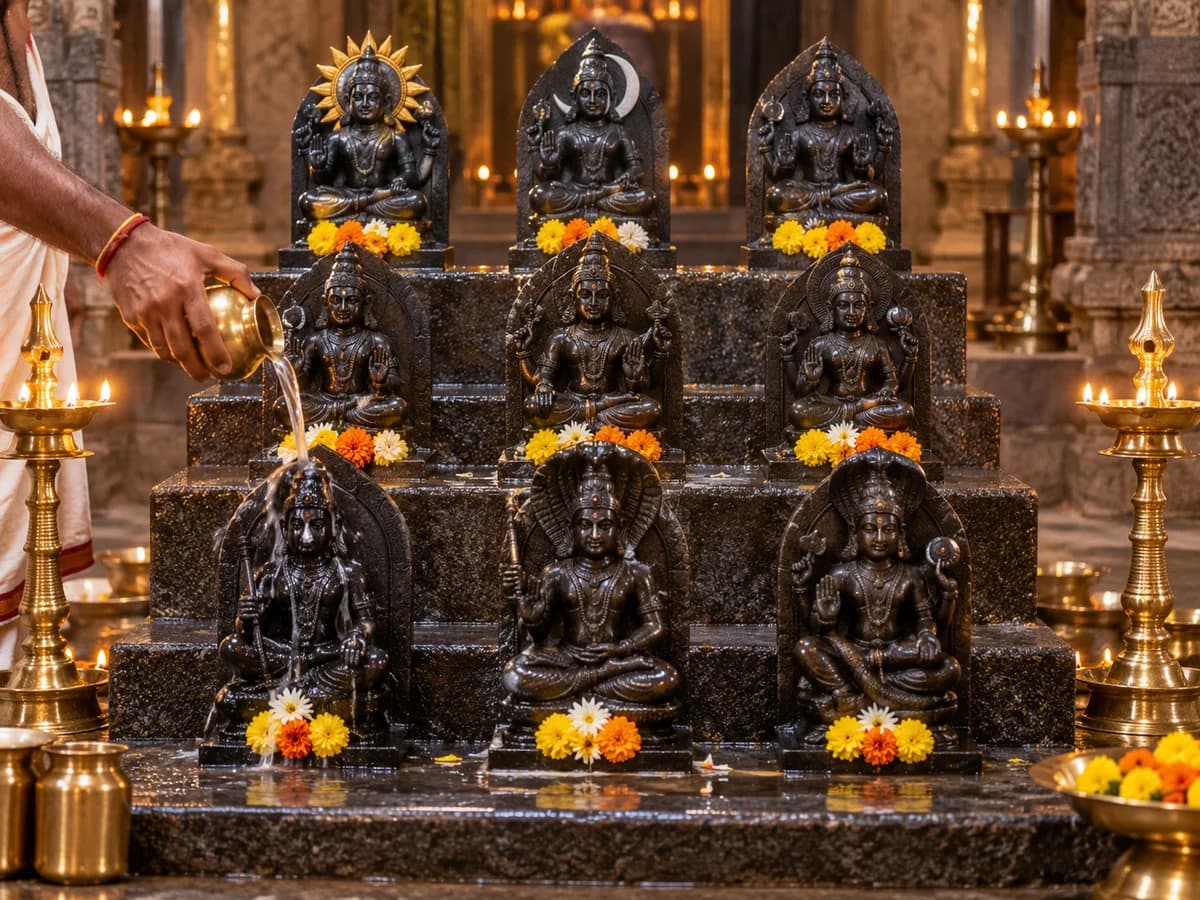
Navagraha Abhishekam Service in Hyderabad
Anugraha Siddhi helps devotees in Hyderabad arrange Navagraha Abhishekam with experienced and verified Vedic Purohits. The ritual can be planned according to the devotee's requirement, family tradition, and the guidance of the Purohit.
Book a Purohit
Call / WhatsApp: 9032022323
Quick Overview
| Detail | Information |
|---|---|
| Ritual Name | Navagraha Abhishekam |
| Deities Worshipped | The nine Navagrahas |
| Type | Hindu devotional Abhishekam |
| Purpose | Navagraha worship, prayer and traditional spiritual practice |
| Location | Hyderabad, Telangana |
| Purohits | Experienced and verified Vedic Purohits |
| Languages | Telugu and English |
| Booking | Call or WhatsApp |
| Contact | 9032022323 |
What Is Navagraha Abhishekam?
Navagraha Abhishekam is a traditional form of worship dedicated to the nine Navagrahas in Hindu religious and astrological traditions.
The Navagrahas are traditionally identified as:
- Surya — Sun
- Chandra — Moon
- Mangala — Mars
- Budha — Mercury
- Brihaspati or Guru — Jupiter
- Shukra — Venus
- Shani — Saturn
- Rahu
- Ketu
During Navagraha Abhishekam, the relevant deities or representations are ceremonially worshipped with Abhishekam, prayers, mantras, and offerings according to the tradition being followed.
The exact procedure, mantras, offerings, and sequence can vary according to sampradaya, regional practice, temple tradition, family tradition, and Purohit guidance.
Why Is Navagraha Abhishekam Performed?
Devotees may perform Navagraha Abhishekam as part of traditional planetary worship and personal prayer.
Common devotional intentions may include:
- Performing Navagraha worship
- Following a family religious tradition
- Performing a personal Sankalpam
- Observing a spiritually significant occasion
- Participating in traditional Jyotisha-related remedies
- Offering prayers and devotion to the Navagrahas
- Seeking guidance from a Purohit regarding traditional worship
In Hindu astrology, the Navagrahas are traditionally considered significant in interpreting a person's horoscope. Some devotees therefore perform Navagraha-related Pooja or Abhishekam as part of their religious practice.
These are traditional religious and astrological beliefs. Navagraha Abhishekam should not be presented as a guaranteed way to change a person's future or produce a specific financial, health, career, marriage, or other personal outcome.
When Is Navagraha Abhishekam Performed?
The appropriate time for Navagraha Abhishekam can depend on the devotee's family tradition, Panchangam, horoscope-related requirements, religious occasion, and Purohit guidance.
Some devotees may perform Navagraha worship:
- On an auspicious day selected according to Panchangam
- As part of a family religious observance
- During a specific Pooja or Sankalpam
- When following a traditional Jyotisha-based remedy
- On a personally significant religious occasion
The suitable date and time can be discussed with the Purohit based on the devotee's requirement.
There is no single date or procedure that universally applies to every Navagraha Abhishekam.
How Is Navagraha Abhishekam Performed?
The exact procedure may differ according to the tradition and the type of Navagraha worship being performed.
A general arrangement may include:
1. Preparation
The Pooja area, Navagraha representations, and required materials are prepared before the ritual.
2. Sankalpam
The Purohit may guide the devotee through the Sankalpam, stating the intention of performing the worship.
3. Ganapati Worship
Depending on the tradition, the ritual may begin with prayers to Lord Ganesha before proceeding with the main worship.
4. Navagraha Invocation
The Purohit may invoke and worship the nine Navagrahas through appropriate prayers and mantras.
5. Abhishekam
The ceremonial bathing of the deity representations is performed using appropriate offerings. The materials used can vary according to the ritual tradition and the particular Navagraha being worshipped.
6. Mantra Recitation and Archana
Appropriate Navagraha mantras and names may be recited, followed by Archana according to the Purohit's tradition.
7. Alankaram
After the Abhishekam, the deity representations may be cleaned and decorated appropriately.
8. Naivedyam and Harathi
Depending on the ritual arrangement, Naivedyam and Mangala Harathi may be offered at the conclusion of the worship.
Procedures may vary according to tradition. The Purohit should be consulted regarding the exact method, mantras, and Samagri required.
Importance of Navagraha Abhishekam
Navagraha Abhishekam holds a place in Hindu devotional practices connected with the worship of the nine planetary deities.
For devotees who follow Jyotisha and traditional Navagraha worship, the ritual provides an opportunity to perform prayers and religious observances associated with the planets.
It can also be a meaningful family devotional practice, particularly when performed according to an established family or regional tradition.
The importance of the ritual is best understood through faith, devotion, prayer, and traditional religious practice, rather than through guaranteed worldly results.
Navagraha Abhishekam Benefits
Traditional Hindu and Jyotisha practices associate Navagraha worship with different devotional and spiritual intentions. These should be understood as traditional beliefs rather than guaranteed outcomes.
Navagraha Worship
The Abhishekam provides an opportunity to worship all nine Navagrahas as part of a traditional religious practice.
Focused Prayer
The ritual creates dedicated time for Sankalpam, mantra recitation, prayer, and spiritual reflection.
Following Traditional Practices
Families who follow Navagraha worship can perform the ritual as part of their religious customs.
Horoscope-Related Religious Practice
Some devotees may perform Navagraha Pooja or Abhishekam after consulting a qualified astrologer or Purohit regarding traditional Jyotisha practices.
Family Participation
Family members may participate in appropriate parts of the ceremony according to the guidance of the Purohit.
Devotional Discipline
Regular participation in traditional worship can provide devotees with a structured opportunity for prayer and spiritual practice.
These traditional associations do not guarantee removal of Doshas, financial improvement, health recovery, marriage, career success, or any other specific result.
Samagri for Navagraha Abhishekam
The Samagri required for Navagraha Abhishekam can vary depending on the ritual tradition, the type of Pooja, and the Purohit's guidance.
A general reference may include:
- Clean water
- Milk
- Curd
- Honey
- Flowers
- Fruits
- Turmeric
- Sandal paste
- Rice or Akshata
- Betel leaves and nuts
- Incense
- Camphor
- Diya and oil or ghee
- Naivedyam items
- Clean cloth
- Items associated with specific Navagrahas, where required
- Other materials recommended by the Purohit
Not every Navagraha Abhishekam requires all of these items. Some rituals may require additional materials based on the specific tradition or Sankalpam.
Samagri may be arranged by Anugraha Siddhi or by the customer depending on the package and requirement. Please confirm the arrangements before booking.
Booking Checklist for Navagraha Abhishekam
Before booking Navagraha Abhishekam, it is useful to discuss:
- Preferred date
- Preferred time
- Ritual location
- Type of Navagraha worship required
- Number of family members participating
- Purohit requirement
- Samagri arrangements
- Any specific Sankalpam
- Whether the ritual is being performed as part of a traditional Jyotisha recommendation
- Family or regional tradition
- Any additional Pooja requirements
If the ritual is being planned based on a horoscope or astrological recommendation, share the relevant information with the Purohit or astrologer so the appropriate traditional procedure can be discussed.
Call / WhatsApp: 9032022323
Navagraha Abhishekam Cost in Hyderabad
The cost of Navagraha Abhishekam can vary depending on the specific requirements of the ritual.
Factors that may affect the cost include:
- Type of Navagraha Abhishekam
- Duration of the ritual
- Number of Purohits required
- Samagri arrangements
- Ritual location
- Additional Pooja requirements
- Specific mantra or devotional requirements
- Other arrangements requested by the devotee
Because requirements can differ between families and rituals, a fixed price should not be assumed without discussing the details.
For current package details, contact Anugraha Siddhi.
Call / WhatsApp: 9032022323
Why Choose Anugraha Siddhi?
Anugraha Siddhi helps devotees arrange Hindu Pooja and ritual services in Hyderabad with experienced and verified Vedic Purohits.
Experienced Vedic Purohits
Anugraha Siddhi has 5+ years of experience in arranging Hindu religious services with experienced Vedic Purohits.
Purohit guidance is available from a Vedic Purohit with 5+ years of experience. Confirm availability and your ritual requirements when booking.
Telugu and English Support
Communication is available in Telugu and English, making it easier for devotees to discuss their ritual requirements.
Guidance Before the Ritual
Devotees can discuss the preferred date, location, ritual requirements, and other arrangements before confirming the ceremony.
Hyderabad Arrangements
Anugraha Siddhi helps devotees arrange Hindu religious rituals in Hyderabad according to their requirements.
Traditional Approach
The ritual can be discussed with the Purohit so that the ceremony follows the relevant tradition and devotional requirements.
Online or in-person arrangements may be available depending on the service and requirement. Please confirm availability with Anugraha Siddhi before booking.
Frequently Asked Questions
1. What is Navagraha Abhishekam?
Navagraha Abhishekam is a traditional Hindu devotional ritual dedicated to the nine Navagrahas. It includes Abhishekam, prayers, mantras, and offerings according to the relevant tradition.
2. Who are the nine Navagrahas?
The nine Navagrahas are traditionally identified as Surya, Chandra, Mangala, Budha, Guru, Shukra, Shani, Rahu, and Ketu.
3. Why do devotees perform Navagraha Abhishekam?
Devotees may perform Navagraha Abhishekam as part of traditional planetary worship, personal prayer, family religious practice, or a Jyotisha-related devotional observance.
4. When can Navagraha Abhishekam be performed?
The suitable date and time can depend on the devotee's family tradition, Panchangam, religious occasion, or traditional Jyotisha guidance.
5. Can Navagraha Abhishekam be performed at home?
A Navagraha Abhishekam may be arranged at home when the ritual requirements and tradition permit it. The exact procedure should be discussed with the Purohit beforehand.
6. What items are required for Navagraha Abhishekam?
Common Pooja materials may include water, milk, curd, honey, flowers, fruits, turmeric, sandal paste, Akshata, incense, camphor, and other materials. The exact Samagri can vary according to the ritual.
7. Is a Purohit required for Navagraha Abhishekam?
The requirement depends on how the devotee wishes to conduct the worship. Families following a traditional Vedic ceremony may prefer to have a Purohit guide and conduct the ritual.
8. Can Navagraha Abhishekam be performed based on a horoscope?
Some devotees perform Navagraha worship after receiving a traditional Jyotisha recommendation. The exact religious practice should be discussed with a qualified astrologer or Purohit.
9. Does Navagraha Abhishekam remove Navagraha Doshas?
Different Hindu astrological traditions have different views regarding Doshas and their traditional remedies. Navagraha Abhishekam may be performed as a traditional devotional practice, but it should not be presented as a guaranteed method of removing a Dosha or solving a specific personal problem.
10. Can family members participate in Navagraha Abhishekam?
Yes. Family members may participate in appropriate parts of the devotional ceremony according to the guidance of the Purohit.
11. How long does Navagraha Abhishekam take?
The duration depends on the type of ritual, prayers, mantras, offerings, and other arrangements. The Purohit can provide an estimated duration after understanding the requirement.
12. Can Anugraha Siddhi arrange the Samagri?
Samagri arrangements depend on the selected ritual and package. Please confirm with Anugraha Siddhi whether the materials will be arranged or need to be provided by the devotee.
13. How much does Navagraha Abhishekam cost in Hyderabad?
There is no single fixed cost for every Navagraha Abhishekam. The cost can depend on the ritual type, Purohit requirement, Samagri, location, duration, and additional arrangements.
For current package details, contact Anugraha Siddhi.
14. Can I book Navagraha Abhishekam in Hyderabad?
You can contact Anugraha Siddhi to discuss your preferred date, location, ritual requirements, and Purohit arrangements.
15. Are Navagraha Abhishekam procedures the same everywhere?
No. Procedures, mantras, offerings, and ritual sequences may vary according to sampradaya, regional practice, family tradition, temple practice, and Purohit guidance.
Book Navagraha Abhishekam in Hyderabad
If you are planning Navagraha Abhishekam for yourself or your family, discuss your requirements with Anugraha Siddhi and arrange the ritual with an experienced Vedic Purohit.
The date, location, Samagri, and other arrangements can be discussed according to your family tradition and specific requirements.
Book a Purohit
Call / WhatsApp: 9032022323
Anugraha Siddhi — Traditional Hindu Pooja & Ritual Services in Hyderabad
Email: anugrahasiddhi@gmail.com