
Item 1
Kumkum, turmeric, sandal paste, akshata and loose flowers
The archana set for the Vastu Purusha, the Ashta Dikpalakas and Ganapathi — kumkuma, pasupu, gandham, akshintalu and poolu.
🎁 For Vastu Pooja
The vastu puja samagri list for a Vastu Shanti pooja — in a new house before Gruha Pravesham, in a property that has been altered or corrected, or in an office or shop before it opens. The Vastu Purusha yantra, the nine grains and the nine-metal piece are the items particular to this pooja; the rest is the household archana set. Each is annotated below.
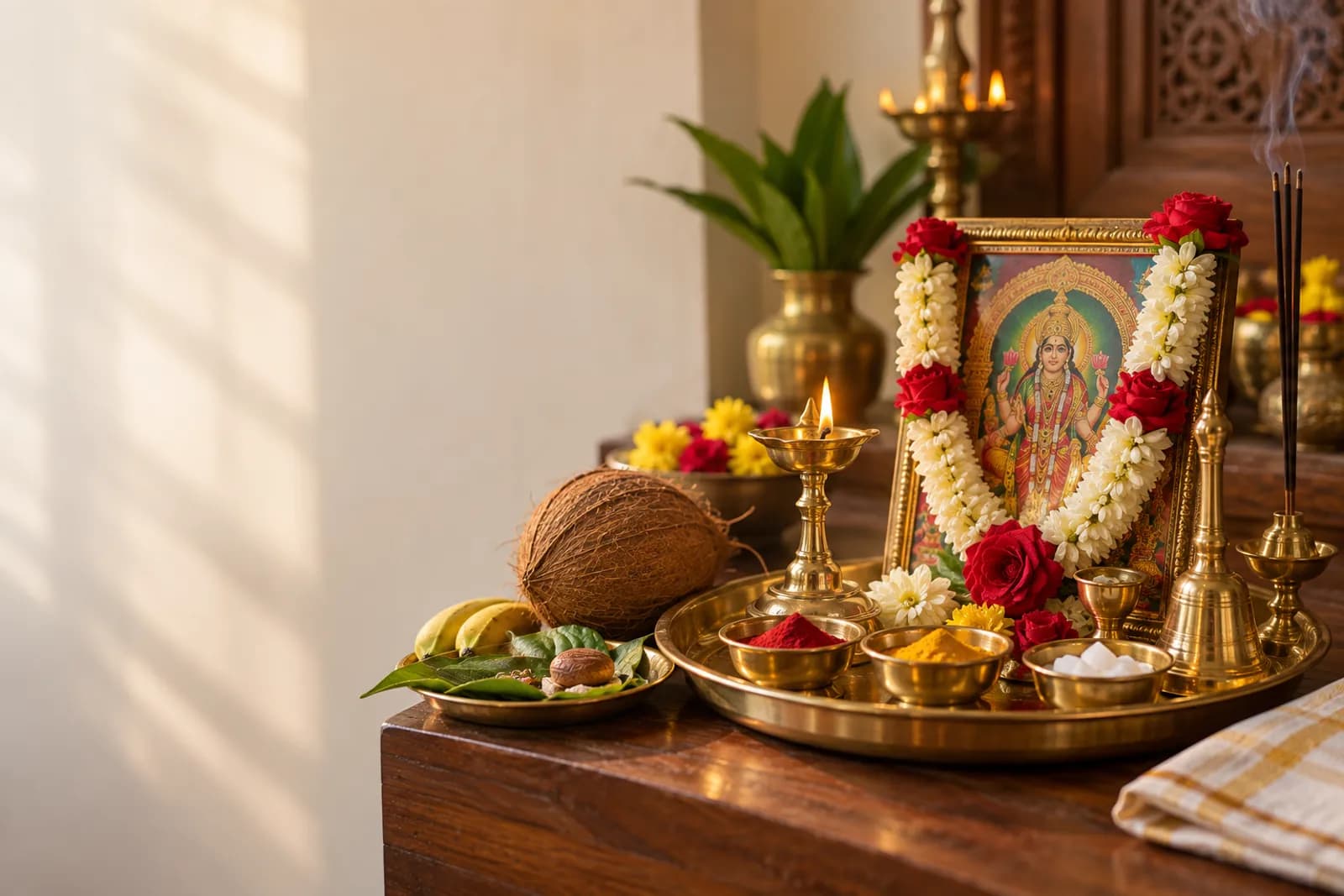
About this kit
Vastu Pooja, or Vastu Shanti, worships the Vastu Purusha — the presiding spirit of the plot, lying with his head to the north-east — and the deities of the eight directions, and asks that any dosha in the layout be pacified. Its samagri centres on the yantra installed in the property, the navadhanyam offered to the Vastu Purusha and the directions, and the navaloha, the nine-metal piece buried or placed as the family's form holds.
The kit carries the yantra, the navaloha, the navadhanyam, a copper kalasam with thread, the panchamrutham dry ingredients and the archana set. It serves the pooja on its own and the pooja that opens a Vastu Homam; for a homam's samidha and havan samagri, ask for the homam addition. Whether your property calls for a Vastu Shanti or a specific correction is a Vastu question — the Vastu consultation pages are the place to start.
What is in the box
Item 1
The archana set for the Vastu Purusha, the Ashta Dikpalakas and Ganapathi — kumkuma, pasupu, gandham, akshintalu and poolu.
Item 2
A copper yantra of the Vastu Purusha mandala, worshipped in the pooja and then installed in the property — usually in the north-east or at the entrance — where it stays.
Item 3
The nine grains offered to the Vastu Purusha and the eight directions, and the navaloha — a small piece of nine metals — placed in the foundation, under the threshold or in the yantra's spot.
Item 4
The kalasam for the Vastu Purusha's avahanam, filled with water and akshata and bound with the thread; its water is sprinkled through the property at the end.
Item 5
Honey, sugar and cardamom for the panchamrutham abhishekam of the yantra; milk, curd and ghee are taken from the house.
Item 6
Lamps, dhoopam and the harathi at the close.
Samagri requirements vary with regional tradition, family custom and the performing priest. This list is what the kit is normally assembled with — confirm the final contents with your purohit before dispatch. Fresh items are supplied against your ceremony date.
Through the ceremony
The Vastu Purusha mandala is drawn on the floor with rice flour at the pooja spot, the yantra placed at its centre and the navadhanyam set in the eight directions around it.
The family states the sankalpam — the property, the purpose, any dosha named — and Ganapathi is worshipped first.
The copper kalasam is filled, bound with the thread and set on rice; the Vastu Purusha is invoked into it and into the yantra with the Vastu mantras.
The yantra is bathed in panchamrutham and water, dried and marked with sandal paste and kumkum, and the Vastu Purusha and the eight Dikpalakas receive archana with akshata and flowers.
Grain, flowers and a lamp are offered in each direction; the navaloha is placed where the family's form holds — the foundation, the threshold or with the yantra.
The yantra is installed in its place, kalasam water is sprinkled through every room, and camphor harathi and mantra pushpam close the pooja.
Not in the box
Common questions
The archana powders and flowers; a copper Vastu Purusha yantra; navadhanyam and a navaloha piece; a copper kalasam with sacred thread; panchamrutham ingredients; and camphor, agarbatti and cotton wicks. Rice flour, rice, milk, curd, ghee and fruit are provided at home.
A copper plate engraved with the Vastu Purusha mandala — the grid of forty-five deities that governs a plot. It is worshipped in the pooja and then installed, usually in the north-east corner or at the entrance, where it remains. The purohit places it; a Vastu consultant can advise on the spot beforehand.
Vastu Shanti is the full form, with the Dikpalaka offerings and often a homam; Vastu Pooja is the household form. The kit serves both; for the homam add the samidha and havan samagri.
If a Vastu Shanti is being performed on the housewarming day, yes — the Griha Pravesh Kit covers the threshold and kalasam rituals, and this kit adds the yantra, the navaloha and the Vastu offerings. Order both and they are packed for the date.
Vastu Shanti is the traditional pacification performed alongside, not instead of, any structural correction a consultant recommends. No outcome is promised. The Vastu Dosha Nivarana page sets out what the remedies address.
Tell us the ceremony date when you enquire. We confirm availability, the final contents and the price before anything is charged; fresh items are supplied against the date.
Other kits
Send us the ceremony date and we will confirm availability, the final contents and the price before anything is charged.