Traditional Pooja Services · Hyderabad
Taddinam Pooja in Hyderabad – Annual Shraddha and Shraddham Ceremony
Taddinam Pooja is a traditional Hindu ancestral remembrance ritual performed according to family customs to honour departed parents and other ancestors. Also known as Taddinam, Thaddinam, Shraddham, Annual Shraddha, Shradh Ceremony, or Shraddha Ceremony, this observance is commonly associated with the annual death anniversary of a departed family member.
For families looking for Taddinam Pooja in Hyderabad, understanding the appropriate date, traditional procedure, and arrangements is an important part of planning the ceremony. Customs can differ according to family tradition, regional practice, and the guidance followed by the family. Therefore, the specific requirements should be confirmed before the ceremony is arranged.
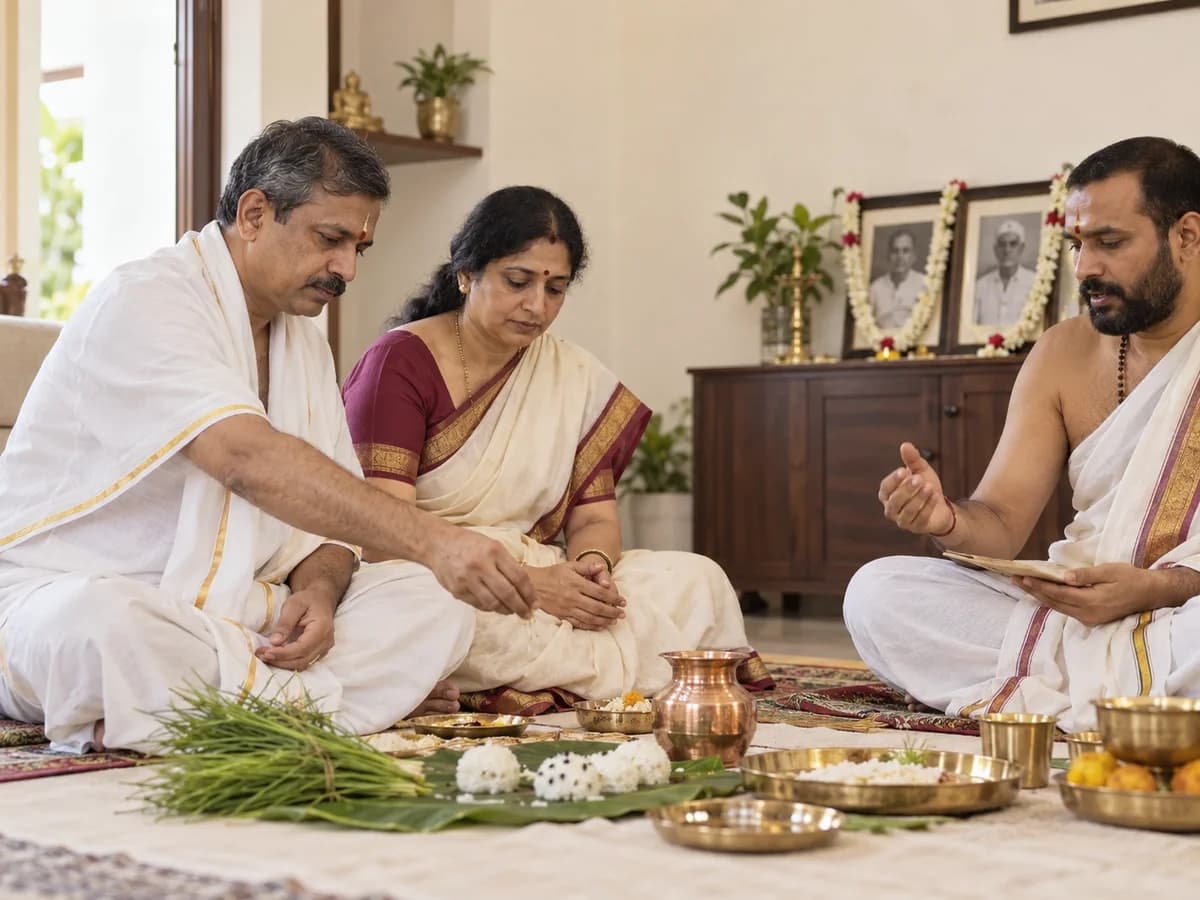
Taddinam Pooja Service Overview
Anugraha Siddhi provides Hindu ritual consultation and assistance in Hyderabad. Families can enquire about Taddinam and Shraddham arrangements, clarify their customary requirements, and discuss the procedure with the service provider before booking.
Whether you are arranging the annual Shraddha for a parent, planning a Shraddha Ceremony for another departed relative, or seeking guidance about Thaddinam, this page explains the purpose of the observance, common planning considerations, and how to enquire about the service.
Quick Overview
| Detail | Information |
|---|---|
| Service | Taddinam Pooja |
| Also Known As | Thaddinam, Shraddham, Annual Shraddha |
| Purpose | Traditional ancestral remembrance |
| Occasion | Annual death anniversary according to family custom |
| Experience | 5+ years |
| Languages | Telugu and English |
| Location | Hyderabad, Telangana |
| Call or WhatsApp | 9032022323 |
What Is Taddinam Pooja?
Taddinam is a term used in some South Indian family traditions for an annual ancestral remembrance observance associated with the death anniversary of a departed person. The ceremony may also be referred to as Shraddham or Annual Shraddha.
In Hindu traditions, Shraddha is associated with remembrance, respect, and the fulfilment of customary duties towards departed ancestors. The observance may involve ritual offerings, prayers, and other prescribed practices, depending on the family tradition and the specific ceremony being performed.
The precise meaning, procedure, and terminology can vary between communities. Some families commonly use the word Taddinam, while others refer to the observance as Shraddham or Shraddha Ceremony.
The appropriate procedure should be established according to the family's customs rather than assuming that every Shraddha observance follows an identical format.
Key Details at a Glance
- Service: Taddinam Pooja and Shraddham consultation
- Purpose: Traditional remembrance of departed family members
- Common occasion: Annual death anniversary, according to family custom
- Other names: Taddinam, Thaddinam, Shraddham, Annual Shraddha and Shradh Ceremony
- Location: Hyderabad
- Language support: Telugu and English
- Enquiries: Call or WhatsApp 9032022323
What Is the Purpose of an Annual Shraddha?
An Annual Shraddha is an observance through which a family remembers a departed relative and follows the ancestral rites prescribed by its tradition. For many Hindu families, it is an important occasion to express respect, maintain religious continuity, and fulfil customary obligations.
The annual observance may be associated with the lunar date of the person's passing, according to the family's ritual calendar and the guidance of its priest. The exact date and applicable observance should be confirmed rather than selected solely by the Gregorian calendar date.
Families may arrange the ceremony for a departed father, mother, spouse, or another relative, depending on the customs and responsibilities recognised within their tradition.
Why Families Observe Taddinam
The reasons for observing Taddinam may include:
- Remembering a departed parent or family member.
- Continuing family customs across generations.
- Performing traditional ancestral rites on the appropriate occasion.
- Teaching younger family members about ancestral remembrance.
- Maintaining continuity with the family's religious practices.
- Seeking guidance on the customary procedure when arranging the observance for the first time.
The ceremony is a religious and cultural observance. Its spiritual meaning is understood through the family's beliefs and traditions, and no particular worldly outcome should be guaranteed as a result of performing it.
Taddinam, Shraddham and Shraddha Ceremony: Are They the Same?
These terms are closely related in the context of Hindu ancestral observances, but they are not necessarily interchangeable in every family or regional tradition.
Taddinam or Thaddinam is commonly used in some South Indian communities to refer to an annual death-anniversary observance. Shraddham and Shraddha Ceremony are broader terms associated with traditional rites performed in honour of departed ancestors. Annual Shraddha specifically highlights the recurring annual observance.
The exact scope of the ceremony depends on the family's customs and the ritual being arranged.
| Term | Common usage |
|---|---|
| Taddinam | Annual ancestral observance in some South Indian traditions |
| Thaddinam | An alternative spelling of Taddinam |
| Shraddham | Traditional ancestral rites performed according to family customs |
| Annual Shraddha | Shraddha observance associated with the annual death anniversary |
| Shraddha Ceremony | General term for a ceremony honouring departed ancestors |
| Shradh Ceremony | An alternative English spelling used for Shraddha-related observances |
If your family uses a particular term, mention it when enquiring. This helps clarify the observance you intend to arrange.
When Is Taddinam Pooja Performed?
Taddinam Pooja is commonly associated with the annual death anniversary of the departed person. The date is generally determined according to the relevant traditional calendar and the family's customary practice.
In many traditions, the lunar tithi associated with the person's passing is important. However, the applicable observance can depend on the circumstances of the death, calendar rules, and community-specific customs.
Understanding the Annual Shraddha Date
Before fixing the ceremony, gather the available information about the departed person and the date of passing.
Useful details may include:
- The date of passing, if known.
- The lunar tithi, if already established.
- The family's customary calendar or ritual practice.
- Any guidance previously received from the family's priest.
- Whether the family observes the ceremony at home or at another customary location.
If the tithi is unknown, explain this when you enquire. A knowledgeable priest can advise what information is needed to identify the appropriate observance according to the family's tradition.
What If the Annual Date Falls on a Busy Day?
If the family cannot arrange the ceremony on the date initially identified, seek guidance before rescheduling it. The appropriate alternative may depend on the relevant calendar rules and the family's customary practice.
Avoid assuming that any convenient day can automatically replace the traditional date.
What Happens During a Taddinam Pooja?
The procedure for Taddinam varies according to regional customs, family traditions, and the particular rites being performed. A consultation should establish the intended ceremony before confirming its arrangements.
Depending on the tradition, an ancestral observance may involve prayers, ritual offerings, remembrance, and other prescribed acts. The exact sequence and requirements should be confirmed with the priest.
1. Confirming the Ritual Details
The first step is to establish whom the ceremony is being performed for, the occasion, the relevant date, and the customary procedure.
This is especially important when a family is arranging Taddinam for the first time or following a tradition that differs from the local community's usual practice.
2. Preparing the Ritual Space
If the observance is being held at home, the family may prepare an appropriate, clean space for the ceremony. The priest can clarify the arrangements required for the particular ritual.
The space, materials, and setup should not be assumed to be the same for every family.
3. Performing the Prescribed Rites
The priest guides the ceremony according to the agreed ritual and the family's tradition. The sequence, prayers, offerings, and other elements depend on the type of Shraddham being performed.
Families should communicate any specific customary requirements in advance.
4. Completing the Ceremony
The conclusion of the ceremony follows the prescribed procedure. Any additional rites, offerings, food arrangements, or customary practices should be confirmed beforehand rather than assumed to be included in the service.
How to Arrange Taddinam Pooja in Hyderabad
Planning the ceremony becomes easier when the family confirms the important details before booking.
Step 1: Explain the Occasion
Tell the service provider whether you need Taddinam for the annual death anniversary of a parent or another departed family member. Mention any additional customary requirements that your family follows.
Step 2: Share the Available Date Information
Provide the date of passing and the lunar tithi, if known. If the information is incomplete, explain what you have so that the next steps can be clarified.
Step 3: Discuss Your Family's Tradition
Different families may follow different procedures for Shraddham. Mention any established family customs or instructions from your usual priest.
Step 4: Confirm the Ceremony Location
Explain whether you want to conduct the observance at home or at another appropriate location. Confirm the feasibility and arrangements with the provider.
Step 5: Clarify the Scope of the Service
Before booking, ask which ritual components are included, what materials you need to arrange, and whether any additional requirements apply.
Do not assume that Samagri, food preparation, Pinda-related rites, Tarpanam, or other ceremonies are automatically included. These details depend on the specific service agreed upon.
Step 6: Confirm the Final Arrangements
Once the date, procedure, location, and requirements are clarified, confirm the booking details and any agreed preparations.
Can Taddinam Pooja Be Performed at Home?
A family may be able to arrange Taddinam at home, depending on the customary procedure and the practical suitability of the location.
Home observances can be convenient for families who prefer to perform ancestral rites in a familiar setting. However, the suitability of the space, the required materials, and the ritual procedure should be confirmed with the priest.
What to Discuss for a Home Ceremony
- The available space for the observance.
- The number of family members expected to participate.
- The customary procedure followed by the family.
- The required ritual materials and who will arrange them.
- Any food, offering, or additional ritual requirements.
- The expected duration and preparation arrangements.
A home ceremony should be planned around the specific ritual rather than a generic checklist. Confirm all essential details before the scheduled date.
What Materials Are Required for Taddinam?
The required materials depend on the procedure followed by the family and the priest. Certain ancestral observances may involve traditional offerings and other ritual items, but the exact list should be provided for the specific ceremony.
Rather than purchasing items based on a general online list, ask for a confirmed checklist.
Questions to Ask About Samagri
- What materials are required for this particular Shraddham?
- Will the family need to arrange them?
- Is any preparation needed before the priest arrives?
- Are any additional offerings or rites part of the agreed procedure?
- Are there family-specific customs that need to be followed?
This helps avoid unnecessary purchases and reduces the risk of missing items that are actually required.
Is Taddinam the Same as Pinda Daan?
Taddinam and Pinda Daan are related to Hindu ancestral traditions, but they should not automatically be treated as identical services.
Taddinam commonly refers to an annual death-anniversary observance in certain South Indian traditions. Pinda Daan refers to a particular form of offering within ancestral rites. Depending on the family's tradition and the ceremony being arranged, Pinda-related rites may or may not form part of the intended observance.
If your family specifically requires Pinda Daan, Pinda Pradanam, Tarpanam, or another related rite, state this clearly when enquiring. Confirm the complete scope of the ceremony before booking.
Taddinam for Parents and Other Departed Relatives
Families may seek guidance about annual Shraddha for a departed father, mother, spouse, or another relative. The customary responsibilities and procedure can vary according to family tradition and community practice.
Taddinam for a Father
Families arranging an annual observance for a departed father should confirm the appropriate date, the prescribed rites, and any established family customs.
Taddinam for a Mother
For a departed mother, the applicable observance should likewise be clarified according to the family's tradition. The procedure should not be assumed to be identical to every other ancestral ceremony.
Taddinam for Other Relatives
If you are arranging Shraddham for another departed relative, explain the relationship and the customary practice followed by your family. The priest can advise what details are needed to clarify the intended ritual.
In all cases, the exact procedure and responsibilities should be confirmed rather than inferred from a general description.
Common Mistakes to Avoid When Planning a Shraddha Ceremony
1. Assuming All Families Follow the Same Procedure
Regional and family traditions may differ. Confirm the specific ritual rather than relying entirely on someone else's checklist.
2. Selecting the Date Without Checking the Tradition
The annual observance may depend on the relevant lunar tithi and customary calendar rules. Verify the date before finalising arrangements.
3. Booking Without Explaining the Required Rites
If you need a specific form of Shraddham or an additional ancestral rite, mention it clearly before booking.
4. Assuming All Materials Are Included
Samagri and other arrangements vary by service. Confirm who will provide each required item.
5. Leaving Preparations Until the Last Moment
Share the available date and family requirements early enough to clarify the procedure and make the necessary arrangements.
6. Treating Every Online Guide as Universal
A guide may describe one regional or family practice. Ask a qualified priest to clarify how the guidance applies to your family's observance.
7. Expecting Guaranteed Outcomes
Taddinam is a religious and cultural observance rooted in ancestral remembrance. It should not be presented as a guarantee of wealth, health, family success, or other specific worldly outcomes.
Why Contact Anugraha Siddhi for Taddinam Pooja?
When arranging an ancestral ceremony, families benefit from clear communication about the intended ritual, customary requirements, date, and preparation process.
Anugraha Siddhi provides Hindu ritual consultation and assistance in Hyderabad. Families can enquire in Telugu or English and explain their requirements before confirming the service.
When contacting Anugraha Siddhi, share whether you need Taddinam, Annual Shraddha, Shraddham, or another related ancestral observance. This helps establish the scope of the service and the information required for planning.
Service information
- Business: Anugraha Siddhi
- Experience: 5+ years
- Languages: Telugu and English
- Location: Metro Pillar No A689, JNTU Metro Station, 3rd Floor, Dr Atmaram Estates, beside Sri Bhramaramba Theatre, Hyder Nagar, Vasantha Nagar, Hyderabad – 500072
- Call or WhatsApp: 9032022323
- Website: https://anugrahasiddhi.com/
Please confirm the available date, service scope, fee, ritual materials, and any additional arrangements directly before booking.
Frequently Asked Questions About Taddinam Pooja
1. What is Taddinam Pooja?
Taddinam Pooja is a traditional Hindu ancestral observance commonly associated with the annual death anniversary of a departed family member in some South Indian traditions. Its procedure depends on family customs and the specific rites being performed.
2. What is the meaning of Taddinam?
Taddinam refers to an ancestral remembrance observance performed according to customary Hindu ritual practices. In some families, the term is used specifically for the annual Shraddha ceremony.
3. Is Taddinam the same as Shraddham?
The terms are closely related, and some families use them interchangeably when referring to an annual ancestral observance. However, their exact usage and the scope of the ritual can vary by region and tradition.
4. What is Annual Shraddha?
Annual Shraddha is a recurring ancestral observance associated with the death anniversary of a departed person. The appropriate date and procedure should be established according to the family's tradition.
5. What is the difference between Shradh Ceremony and Shraddha Ceremony?
Both spellings are used in English to refer to traditional Hindu ancestral rites. The terminology may differ, but the exact ceremony should be clarified according to the family's customary practice.
6. When should Taddinam be performed?
It is commonly performed on the appropriate annual death-anniversary observance. The date may depend on the lunar tithi and relevant traditional calendar rules. Confirm the date with a knowledgeable priest.
7. Can Taddinam be performed at home?
A home ceremony may be possible, depending on the customary procedure and the suitability of the space. Confirm the arrangements and required materials before booking.
8. What if I do not know the death tithi?
Share the date of passing and any other information available. Ask the priest what additional details are required to establish the appropriate observance according to your family tradition.
9. Are materials included in Taddinam Pooja arrangements?
This depends on the service agreed upon. Ask for a clear list of included items and materials that the family must arrange.
10. Is Pinda Daan included in Taddinam?
Not necessarily. The scope of the ceremony depends on the family tradition and the service being arranged. If Pinda Daan or Pinda Pradanam is required, confirm this before booking.
11. Can Taddinam be arranged for a mother or father?
Families may arrange annual ancestral observances for departed parents according to their customs. The appropriate procedure and requirements should be confirmed with the priest.
12. How can I book Taddinam Pooja in Hyderabad?
Contact Anugraha Siddhi by calling or WhatsApping 9032022323. Explain the intended observance, the available date information, the location, and any family-specific requirements. Confirm the fee and scope of the service before booking.
Enquire About Taddinam Pooja in Hyderabad
If you are planning Taddinam Pooja, Annual Shraddha, or a Shraddha Ceremony, begin by clarifying the appropriate date and the procedure followed by your family.
Anugraha Siddhi can discuss your requirements and help you understand the arrangements to confirm before the ceremony. Share the information you have about the departed family member and any customary rites your family follows.
Call or WhatsApp: 9032022323
Anugraha Siddhi
Metro Pillar No A689, JNTU Metro Station, 3rd Floor, Dr Atmaram Estates, beside Sri Bhramaramba Theatre, Hyder Nagar, Vasantha Nagar, Hyderabad – 500072.
Website: https://anugrahasiddhi.com/