Homam Service · Hyderabad
Maha Mrityunjaya Homam in Hyderabad
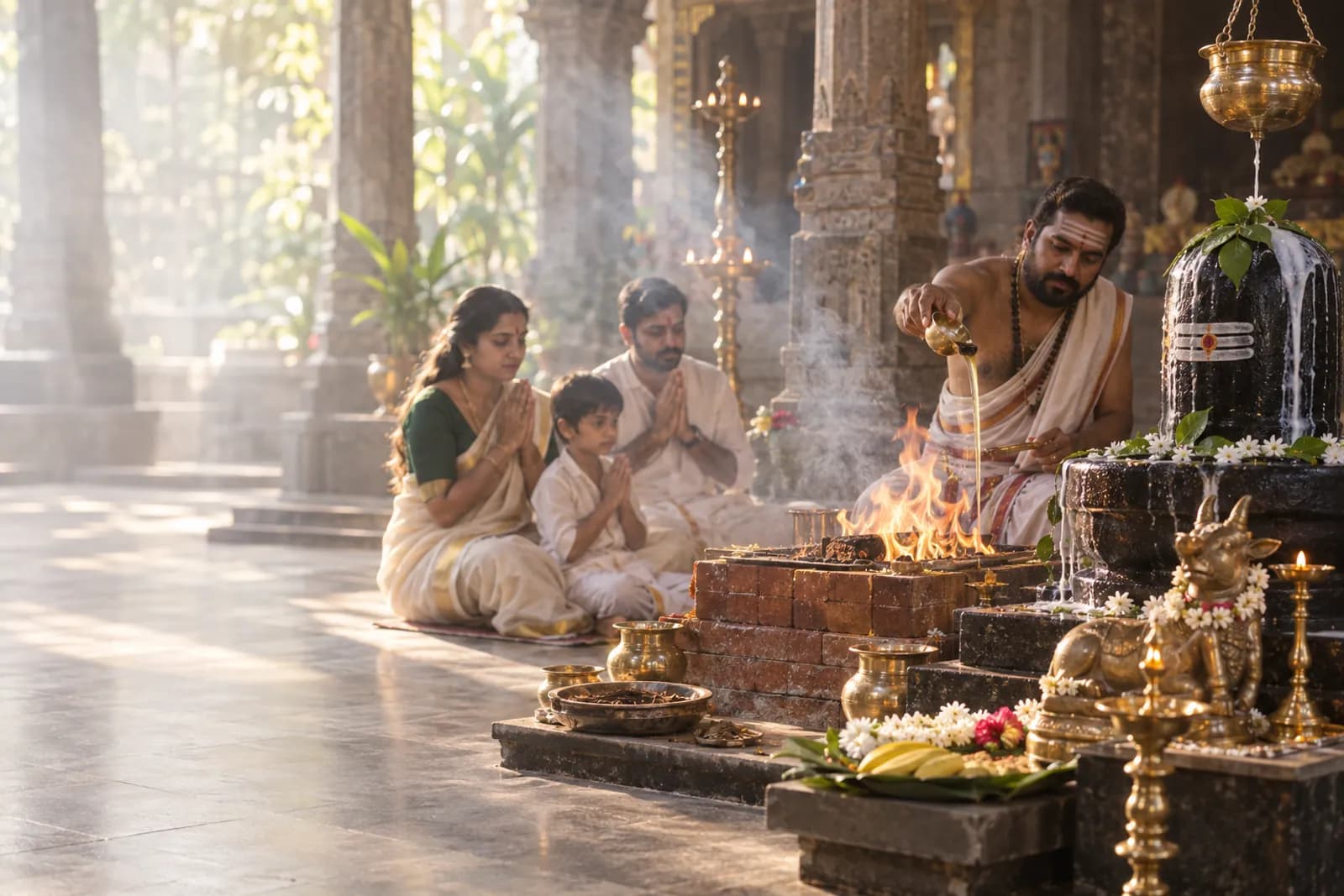
Sacred Shiva homam for well-being, longevity and spiritual protection. Maha Mrityunjaya Homam is a traditional Vedic fire ritual dedicated to Lord Shiva and centred on the Maha Mrityunjaya Mantra.
Families may undertake this sacred homam as a prayer for well-being, longevity, inner strength and protection during significant or difficult periods of life.
Anugraha Siddhi helps families in Hyderabad arrange Maha Mrityunjaya Homam with appropriate ritual preparation, sankalpam, mantra recitation, homam offerings and concluding prayers according to the selected vidhanam, with a qualified Purohit.
Whether you are planning the homam for a family sankalpam, an ayushya-related occasion, a period of recovery or as part of your spiritual practice, the exact procedure, mantra count, duration and samagri requirements can vary according to the ritual tradition and the purpose of the sankalpam.
Quick Overview
| Details | Maha Mrityunjaya Homam |
|---|---|
| Deity | Lord Shiva / Mrityunjaya |
| Primary mantra | Maha Mrityunjaya Mantra |
| Ritual type | Vedic homam / homa |
| Purpose | Prayer for well-being, longevity, strength and spiritual protection |
| Location | Hyderabad |
| Suitable for | Individuals, couples and families |
| Sankalpam | Taken according to the devotee's intention and available birth details |
| Procedure | Varies according to sampradaya, sankalpam and prescribed mantra count |
| Samagri | Confirmed according to the selected ritual |
| Booking | Date and requirements confirmed before the ceremony |
What Is Maha Mrityunjaya Homam?
Maha Mrityunjaya Homam is a sacred fire ritual associated with Lord Shiva and the Maha Mrityunjaya Mantra, also known as the Tryambaka Mantra. The homam takes the mantra-based worship into a fire ritual, where prescribed offerings are made into the sacred fire while the relevant mantras are recited.
The mantra is traditionally addressed to Tryambaka, the three-eyed form of Rudra or Shiva. In devotional practice, it is associated with prayers for release from fear, well-being, strength and freedom from untimely difficulties.
The exact form of Maha Mrityunjaya Homam is not identical in every tradition. The mantra count, preliminary rituals, homa dravyas, duration and concluding ceremonies may differ according to the sampradaya, Purohit, sankalpam and purpose of the ceremony.
For this reason, families should confirm the exact vidhanam and requirements with the Purohit before purchasing specialised samagri or fixing the ceremony.
Maha Mrityunjaya Homam and Mrityunjaya Homam: Are They the Same?
The terms Mrityunjaya Homam and Maha Mrityunjaya Homam are sometimes used interchangeably, but ritual arrangements can distinguish between different forms or scales of the worship.
A Maha Mrityunjaya Homam may involve a more extensive mantra-based practice, a larger prescribed count, preparatory japam or additional ritual components depending on the tradition being followed. The important point is that there is no single universal format that applies to every family or every Purohit.
What to confirm before booking
- Which form of Mrityunjaya worship is being performed
- The prescribed mantra count
- Whether japam is included
- Whether preliminary Shiva or Ganapathi worship is included
- Whether kalasha-related rituals are included
- The expected duration
- Number of Purohits required
- Samagri requirements
- Whether the homam is performed at home, temple or another venue
Anugraha Siddhi can help you clarify these details before the ceremony is finalised.
Why Do Families Perform Maha Mrityunjaya Homam?
Maha Mrityunjaya Homam is traditionally undertaken as a form of Shiva worship and prayer. Families may consider this homam for occasions such as:
Families may undertake the homam as a spiritual prayer for the well-being of a family member or the household.
Mrityunjaya worship has a strong traditional association with ayushya, or longevity. Families may therefore undertake the ritual as part of an ayushya-related sankalpam.
Some families choose Shiva worship during challenging periods when they wish to undertake a structured spiritual practice and seek inner strength and peace.
The ritual may be performed as a devotional observance during a period of recovery. However, a homam is a spiritual practice and does not replace medical diagnosis, treatment or professional medical advice.
Maha Mrityunjaya Homam can also be undertaken as a family prayer without a specific crisis, particularly when the family wishes to perform an extensive Shiva-related ritual.
In some families, a priest or astrologer may recommend Mrityunjaya-related worship based on an individual's horoscope or a particular period. The recommended ritual should be confirmed with the qualified practitioner conducting the ceremony.
Maha Mrityunjaya Mantra
The central mantra associated with this worship is traditionally known as the Maha Mrityunjaya Mantra:
ॐ त्र्यम्बकं यजामहे सुगन्धिं पुष्टिवर्धनम् ।
उर्वारुकमिव बन्धनान्मृत्योर्मुक्षीय मामृतात् ॥
Om Tryambakam Yajamahe Sugandhim Pushtivardhanam
Urvarukamiva Bandhanan Mrityor Mukshiya Maamritat
The mantra is traditionally addressed to Tryambaka, the three-eyed form of Rudra or Shiva. Its devotional meaning is commonly understood as a prayer for release from the bonds of mortality and fear, while seeking divine grace and well-being.
For a formal homam, the Purohit determines the appropriate recitation, associated ritual mantras and count according to the selected vidhanam. The mantra is also recited on its own as Maha Mrityunjaya Japam.
Maha Mrityunjaya Homam Procedure
The exact procedure can vary according to the sampradaya, mantra count, sankalpam and ceremony format. A typical arrangement may include the following stages:
Preparation and Purification
The ritual space is cleaned and prepared for the homam. The required kalasha, homa kundam, pooja materials and other ritual items are arranged.
Sankalpam
The devotee's intention for performing the homam is formally stated. Depending on the ritual tradition, details such as name, gotra, nakshatra, rashi, family details and the purpose of the sankalpam may be included.
Only the details required by the Purohit need to be provided.
Ganapathi Pooja
A preliminary Ganapathi worship may be performed before the main ritual to formally begin the ceremony.
Kalasha Sthapana
Where prescribed, a kalasha is established and worshipped as part of the ritual preparation.
Shiva / Mrityunjaya Worship
The prescribed form of Shiva worship and invocation is performed. Depending on the selected vidhanam, this may be accompanied by mantra japam or other preliminary worship.
Maha Mrityunjaya Mantra Japam
The Maha Mrityunjaya Mantra is recited according to the prescribed count. The count and method should be confirmed with the Purohit, because they can differ between ritual formats.
Homa
The relevant offerings are made into the sacred fire while the prescribed mantras are recited. The homa dravyas depend on the ritual tradition and the specific ceremony being performed.
Poornahuti
The homam concludes with the Poornahuti, the final complete offering into the sacred fire.
Blessings and Prasadam
The ceremony concludes with prayers, blessings and distribution of prasadam according to the arrangements made for the ceremony.
Maha Mrityunjaya Homam Samagri
The required samagri depends on the exact form of the homam. Common categories of materials may include:
- Homa kundam
- Kalasha
- Kalasha vessel
- Mango or other prescribed leaves
- Coconut
- Flowers
- Bilva leaves where prescribed
- Turmeric
- Kumkum
- Sandalwood
- Akshata
- Ghee
- Homa dravyas
- Samidha
- Fruits
- Naivedyam ingredients
- Camphor
- Incense
- Pooja vessels
- Sacred thread
- Other items specified by the Purohit
Do not purchase specialised homam materials solely from a generic online list. The required ingredients can change according to the form of the ritual, mantra count, sampradaya and number of participants.
Anugraha Siddhi can provide the applicable preparation and samagri requirements after the ceremony details are confirmed. Individual ritual items are available through the Homam Dravyam section of the Pooja Store.
How to Prepare for Maha Mrityunjaya Homam
A little preparation can make the ceremony much easier for the family.
Provide the information requested by the Purohit for the sankalpam, such as name, gotra and nakshatra where available.
Discuss your preferred date and check whether a suitable muhurtham needs to be selected.
Ask whether your ceremony includes Maha Mrityunjaya Japam, Shiva Pooja, Kalasha Sthapana, Abhishekam, Homa, Poornahuti or additional prayers.
For a home homam, keep a clean and adequately ventilated area ready. Because a homam involves fire, sufficient space and appropriate fire-safety precautions are important.
Find out which materials will be arranged by the Purohit and which items the family needs to provide.
Family members participating in the sankalpam or pooja should follow the Purohit's instructions during the ceremony.
Who Can Perform Maha Mrityunjaya Homam?
Maha Mrityunjaya Homam is traditionally performed under the guidance of a qualified Vedic Purohit or priest familiar with the relevant ritual procedure and mantra recitation. The required number of Purohits can vary depending on:
- Mantra count
- Scale of the ceremony
- Duration
- Ritual format
- Family sankalpam
- Venue
For an extensive homam, discuss the required priest arrangement before confirming the ceremony.
How Long Does Maha Mrityunjaya Homam Take?
There is no single fixed duration for every Maha Mrityunjaya Homam. The duration can depend on:
- Mantra count
- Whether japam is included
- Number of preliminary rituals
- Number of Purohits
- Type of homa
- Sankalpam
- Tradition followed
A shorter ceremony may take only a few hours, while an extensive mantra-based observance can require considerably more time or may be organised over multiple sessions. Anugraha Siddhi will confirm the expected duration after understanding your required ritual format.
Maha Mrityunjaya Homam Cost in Hyderabad
The cost of Maha Mrityunjaya Homam is not necessarily fixed, because the ceremony can be customised according to the required ritual arrangements. Factors that can influence the cost include:
- Number of Purohits
- Mantra or japam count
- Duration of the ceremony
- Quantity and type of homam samagri
- Additional poojas or abhishekams
- Venue
- Travel requirements
- Prasadam arrangements
- Special ritual requirements
For an accurate quotation, share your preferred date, location and ceremony requirements with Anugraha Siddhi.
Maha Mrityunjaya Homam in Hyderabad with Anugraha Siddhi
Anugraha Siddhi helps families arrange Hindu poojas, homams and Vedic rituals in Hyderabad with guidance on the ceremony requirements. For Maha Mrityunjaya Homam, the service can be arranged based on the family's:
- Preferred date
- Location
- Sankalpam
- Available birth details
- Required ritual format
- Purohit requirements
- Samagri arrangements
The ceremony may be organised at a suitable home or other permitted venue depending on the arrangements. Before the booking is confirmed, the family can discuss the ritual procedure, preparation requirements, samagri and expected duration.
Not sure whether you need the Homam, the Japam or the Pooja form? Describe the sankalpam and the right arrangement can be confirmed before you commit.
Why Choose Anugraha Siddhi?
The ceremony is organised around the prescribed ritual procedure discussed with the Purohit.
The sankalpam can be prepared based on the devotee's intention and the details required for the ritual.
Families can receive guidance about the samagri and preparation required before the ceremony.
Maha Mrityunjaya Homam can be arranged for families across Hyderabad, subject to availability and location.
The important ceremony details can be discussed before the date is finalised, helping families understand what is included.
The team can guide families through the preparation process so that they know what needs to be arranged before the homam.
Maha Mrityunjaya Homam Service Areas in Hyderabad
Anugraha Siddhi can serve families across Hyderabad, subject to priest and scheduling availability. Common service areas include:
- Kukatpally
- KPHB
- Nizampet
- Miyapur
- Bachupally
- Pragathi Nagar
- Hitech City
- Kondapur
- Gachibowli
- Madhapur
- Manikonda
- Jubilee Hills
- Banjara Hills
- Begumpet
- Secunderabad
- Other Hyderabad locations
Service availability should be confirmed based on the exact venue and preferred date.
Office address
Metro Pillar No: A689, Dr Atmaram Estates,3rd Floor, Nizampet X Roads,
beside Sri Bhramaramba Theatre, near Jntu Metro Station,
Hyderabad, Telangana 500072
How to Book Maha Mrityunjaya Homam in Hyderabad
Booking the ceremony can be completed in a few simple steps.
Contact Anugraha Siddhi
Share your requirement for Maha Mrityunjaya Homam on +91 90320 22323.
Discuss Your Sankalpam
Explain why you wish to perform the homam and provide the relevant details requested by the Purohit.
Select the Date
Share your preferred date. If required, discuss the appropriate muhurtham.
Confirm the Ceremony
Confirm the ritual format, location, Purohit arrangements, samagri and other requirements.
Prepare for the Homam
Arrange the required space and materials according to the final instructions.
Perform the Homam
The Purohit conducts the Maha Mrityunjaya Homam according to the agreed ritual procedure.
Frequently Asked Questions
What is Maha Mrityunjaya Homam?
Maha Mrityunjaya Homam is a traditional Vedic fire ritual dedicated to Lord Shiva and centred on the Maha Mrityunjaya Mantra. It is undertaken as a devotional prayer for well-being, longevity, strength and spiritual protection.
What is the Maha Mrityunjaya Homam performed for?
Families may perform it for well-being, longevity-related sankalpam, spiritual strength, recovery-related prayers or during significant periods of life. The exact intention should be discussed with the Purohit.
Is Maha Mrityunjaya Homam the same as Mrityunjaya Homam?
The terms are sometimes used interchangeably, but different ritual traditions may distinguish between the forms. The mantra count, duration and ritual components can vary, so confirm the exact vidhanam before booking. The comparison above lists what to check.
Can I perform Maha Mrityunjaya Homam at home in Hyderabad?
Yes, it may be arranged at a suitable home venue, subject to space, fire-safety requirements, priest availability and the selected ritual format.
How long does Maha Mrityunjaya Homam take?
There is no universal fixed duration. It depends on the mantra count, ritual format, number of priests and additional ceremonies included.
What samagri is required for Maha Mrityunjaya Homam?
The samagri varies according to the selected ritual. Common categories include ghee, homa dravyas, samidha, flowers, fruits, kalasha items and other pooja materials. The final list should be confirmed with the Purohit.
Do I need my gotra and nakshatra for the homam?
These details may be used for the sankalpam when available. If you do not know certain details, discuss this with the Purohit before the ceremony.
Can Maha Mrityunjaya Homam be performed for a family member?
Families may undertake the homam with a specific family member as the focus of the sankalpam. The appropriate ritual arrangement should be discussed with the Purohit.
Does Maha Mrityunjaya Homam replace medical treatment?
No. Maha Mrityunjaya Homam is a religious and spiritual practice. It should not be considered a substitute for medical diagnosis, treatment or advice from qualified healthcare professionals.
How can I book Maha Mrityunjaya Homam in Hyderabad?
Contact Anugraha Siddhi with your preferred date, location and purpose of the ceremony. The ritual format, priest arrangement, samagri and other requirements can then be discussed before confirmation.
Related Mrityunjaya and Shiva Services
Book Maha Mrityunjaya Homam in Hyderabad
If you are looking to arrange Maha Mrityunjaya Homam in Hyderabad, Anugraha Siddhi can help you understand the ritual requirements and coordinate the ceremony according to your chosen date and sankalpam. Share your preferred date, location and requirement to discuss the arrangements.