Japam Service · Hyderabad
Navarna Mantra Japam in Hyderabad
Navarna Mantra Japam is a traditional Devi worship practice centred on the sacred Navarna Mantra associated with Goddess Durga and Chamunda. The mantra is traditionally used in Devi Upasana and is especially connected with Durga Saptashati-related practices.
Anugraha Siddhi provides Navarna Mantra Japam services in Hyderabad with experienced Vedic Purohits. Language support is available in Telugu and English.
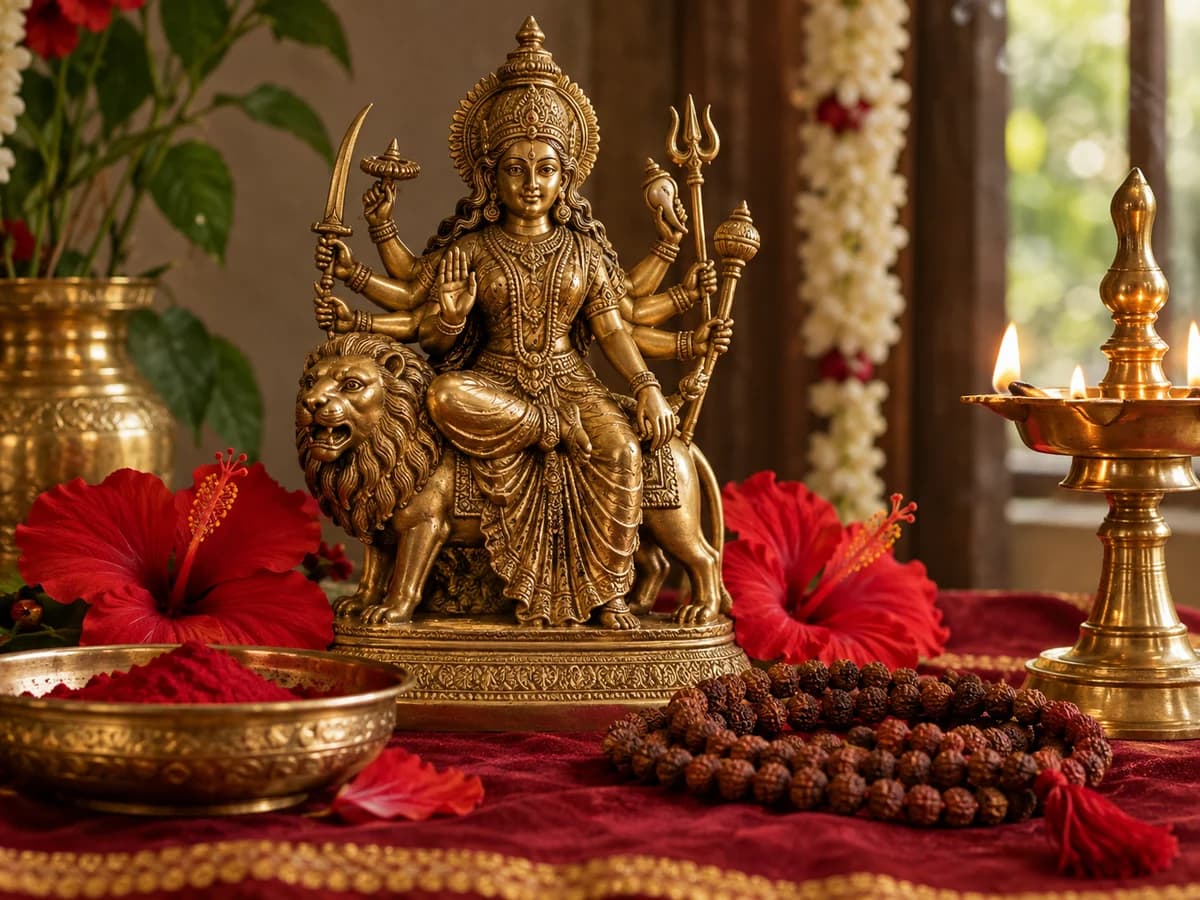
Navarna Mantra Japam Service in Hyderabad
Navarna Mantra Japam involves the repeated chanting of the Navarna Mantra with devotion, concentration and a specific sankalpam. The traditional mantra is:
ॐ ऐं ह्रीं क्लीं चामुण्डायै विच्चे॥
Om Aim Hreem Kleem Chamundayai Vichche
The Navarna, or nine-syllable, mantra · commonly chanted 108 times
The Navarna Mantra is traditionally associated with Goddess Chamunda and the three forms of Devi represented as Mahakali, Mahalakshmi and Mahasaraswati.
The exact japa procedure, count and accompanying practices can vary according to the tradition being followed.
Quick Overview
| Detail | Information |
|---|---|
| Service | Navarna Mantra Japam |
| Deity | Goddess Durga / Chamunda |
| Mantra | Om Aim Hreem Kleem Chamundayai Vichche |
| Traditional association | Devi Upasana and Durga Saptashati-related practice |
| Common japa count | 108 repetitions |
| Associated practice | Navarna Vidhi |
| Suitable occasions | Navratri, Devi worship and other suitable occasions |
| Service location | Hyderabad |
| Service mode | As arranged according to requirement |
| Experience | 5+ years of Pooja and Vedic ritual service experience |
| Languages | Telugu and English |
What Is Navarna Mantra Japam?
Navarna Mantra Japam is the repeated chanting of the Navarna Mantra, Om Aim Hreem Kleem Chamundayai Vichche.
It is a traditional Devi mantra associated with Goddess Chamunda and is used in specific forms of Shakta and Durga worship. Traditional Navarna Vidhi includes preparatory practices such as viniyoga, nyasa and dhyanam before the main japa.
Our editorial policy explains how traditional practices are described on this site.
Navarna Mantra
ॐ ऐं ह्रीं क्लीं चामुण्डायै विच्चे॥
Om Aim Hreem Kleem Chamundayai Vichche
The mantra is traditionally treated as a nine-syllable mantra when counted according to its traditional classification, which is why it is called Navarna.
It is associated with Goddess Chamunda and the three principal forms of Devi represented by Mahakali, Mahalakshmi and Mahasaraswati in the traditional Navarna Vidhi.
Why Is Navarna Mantra Japam Performed?
Devotees may perform Navarna Mantra Japam as part of traditional Devi worship for purposes such as:
- Devotional worship of Goddess Durga
- Seeking the blessings of Devi
- Spiritual discipline
- Focused mantra practice
- Prayer for strength and courage
- Traditional Devi Upasana
- Observance during Navratri
- Durga Saptashati-related spiritual practice
These are traditional religious associations and are not guaranteed results.
Navarna Mantra Japa Vidhi
The Navarna Mantra Japa Vidhi is the traditional procedure followed for Navarna Mantra practice.
A formal Navarna Vidhi can be considerably more detailed than simply repeating the mantra. Traditional references describe preparatory elements including viniyoga, nyasa, dhyanam, mala preparation and then the prescribed mantra japa. A simplified overview is given below.
-
Preparation
The worship area is cleaned and prepared for Devi worship. The devotee prepares mentally and physically before beginning the practice.
-
Sankalpam
A sankalpam is made according to the purpose and intention of the japa.
-
Viniyoga
In the traditional Navarna Vidhi, viniyoga is performed before the main mantra practice. It identifies the traditional rishi, chandas, deity, bija, shakti and kilaka associated with the mantra.
-
Nyasa
Traditional Navarna Vidhi includes Karanyasa and Hridayadi Nyasa. These practices involve placing or invoking the mantra through prescribed touches of the fingers and parts of the body.
Because nyasa is part of a specific traditional procedure, it should not be improvised without understanding the practice.
-
Dhyana
The practitioner performs dhyana or meditation on the Devi according to the relevant tradition.
-
Mala Preparation
Traditional Navarna Vidhi includes prayer and preparation associated with the japa mala before beginning the mantra repetition.
-
Navarna Mantra Japa
The main mantra is then repeated. Traditional Navarna Vidhi specifies 108 repetitions of the mantra.
-
Japa Samarpanam
After completing the prescribed count, the japa is traditionally offered to Devi through the appropriate concluding prayer. The exact concluding procedure may vary according to the tradition.
How Many Times Is the Navarna Mantra Chanted?
In the traditional Navarna Vidhi, the Navarna Mantra is chanted 108 times.
Another traditional Durga Saptashati Upasamhara procedure gives 108 or 1008 repetitions of the Navarna Mantra, depending on the practice. There is therefore no need to assume that one repetition count applies to every Navarna Mantra practice.
The appropriate count can depend on:
- The purpose of the japa
- The specific tradition
- The ritual being performed
- The Purohit’s guidance
- Whether it is a simple devotional practice or a formal sadhana
Navarna Mantra and Durga Saptashati
The Navarna Mantra has a close traditional connection with Durga Saptashati, also known as Devi Mahatmyam.
Traditional Durga Saptashati procedures include Navarna Mantra-related practices. The Navarna Vidhi described in traditional references includes viniyoga, nyasa and dhyanam, followed by mantra japa.
However, Navarna Mantra Japam and Durga Saptashati Parayanam are not automatically the same service.
| Navarna Mantra Japam | Durga Saptashati Parayanam |
|---|---|
| Focuses on repeated chanting of the Navarna Mantra | Focuses on recitation of Devi Mahatmyam |
| Mantra japa is the central practice | Scripture recitation is the central practice |
| May be performed independently depending on tradition | Follows the structure of the 13 chapters |
| Japa count is specified according to the practice | Includes the prescribed chapters and associated procedures |
Additional Durga Saptashati rituals should not be assumed to be included in a Navarna Mantra Japam service unless specifically arranged.
Where the Saptashati itself is what you want arranged, that is offered as a Chandi Homam.
When Is Navarna Mantra Japam Performed?
Navarna Mantra Japam may be performed as part of Devi worship on suitable occasions. Common occasions include:
- Navratri
- Durga Ashtami
- Maha Navami
- Other Devi-related observances
- Regular devotional practice
- Specific spiritual sankalpams
Navratri is particularly associated with worship of Goddess Durga and different forms of Devi.
Where the full nine-night observance rather than a single mantra practice is what you want arranged, that is booked as a Devi Navaratri Pooja.
The appropriate date and procedure may vary according to the tradition followed.
Importance of Navarna Mantra Japam
The Navarna Mantra holds an important place in certain traditional forms of Devi Upasana.
The mantra brings together the traditional bija sounds Aim, Hreem and Kleem with the invocation of Chamunda, and traditional Navarna Vidhi associates it with Mahakali, Mahalakshmi and Mahasaraswati.
For devotees following this tradition, Navarna Mantra Japam provides a focused form of Devi worship and mantra discipline. A broader ceremony is arranged as a Durga Pooja.
Navarna Mantra Benefits
The traditional benefits associated with Navarna Mantra Japam are described within the context of Devi worship and spiritual practice.
-
Traditional Devi worship
Navarna Mantra Japam provides a focused form of devotional worship dedicated to Devi.
-
Supports spiritual discipline
Regular mantra repetition can form part of a disciplined devotional routine.
-
Traditional prayer for inner strength
Devotees may perform the japa as a prayer for strength and spiritual support during challenging periods.
-
Supports focused meditation
Repeated mantra chanting provides a structured practice for maintaining attention and devotional focus.
-
Traditional prayer for overcoming difficulties
Devi worship is traditionally associated with seeking support while facing difficulties and obstacles.
-
Supports Devi Upasana
The Navarna Mantra is traditionally used in specific forms of Shakta and Durga worship.
-
Associated with Durga Saptashati practice
The mantra has an important role in traditional Durga Saptashati-related procedures.
These are traditional spiritual associations. They are not guaranteed outcomes, and are not substitutes for medical, legal, financial or professional support.
Navarna Mantra Japam Procedure at Home
A simple devotional practice at home can involve:
Prepare the space
Clean and prepare the worship area.
Place the image
Place an image or representation of Devi.
Sankalpam
Take a devotional sankalpam.
Offer prayers
Offer simple prayers.
Chant
Chant the Navarna Mantra with concentration.
Complete the count
Complete the selected japa count.
Conclude
Offer a concluding prayer.
However, the formal Navarna Japa Vidhi can involve viniyoga, nyasa, dhyanam and other traditional components.
People wishing to undertake a formal or specialised practice should follow the guidance of a knowledgeable Purohit or qualified teacher, rather than improvising advanced procedures.
Navarna Mantra Japam Samagri
The exact requirements depend on the type of ritual being performed. Common items for a simple Devi worship setup may include:
- Goddess Durga or Chamunda picture or idol
- Flowers
- Kumkum
- Turmeric
- Akshata
- Incense
- Deepam
- Fruits
- Coconut
- Naivedyam
- Water
- Japa mala
Lamp oil, ghee, wicks and camphor are grouped in the deepam section of the Pooja Store, which is the quickest way to check that list against what you already have.
Not every item is required for every form of Navarna Mantra Japam.
Samagri may be arranged by Anugraha Siddhi or by the customer, depending on the selected service package and requirement. The exact requirements should be confirmed before booking, and everything else is in the general Pooja Samagri Store.
Navarna Mantra Japam and Durga Mantra Japam
Both practices are associated with Goddess Durga, but they are not necessarily identical.
| Navarna Mantra Japam | General Durga Mantra Japam |
|---|---|
| Uses the specific Navarna Mantra | May use different Durga mantras |
| Traditionally associated with Chamunda and Devi Upasana | Can include various forms of Durga worship |
| Closely connected with certain Durga Saptashati traditions | May be performed independently |
| Traditional Navarna Vidhi can include nyasa and dhyanam | Procedure depends on the selected mantra |
The mantra and procedure should be selected according to the tradition being followed. The wider set of Durga mantras is covered under Durga Mantra Japam.
Booking Checklist for Navarna Mantra Japam
| Requirement | Details |
|---|---|
| Service | Navarna Mantra Japam |
| Preferred date | Confirm during booking |
| Location | Confirm during booking |
| Purpose / sankalpam | Discuss during booking |
| Mantra | Om Aim Hreem Kleem Chamundayai Vichche |
| Japa count | Confirm before the ritual |
| Procedure | Confirm according to tradition |
| Samagri | Confirm arrangement |
| Purohit | Experienced Vedic Purohit |
| Language | Telugu / English |
| Service mode | Confirm based on requirement |
Navarna Mantra Japam Cost in Hyderabad
The cost of Navarna Mantra Japam can vary depending on:
- Japa count
- Ritual procedure
- Number of Purohits
- Location
- Samagri arrangements
- Additional Devi worship
- Durga Saptashati-related services, if specifically included
- Overall service requirements
There is no single fixed price applicable to every Navarna Mantra Japam service. Contact Anugraha Siddhi for current package details.
Why Choose Anugraha Siddhi for Navarna Mantra Japam?
Anugraha Siddhi has 5+ years of experience in Pooja and Vedic ritual services, and helps devotees arrange mantra and Vedic ritual services according to their requirements.
- Experienced Vedic Purohits
- Navarna Mantra Japam service arrangements
- Telugu and English language support
- Hyderabad service arrangements
- Guidance regarding japa requirements and ritual arrangements
- Service options based on the selected ritual and requirement
Specific ritual inclusions, japa counts, samagri arrangements and additional services should be confirmed before booking. Other mantra practices are listed under Japams.
Frequently Asked Questions
What is the Navarna Mantra?
The Navarna Mantra is Om Aim Hreem Kleem Chamundayai Vichche. It is a traditional mantra associated with Goddess Chamunda and forms of Devi worship.
What does Navarna Mantra Japam mean?
It means the repeated chanting of the Navarna Mantra as part of traditional Devi worship and mantra practice.
What is Navarna Mantra Japa Vidhi?
The Navarna Mantra Japa Vidhi is the traditional procedure for performing Navarna Mantra practice. It can include viniyoga, nyasa, dhyanam, mala preparation, mantra japa and concluding prayers.
How many times should the Navarna Mantra be chanted?
Traditional Navarna Vidhi specifies 108 repetitions. Another traditional procedure gives 108 or 1008 repetitions depending on the practice.
What are the Navarna Mantra benefits?
Traditional benefits include devotional worship of Devi, spiritual discipline, focused meditation, prayer for strength and traditional Devi Upasana. These are not guaranteed material or personal outcomes.
Is the Navarna Mantra the same as a Durga Mantra?
Not exactly. Navarna Mantra is a specific mantra associated with Devi and Chamunda, whereas “Durga Mantra” can refer to several different mantras dedicated to Goddess Durga.
Is the Navarna Mantra related to Durga Saptashati?
Yes. The Navarna Mantra has an important role in traditional Durga Saptashati-related practices, including the Navarna Vidhi.
Can Navarna Mantra Japam be performed during Navratri?
Yes. Navratri is an important period for Devi worship, and devotees may perform Navarna Mantra Japam during this period according to their tradition.
Can Navarna Mantra Japam be performed at home?
A simple devotional practice may be performed at home. Formal Navarna practices involving nyasa and other specialised procedures should follow appropriate traditional guidance.
Is Navarna Mantra Japam the same as Durga Saptashati?
No. Navarna Mantra Japam focuses on repeated chanting of the specific mantra, while Durga Saptashati involves recitation of the Devi Mahatmyam scripture and its associated procedures.
What samagri is required for Navarna Mantra Japam?
Requirements vary according to the ritual. Flowers, kumkum, turmeric, akshata, deepam, incense, fruits, coconut, naivedyam and a japa mala may be used for a simple devotional setup.
Can a Purohit perform Navarna Mantra Japam?
Yes. Anugraha Siddhi can help arrange Navarna Mantra Japam with experienced Vedic Purohits, subject to service availability and requirements.
Are 108 repetitions enough for Navarna Mantra Japam?
108 repetitions are specified in the traditional Navarna Vidhi. Formal practices may use different counts depending on the tradition and purpose.
Are Navarna Mantra benefits guaranteed?
No. Traditional spiritual benefits are not guaranteed outcomes. The practice is a form of devotional and spiritual discipline.
Can Anugraha Siddhi arrange Navarna Mantra Japam in Hyderabad?
Yes. Anugraha Siddhi can help arrange the service in Hyderabad according to the devotee’s requirements, subject to availability and the selected service arrangement.
Book Navarna Mantra Japam in Hyderabad
If you are looking to perform Navarna Mantra Japam in Hyderabad, Anugraha Siddhi can help arrange the service according to your devotional requirements. Languages: Telugu and English.