Readings, matching and timing, all from your chart

Astrology

Consultations read from your Janma Kundali, jathakam and kundali matching for marriage, the daily panchangam, rasi phalalu for all twelve signs, the muhurtham for the date you are trying to fix, the dosha nivarana an astrologer may prescribe, and Vastu for the property you live or work in. One vertical, because the same chart answers all of them.
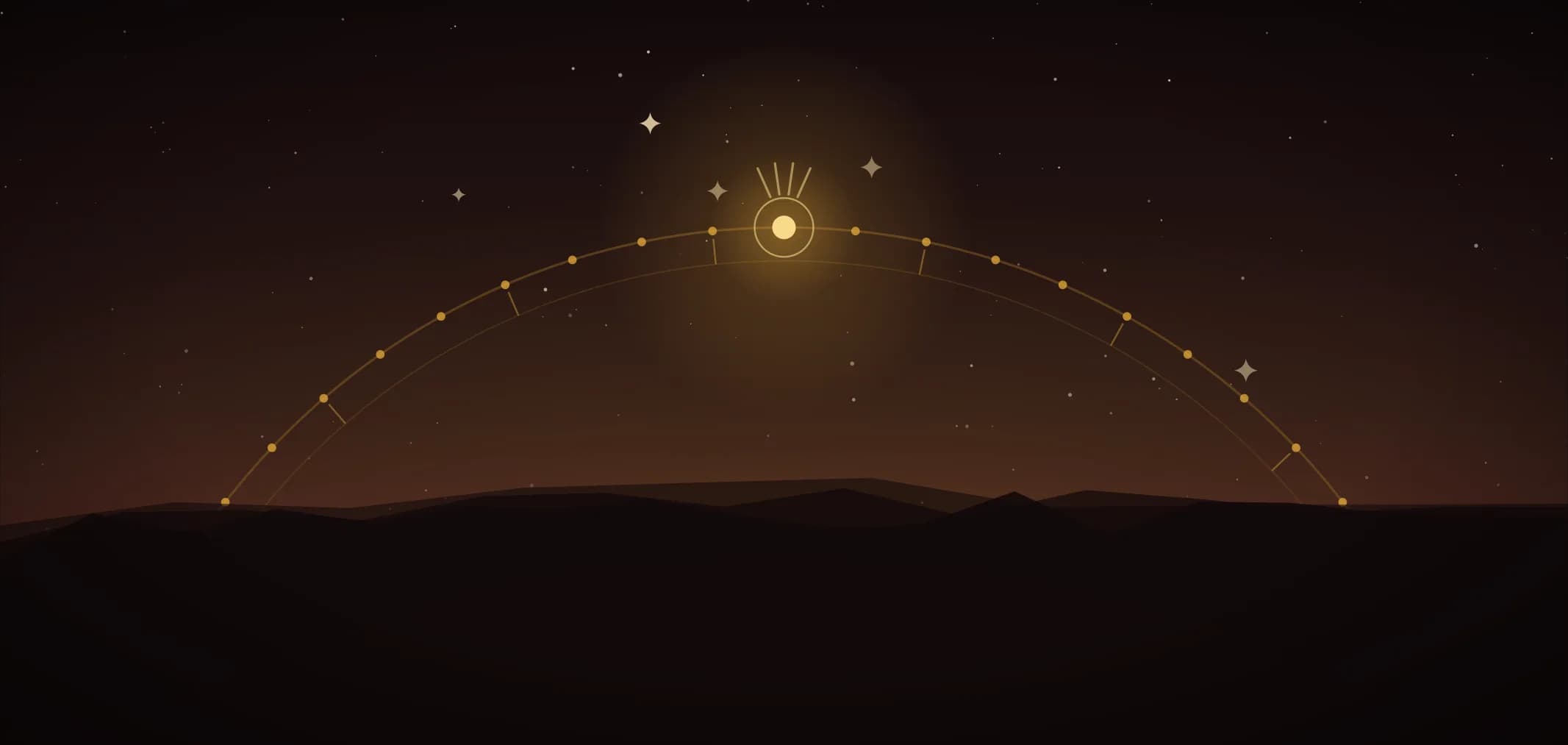
A wide arc of twenty-seven nakshatra points drawn in brass across a night sky, one of them opened into its four padas, above a dark ridge line.

What this covers

Inside Astrology

22 services

Muhurtham

The right time, chosen against your chart and the panchangam.

Explore Muhurtham

29 services

Vastu

Direction, proportion and placement, checked against your plan.

Explore Vastu

How a reading works

Everything here starts from one chart

Three inputs produce a Janma Kundali: the date of birth, the clock time, and the place. The date fixes the Sun and the slower grahas. The place fixes the horizon. The time fixes the lagna and the Moon’s degree, which are the two fastest-moving things in the chart — and the two that every later reading depends on.

Once that chart exists, the twenty-eight services below are not twenty-eight separate readings of it. They are the same chart questioned in different places: a career reading goes to the tenth bhava and the Dasamsa, a marriage reading to the seventh and the Navamsa, a timing question to the dasha sequence. Each service page names the bhavas, karakas and divisional charts it is drawn from, so you can see what you are asking for before you ask.

12loss1self2wealth3effort11gains4home10work5children9fortune8change7marriage6debtLAGNAbhava 1 — the rising signhouses run clockwise
The twelve bhavas as a South Indian chart, with the four kendras marked. Every service below reads some subset of these squares.

Vocabulary

Six words the readings assume you know

Lagna
The rising sign — the point of the zodiac on the eastern horizon at your birth. It moves a full sign about every two hours, which is why the birth time matters to the minute.
Bhava
One of the twelve houses, each governing a defined area of life. Counted from the lagna. The tenth is work, the seventh marriage, the fourth home and property.
Graha
One of the nine — Sun, Moon, Mars, Mercury, Jupiter, Venus, Saturn, Rahu and Ketu. Placed by sign and degree. A graha's dignity in its sign qualifies everything read from it.
Nakshatra
One of the 27 lunar mansions, each spanning 13°20' and divided into four padas. The nakshatra the Moon occupied at birth starts the dasha sequence and gives the naming syllable.
Dasha
A planetary period. Vimshottari, the usual system, runs 120 years across nine unequal ones. It answers when. A placement indicates something; the dasha decides when it is active.
Varga
A divisional chart, computed arithmetically from the same degrees as the main chart. The D-9 is read for marriage, the D-10 for career, the D-7 for children, the D-24 for education.
27nakshatras108padas, one syllable eachfour padas to a nakshatra
The 27 nakshatras, one opened into its four padas. The Moon’s pada at birth sets the dasha sequence and, in the naming consultations, the syllable a name begins with.

Choosing

Which of these you actually need

Twenty-eight services is a long list to arrive at cold. These are the eight starting points people most often turn out to want. If none of them matches, describe the situation and we will say which reading fits — or that none does.

I have never had my chart read at all.
Horoscope ReadingIt surveys the whole chart and reports what stands out, which is the useful starting point when you do not yet know what to ask.
I want the chart itself, on record.
Birth Chart / Janma KundaliThe chart every other reading here is derived from, cast once and kept.
A proposal is being considered.
Kundali MatchingBoth charts compared. Ask for porutham if your family matches the Telugu way rather than by the 36 gunas.
I have been told a dosha is present.
Kuja Dosha / Manglik AnalysisThe conventions genuinely differ north and south, and most placements have a recognised cancellation worth testing.
I need to know when, not whether.
Dasha AnalysisThe reading that most directly answers timing — which period is running and where the next boundary falls.
Saturn is transiting and I want to know what that means.
Transit AnalysisSade sati, kantaka and ashtama shani are three different things, and they are frequently confused for one another.
A child has been born and we are choosing a name.
Baby Name SelectionThe syllable comes from the pada, not the nakshatra, so the birth time decides it.
We have a date to fix.
Marriage MuhurthamAsk before the venue is booked. Once the date is paid for, a muhurtham can only work within it.

What to expect

What a reading is, and what it is not

What it does

  • Reads your own chart, cast from your birth details, rather than a sun-sign generalisation.
  • Names the bhavas, karakas and divisional charts the answer rests on, so the reasoning is visible.
  • Describes tendency and timing — what the chart indicates, and the periods that support it.
  • Says where traditions disagree, rather than presenting one school’s convention as the rule.

What it does not

  • Diagnose an illness, or sit anywhere near a decision about treatment. See a doctor.
  • Give financial or legal advice, or name an investment, an amount or a market.
  • Report on another person’s intentions, or settle a family disagreement.
  • Guarantee an outcome. A remedy is an observance, and it is offered as one.

Astrology

Personal Astrology

All Astrology

Astrology

Matching

All Astrology

Astrology

Naming

All Astrology

One brand, three businesses

Also part of AnugrahaSidhi

Sources and practice notes

Astrological practice differs by school, and the conventions behind a chart change what it can be read to say. This note separates what is consistently described in published practice from what genuinely varies, and states plainly which parts are AnugrahaSidhi’s recommendation rather than a rule.

Consistently described

Points on which published practice broadly agrees.

  • A reading needs the date of birth, the place of birth and the time of birth as precisely as it is known; the time determines the ascendant and the divisional charts.
  • Indian practice is predominantly sidereal, and the Lahiri or Chitrapaksha ayanamsa is the most widely used reference in this region.
  • Vimshottari dasha is the timing system most commonly applied in South Indian practice.

Varies by tradition

Real differences between families, regions and sampradayams — not errors.

  • Astrologers use different ayanamsa values, and KP or Raman practitioners will produce charts that differ from a Lahiri chart.
  • Chart style — South Indian, North Indian or East Indian — changes how the same chart is drawn, not what it contains.
  • Which divisional charts and which dasha systems are consulted is a matter of the astrologer's training.

What we suggest you confirm

AnugrahaSidhi's recommendation, to settle before you pay.

  • Establish the birth time as accurately as you can before the consultation. An uncertain time limits what can responsibly be said.
  • Ask which ayanamsa and dasha system the astrologer uses, so a second opinion can be compared like for like.
  • Treat the reading as cultural and personal guidance. It is not medical, legal or financial advice, and no outcome is guaranteed.

Sources consulted

  • Standard sidereal calculation conventions used in Indian practice, with the ayanamsa stated rather than assumed
  • The consulting astrologer's stated method, recorded when the consultation is scheduled

Last reviewed . This date changes only when the note above changes. How we source and correct this.

Not sure where astrology starts for you?

Tell us the occasion or the decision you are facing, and we will point you at the right service — or tell you that you do not need one.