
Pooja Service · Hyderabad
Kumkumarchana in Hyderabad
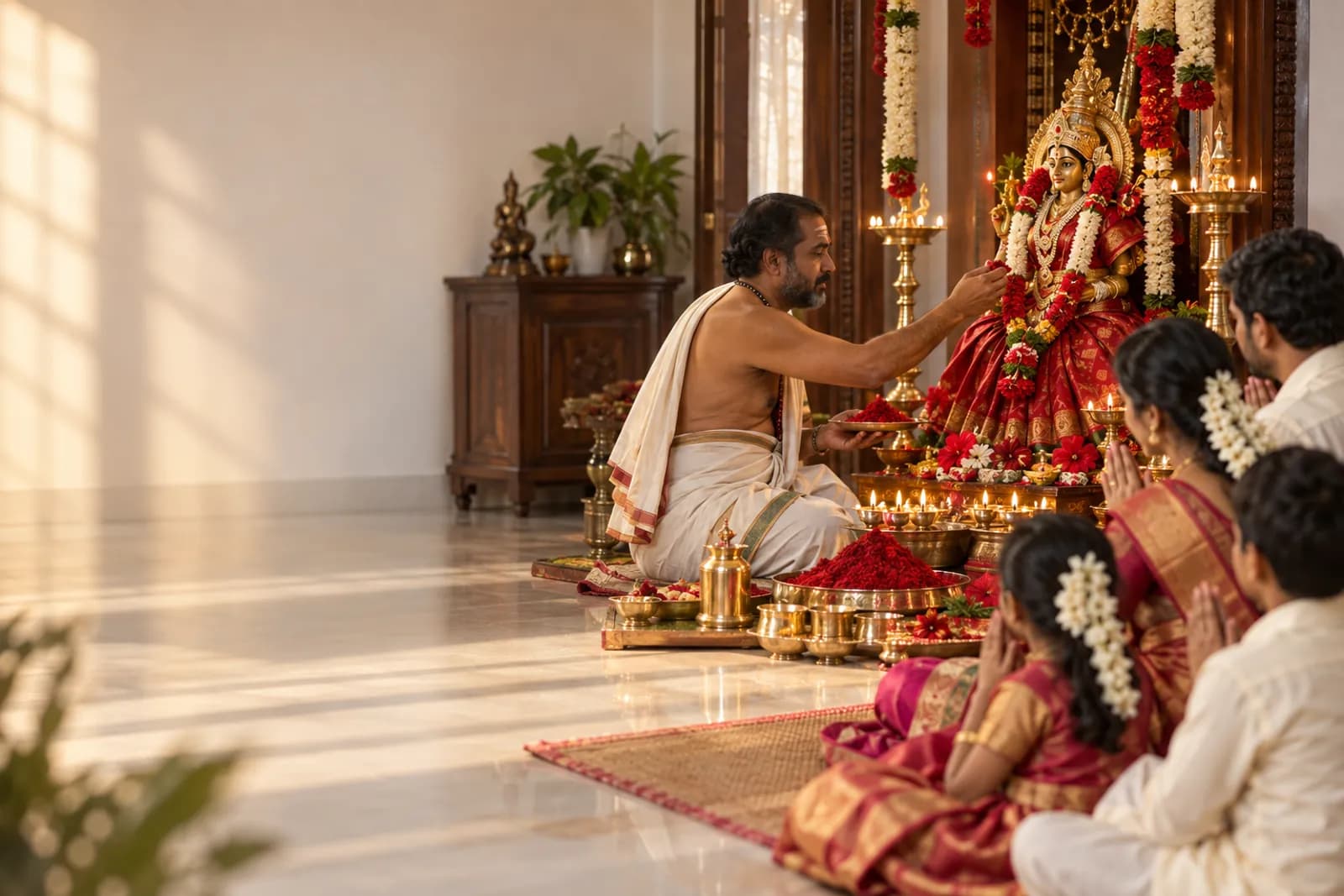
Kumkumarchana is a traditional form of Devi worship in which Kumkum is offered while the names of the Goddess are recited. It may be performed as part of worship of Lalita, Durga, Lakshmi or another Devi tradition, depending on the Sampradaya and the purpose of the ceremony.
At Anugraha Siddhi, families can arrange Kumkumarchana at home, at a temple, or through an online service, discussed with an experienced Pandit according to the preferred date, location, family tradition, language and ritual requirements.
What Is Kumkumarchana?
Kumkumarchana is a devotional form of Archana in which Kumkum is offered to the Goddess while her names, mantras or stotras are recited. The exact form can differ according to the deity being worshipped, the family tradition, the Sampradaya and the mantra or Namavali selected for the ceremony.
Kumkumarchana may accompany worship dedicated to:
The ritual is primarily a devotional practice. Its sequence, mantra count and offerings should be confirmed with the conducting Pandit before the ceremony.
Significance of Kumkumarchana
Kumkum has an important place in many Hindu worship traditions, particularly in Devi-related rituals.
During Kumkumarchana, devotees offer Kumkum while reciting the names or praises of the deity. The ceremony can provide a structured way for families to participate in Devi worship and prayer. Traditional interpretations may associate Devi worship with qualities such as:
- Devotion
- Spiritual discipline
- Reverence for Shakti
- Prayer for family well-being
- Seeking divine blessings
- Inner strength and spiritual focus
These are traditional religious beliefs and devotional interpretations, not guaranteed material, financial, medical or other outcomes.
Kumkumarchana Benefits
Devotees may choose Kumkumarchana as a form of devotional worship and prayer. Traditional devotional purposes can include:
Kumkumarchana provides a focused form of worship in which the devotee participates in the recitation of the Goddess's names and offerings.
The repetition of names, mantras or stotras can form part of a family's regular spiritual practice.
Families may arrange Kumkumarchana for a shared devotional gathering and collective prayer.
The ritual may be arranged on Fridays, during Navaratri, on Pournami or on other days considered appropriate within a family's tradition.
The ceremony allows devotees to express their prayers and devotion to the Goddess according to their chosen tradition.
When Is Kumkumarchana Performed?
Kumkumarchana can be performed on different occasions depending on family tradition and the deity being worshipped. Families commonly consider it for:
- Fridays
- Navaratri
- Pournami
- Devi-related festivals
- Family devotional gatherings
- Special prayer occasions
- Regular Devi worship
The suitable date, sequence and duration can vary according to Sampradaya, family custom and the Sankalpam being taken. Pournami and other observance days can be checked against the Tithi for your location before the date is fixed.
Kumkumarchana at Home
Kumkumarchana can be arranged at home when the selected form of the ritual is appropriate for a home setting. A home ceremony allows family members to participate in the worship within their own space.
Before the ceremony, it is useful to confirm:
| Detail | What to confirm |
|---|---|
| Date and location | Preferred date, and whether the ceremony is at home, at a temple or online |
| Deity | The form of Devi being worshipped |
| Family tradition | Sampradaya and any customs specific to your family |
| Mantra or Namavali | The recitation to be used, and the count |
| Samagri | Required materials and who arranges them |
| Participants | Number of family members taking part |
| Pandits | Number of Pandits required for the selected format |
| Duration | Expected duration of the ceremony |
| Additional rituals | Whether any further ritual is included |
Confirm the exact requirements before purchasing specialised Pooja materials.
Kumkumarchana Procedure
The procedure varies according to the deity, Sampradaya and selected ritual format. A typical ceremony may include:
Sankalpam
The ceremony begins with Sankalpam according to the devotee's intention and the selected ritual tradition.
Preliminary Worship
Preliminary prayers and worship, which may include Ganapathi Pooja, may be performed before the main Devi Archana.
Deity Avahanam
The chosen form of Devi is invoked according to the prescribed ritual procedure.
Kumkum Archana
Kumkum is offered while the Goddess's names, Namavali, mantra or stotra are recited.
Mantra or Stotra Recitation
The agreed mantra, Namavali or stotra is recited according to the selected form and count.
Naivedyam
Naivedyam and other prescribed offerings may be presented to the deity.
Aarti
The ceremony may conclude with Aarti and devotional prayers.
Prasadam
Prasadam is distributed or returned to the family according to the arrangement.
Kumkumarchana Samagri
The required Samagri depends on the specific form of Kumkumarchana. Common requirements may include:
- Kumkum
- Flowers
- Fruits
- Coconut
- Turmeric
- Akshata or rice
- Betel leaves
- Betel nuts
- Diya and oil or Ghee
- Incense
- Kalasha-related items
- Pooja vessels
- Naivedyam
- Other items prescribed for the selected ritual
There is no single universal Samagri list for every Kumkumarchana. Requirements can change according to the deity, mantra count, ritual form, venue and number of Pandits. Commonly used Archana materials are listed in the Pooja Store.
The Samagri list is shared once the ceremony details are confirmed. Do not purchase specialised items until the final list is established.
Kumkumarchana Mantra and Namavali
The mantra or Namavali used during Kumkumarchana depends on the deity and ritual tradition. The selected worship may involve:
- Devi Namavali
- Ashtottara Shatanamavali
- Lalita-related worship
- Durga-related worship
- Lakshmi-related worship
- Sri Chakra-related worship
- A prescribed stotra or mantra
Confirm the exact recitation with the conducting Pandit rather than assuming that the same mantra or Namavali applies to every Kumkumarchana.
Where the family's practice centres on repetition of a single Namavali, discuss the recitation and count with the conducting Pandit.
Laksha and Sri Chakra Kumkumarchana
Laksha Kumkumarchana
Laksha Kumkumarchana is a more extensive form of Kumkum-based Devi worship involving a large-scale offering and recitation.
Because the scale and procedure can vary, families considering it should confirm the ritual format, number of participants, number of Pandits, Kumkum requirement, mantra or Namavali, venue, duration and Samagri responsibility. It should not be treated as simply a longer version of every standard Kumkumarchana ceremony.
Sri Chakra Kumkumarchana
Sri Chakra Kumkumarchana is associated with Sri Vidya and Devi worship traditions involving the Sri Chakra. The exact procedure and eligibility requirements can differ according to the Sampradaya and the conducting practitioner.
For this reason, the ritual format should be confirmed with the Pandit before scheduling the ceremony.
Kumkumarchana for Lalita, Durga and Lakshmi
Kumkumarchana can be incorporated into different forms of Devi worship.
Kumkumarchana may be performed as part of worship dedicated to Goddess Lalita according to the family's tradition.
Devotees may arrange Kumkumarchana as part of Durga worship, particularly during Devi-related observances.
Families may also perform Kumkumarchana during Lakshmi worship and on other occasions associated with Goddess Lakshmi.
The appropriate mantra, Namavali and procedure depend on the specific form of worship.
Kumkumarchana Service with Anugraha Siddhi
Families looking for Kumkumarchana in Hyderabad can arrange the ceremony based on their preferred date, location and ritual requirements.
Anugraha Siddhi provides spiritual and Vedic ritual services in Hyderabad and helps families coordinate ceremonies based on the required service, location, language preference, family traditions and preparation requirements. Kumkumarchana can be arranged at a home, at a temple or online, subject to the agreed arrangement and availability. The service includes:
- Pandit verified for the ritual
- Samagri list shared in advance
- Home, temple or online arrangements
- Sankalpam details
- Prasadam arrangement
The final scope should be confirmed before booking, because the ritual format, date, duration, number of Pandits and Samagri responsibility can vary.
Can Kumkumarchana be performed online?
Kumkumarchana can be arranged online as well as at a home or temple, subject to the agreed arrangement. For an online ceremony, the family should confirm beforehand:
- How the Sankalpam details will be collected
- Which Samagri is required
- Whether the family needs to perform any part of the ritual
- How the ceremony will be streamed
- How Prasadam will be handled
Arranging the ceremony from outside Hyderabad, or for a family member elsewhere? Say so at the enquiry, so the format and Samagri responsibility are settled in advance.
Office address
Metro Pillar No: A689, Dr Atmaram Estates,3rd Floor, Nizampet X Roads,
beside Sri Bhramaramba Theatre, near Jntu Metro Station,
Hyderabad, Telangana 500072
Frequently Asked Questions
What is Kumkumarchana?
Kumkumarchana is a traditional Devi worship ceremony in which Kumkum is offered while the Goddess's names, mantras or stotras are recited.
What are the benefits of Kumkumarchana?
Traditionally, devotees perform Kumkumarchana as an expression of devotion, prayer and worship of Devi. Specific spiritual benefits are understood differently across traditions and are not guaranteed outcomes.
Can Kumkumarchana be performed at home?
Yes. Kumkumarchana can be arranged at home when the selected ritual format is suitable for a home ceremony.
When is Kumkumarchana performed?
Families may perform it on Fridays, during Navaratri, on Pournami and during other devotional occasions, depending on their family tradition and the selected Devi worship.
What is required for Kumkumarchana?
The required Samagri depends on the ritual format, deity, mantra count, venue and family tradition. The final list should be confirmed with the conducting Pandit.
What mantra is used for Kumkumarchana?
The mantra or Namavali depends on the deity and Sampradaya. It may involve a Devi Namavali, stotra or another prescribed recitation.
What is Laksha Kumkumarchana?
Laksha Kumkumarchana is an extended form of Kumkum-based Devi worship. The exact procedure, scale and requirements depend on the tradition being followed.
Can Kumkumarchana be performed for Lakshmi?
Yes. Kumkumarchana can accompany Lakshmi worship according to the family's devotional tradition.
Can Kumkumarchana be performed for Durga?
Yes. Kumkumarchana can be incorporated into Durga worship according to the selected ritual procedure.
How long does Kumkumarchana take?
The duration depends on the selected form of the ritual and mantra count. The expected duration is confirmed before the ceremony.
Can Kumkumarchana be arranged outside Hyderabad?
In-person service covers Hyderabad and the surrounding districts. Online arrangements can be discussed for families elsewhere, including families abroad.
Book Kumkumarchana in Hyderabad
If you are planning Kumkumarchana in Hyderabad, share your preferred date, location and ceremony requirements with Anugraha Siddhi. You can also contact Anugraha Siddhi to confirm the appropriate ritual format, Pandit availability, Samagri requirements and preparation details before the ceremony.