Astrology · Naming

Nakshatra-based Names

Nakshatra-based Names are derived from the syllable assigned to the pada of the birth nakshatra. Each nakshatra has four padas with a different syllable each, so the birth time matters here as much as the birth date.
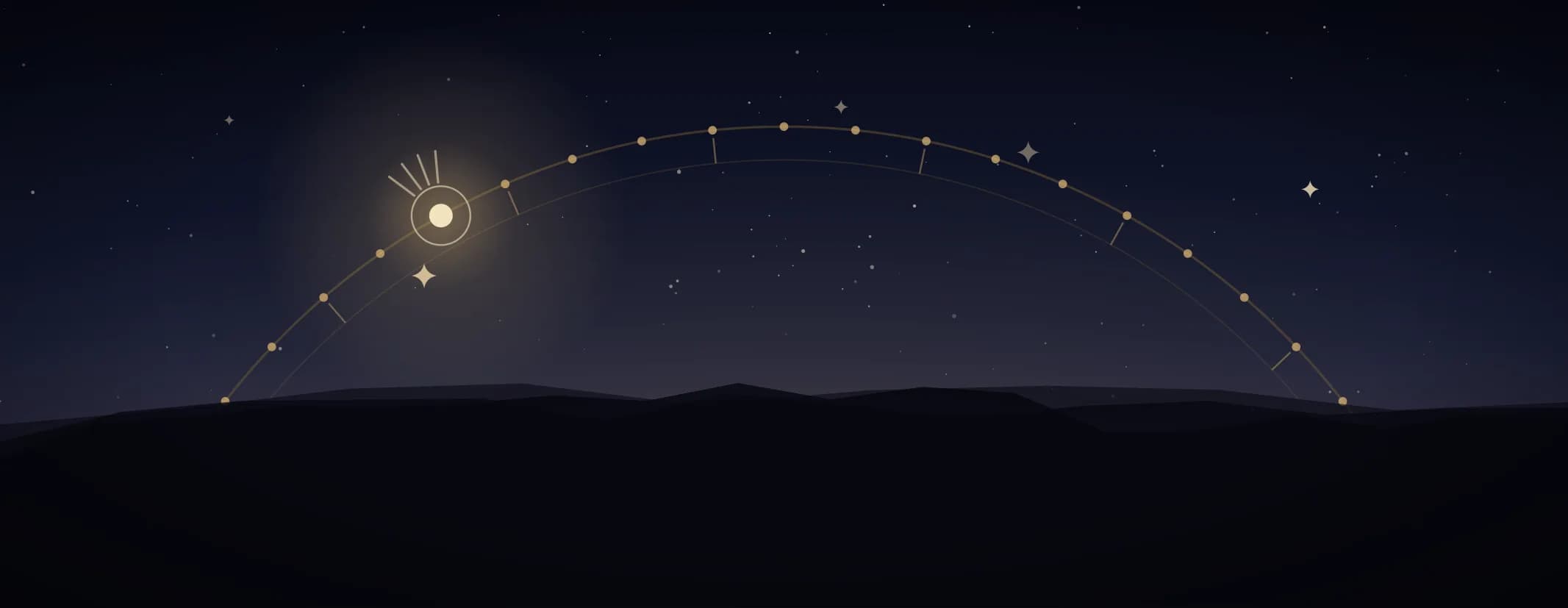
A ring of twenty-seven nakshatra points across an indigo sky, one opened into four padas, above a low dark horizon.

How it works

From your details to the answer

1

Share your birth details

Date, exact time of birth and place — the time to the minute is what makes the chart usable.

2

The chart is cast and read

Your Janma Kundali, divisional charts, running dasha and current gochara are read together.

3

You receive the analysis

A written answer to the question you asked, with the placements it rests on stated plainly.

4

Talk it through

A call with the astrologer to go over the reading and the remedies, if you want one.

Guide

When is Nakshatra-based Names useful?

It is asked for after a birth, or when a family wants to check that a name already chosen fits the child's nakshatra.

Astrologers differ on method — ayanamsa, dasha system and house division are all matters on which respected traditions disagree. A reading states which conventions it follows, and describes tendency and timing rather than settling a decision for you.

Scope

What the consultation covers

1

The Moon's exact position, which fixes both the nakshatra and the pada

2

The one syllable that pada carries, rather than the four the nakshatra carries

3

Names in current Telugu use that begin with it, not only classical ones

4

A check on a name you have already chosen, where that is what you want

In the chart

What the astrologer reads for Nakshatra-based Names

The Moon's degree
A nakshatra spans 13°20' and a pada 3°20'. Fixing the pada therefore needs the Moon's position to a degree, which needs the birth time — the date on its own is not sufficient.
The pada syllable
Each of the four padas carries its own sound. A list that offers all four is offering the nakshatra's family of syllables, not the child's letter.
Boundary cases
Where the Moon sits near the end of a pada or a nakshatra, a birth time rounded to the nearest hour can move the syllable entirely — which is worth knowing before a name is fixed.
Usability in daily life
A prescribed syllable can be satisfied by names that are hard to say or spell in the languages a child will actually grow up using. A shortlist is worth more than a syllable.
27nakshatras108padas, one syllable eachfour padas to a nakshatra
One nakshatra opened into its four padas. A nakshatra spans 13°20' and a pada 3°20' — which is why the birth time, not just the date, decides the syllable.

Sources

What is established, and what varies

The first list is what published practice describes consistently. The second is where schools, regions and sampradayams legitimately differ — and where the astrologer’s own tradition decides the answer rather than a general rule.

Consistently described

  • Each nakshatra spans 13°20' of the zodiac and divides into four padas of 3°20' each.
  • 27 nakshatras × 4 padas gives 108 padas, each with one assigned naming syllable.
  • The Moon moves through roughly one nakshatra a day, so the pada changes several times within a single day.

Varies by tradition

  • Which transliteration of a syllable is used, since Telugu, Sanskrit and English renderings of the same sound differ.
  • Whether the assigned syllable must begin the name or may appear within it, on which families differ.
  • The ayanamsa, which can move a Moon near a boundary into the neighbouring pada and change the syllable.

In plain terms

The vocabulary of naming by nakshatra

Nakshatra-based Names are derived from the syllable assigned to the pada — the quarter — of the birth nakshatra. Each nakshatra spans thirteen degrees and twenty minutes of the zodiac and divides into four padas of three degrees and twenty minutes each; twenty-seven nakshatras by four padas gives a hundred and eight, each with one syllable. The Moon moves through roughly one nakshatra a day, so the pada changes several times within a single day — which is why the birth time matters here as much as the birth date.

The Moon's degree
The exact longitude the Moon occupied at birth, to the minute of arc. Everything else on this page is computed from it, and it is what the birth time actually fixes.
The nakshatra
Which of the twenty-seven thirteen-and-a-third-degree divisions that longitude falls in. The date usually settles it; a birth near a boundary needs the time.
The pada
Which of the four quarters within the nakshatra. The Moon crosses a pada in roughly six hours, so a birth time uncertain by more than that can leave the pada open — and with it the syllable.
The syllable
One of a hundred and eight, from the classical list. The tradition assigns four to each nakshatra, in order of pada, and a reading names the one for the pada the Moon was in.
Boundary cases
A birth within minutes of a pada boundary — or, more rarely, a nakshatra boundary. The reading should say when the Moon crossed, how close the birth was to it, and which syllable applies on each side.
Usability
Some syllables have few names behind them in a given language. Tradition allows the nearest usable sound, and it allows the rashi list as an alternative; a reading that permits neither is stricter than the texts.
A low moon over still water with open lotus flowers resting on their pads in the foreground, under a deep indigo sky, the subject set well to the left of the frame, drawn for this page's elements band.

Related consultations

Around the nakshatra syllable

Naming by nakshatra is the narrower of the two methods and depends most on the birth time. The readings around it are the broader method, the chart the time was fixed in, and the ceremonies that follow.

The broader method

Naming by rashi needs only the moon sign, which the date usually fixes. The fallback when the pada cannot be settled, and the custom in some families regardless.

Rashi-based Names

Naming in general

The overview — both methods, the namakaranam, and what to do with a name the family already has.

Baby Name Selection

The chart the Moon is read from

The pada is a fact about the Moon's degree, which is a fact about the birth time. If the time is uncertain, the chart needs casting and, where necessary, rectifying before the syllable means anything.

Birth Chart / Janma Kundali

The naming day

The namakaranam muhurtham, cast forward from the panchangam. Usually asked for once the syllable is known.

Naming Ceremony Muhurtham

The same nakshatra, for the dasha

The birth nakshatra that gives the syllable also gives the first dasha lord. The two readings share one fact and answer entirely different questions from it.

Dasha Analysis

The nakshatra, on the hub

The twenty-seven nakshatras drawn as a wheel, with one opened into its padas, on the astrology hub — a picture of the thing this page computes.

Astrology

How fine the timing has to be

What each level of the reading needs from the birth time

 What fixes itRoughly how long the Moon takes to cross one
The rashiThe date, nearly always. The Moon spends about two and a quarter days in a sign.Two and a quarter days.
The nakshatraThe date, usually. A birth near a boundary needs the time to the hour.About a day.
The padaThe time, to within a few hours.About six hours.
The Moon's exact degreeThe time, to the minute.About two minutes of arc per hour.
The lagnaThe time, to the minute — and the place.Not a Moon matter: the lagna changes sign roughly every two hours regardless.

The reason this page and the rashi page exist separately. The syllable sits at the pada level, which is finer than the date fixes and coarser than the lagna needs — so a birth time good to within a few hours is usually enough, and a guessed one is not.
A tall brass oil lamp burning with a single flame on a floor marked with a looped kolam, under a deep indigo sky, the subject set well to the left of the frame, drawn for this page's topics band.

Come prepared

Questions worth asking about the nakshatra syllable

This reading rests on one number — the Moon's degree — and the questions worth asking are the ones that test how well that number is known.

  1. Which nakshatra and which pada was the Moon in, and what was its exact degree?
  2. How close was the birth to a pada boundary, and what is the syllable on the other side of it?
  3. How reliable does our birth time need to be for this pada, and is it that reliable?
  4. Which ayanamsa did you use, and would another move the Moon across a boundary here?
  5. If the pada cannot be fixed, does your tradition fall back to the rashi syllable or to the nearest pada?
  6. Why do the twenty-seven nakshatras give a hundred and eight syllables rather than twenty-seven?
  7. If the syllable is unusable in our language, what is the nearest sound the tradition allows?
  8. Does the family's custom prefer this method over the rashi one, and does that change anything here?

Suitability

Who this reading is for

  • The family names by nakshatra as a matter of custom and wants the pada syllable fixed properly.
  • The birth time is known to the minute and you want the finer method used, not the broader one.
  • The birth was near a boundary and you want to know which side of it the pada falls.
  • An online calculator gave one syllable and an astrologer another, and you want to know which ayanamsa or boundary caused it.
  • The birth time is approximate and you want to know whether the pada can still be fixed or whether the rashi method should be used instead.
  • You want to understand why the birth time matters here when it did not for the rashi.
  • You want the syllable with the Moon's degree and the boundary shown, so you can check it.

The syllable is only as certain as the Moon's degree, and the Moon's degree is only as certain as the birth time. Where the time is approximate, an honest reading says the pada is open rather than picking one, and offers the rashi method instead. The syllable is customary, not compulsory: a name that begins with the nearest usable sound, or one the family already loves, is within the tradition. A name carries no fate.

Before you book

What to have ready

  • Date of birth, time of birth as precisely as you know it, and place of birth.
  • Say so if the birth time is uncertain — it can be narrowed by rectification rather than guessed.
  • The specific question you want answered, which focuses the reading far more than a general request.
  • For a property or premises, the floor plan and the direction the main entrance faces.

Do not act on a reading alone where a decision also needs professional advice — medical, legal or financial. A consultation is one input, and it is offered as one.

Written and reviewed by the AnugrahaSidhi editorial team. Last substantive review: . How we source and correct this material is set out in our editorial policy.

Common questions

Before you book

How is this different from Baby Name Selection?

It is the same underlying method, asked more narrowly. Baby Name Selection is the general consultation, usually taken alongside the naming ceremony timing; this is the nakshatra-pada derivation specifically, which is what families ask for when they want the syllable checked rather than a shortlist built.

Our birth time is approximate. Does the syllable still hold?

It depends where the Moon fell. Well inside a pada, an approximate time changes nothing. Near a boundary, an hour either way can move the syllable — and a reading should tell you which of the two situations you are in rather than just giving a letter.

Do the 27 nakshatras have 27 letters or 108?

108. The figure of 27 comes from lists that give one syllable per nakshatra for convenience. The tradition assigns one per pada, and there are four padas to a nakshatra.

Which languages is the reading available in?

Telugu, Hindi and English. Ask for the one you want when you book.

Related

Others in Naming

All Astrology

Ask about Nakshatra-based Names

Send your birth details and the question you want answered. You get the reading in writing, with the placements it rests on named, and a call to talk it through.