Shiva Abhishekam · Hyderabad
Maha Rudrabhishekam in Hyderabad – Book Purohits for Maha Rudram
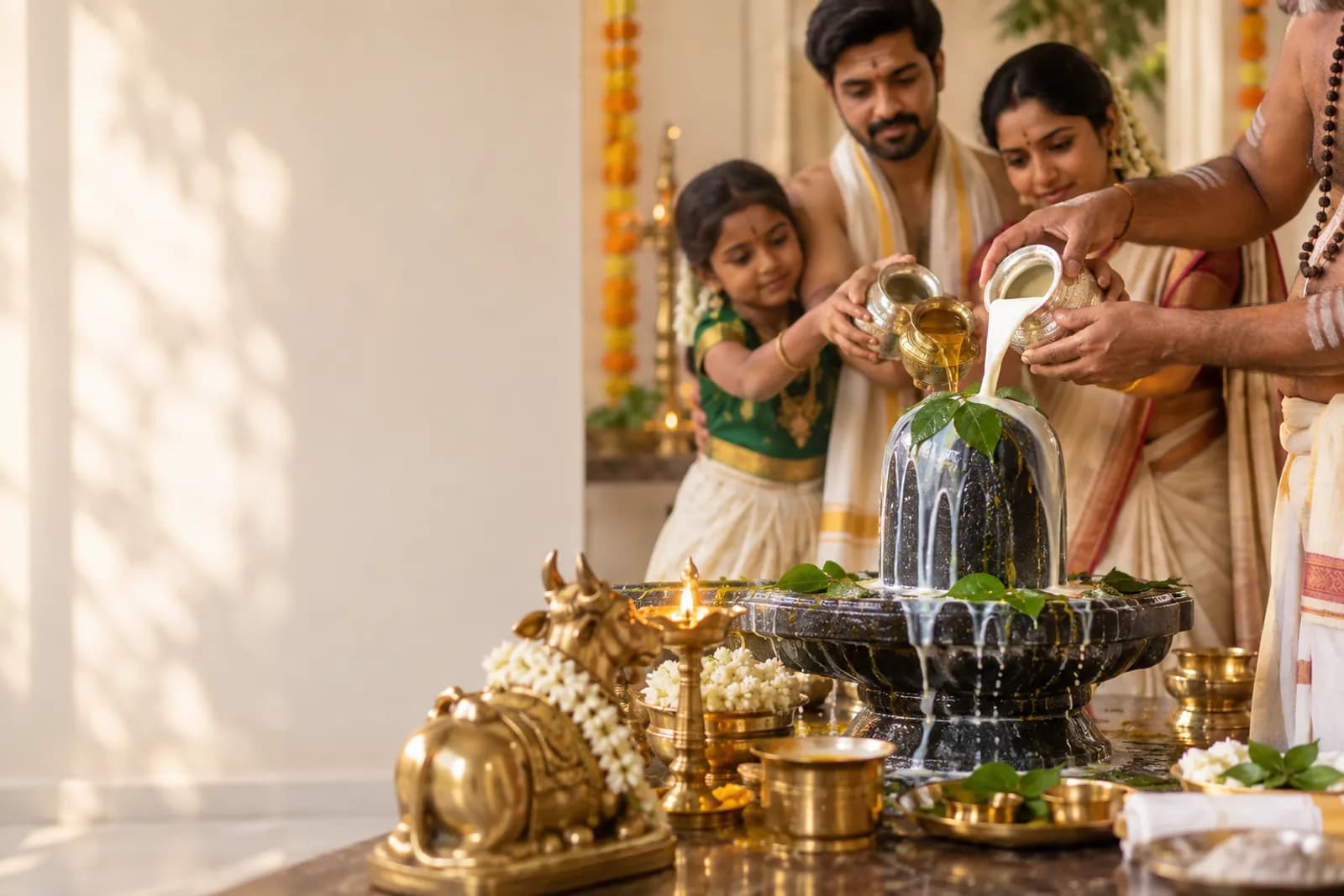
Maha Rudrabhishekam is the large-scale form of Rudra worship: Sri Rudram recited in the Maha Rudram arrangement by a team of Purohits while the Shiva Lingam receives abhishekam, usually concluding with a Rudra Homam. It is the ceremony families, groups and temples choose when a single Rudrabhishekam is felt to be too small for the occasion.
Anugraha Siddhi arranges Maha Rudrabhishekam in Hyderabad with a team of experienced Purohits. Because the scale of a Maha Rudram is what defines it, the number of ritviks, the recitation count, the homam, the venue and the samagri are all discussed and written down before the date is confirmed.
Planning a Maha Rudram for Maha Shivaratri, Karthika masam or a family sankalpam? Call or WhatsApp +91 90320 22323 — a team of Purohits needs to be booked earlier than a single Purohit.
Quick Overview of Maha Rudrabhishekam
| Detail | Information |
|---|---|
| Deity | Lord Shiva in his Rudra aspect |
| Recitation | Sri Rudram (Namakam and Chamakam) in the Maha Rudram count — commonly 121 |
| Purohits | A team, most commonly eleven ritviks led by a chief Purohit |
| Main Ritual | Abhishekam of the Shiva Lingam during the recitation, usually with Rudra Homam |
| Duration | Most of a day; sometimes two days when the homam is included |
| Common Occasions | Maha Shivaratri, Karthika masam, Shravana masam, community and family sankalpams |
| Venue | Temple, function hall or a home with enough space for the team |
| Service Area | Hyderabad and Telangana, with other arrangements on request |
| Languages | Telugu, Hindi, English |
What Is Maha Rudrabhishekam?
Sri Rudram is the Vedic hymn to Rudra from the Taittiriya Samhita of the Krishna Yajurveda, recited as Namakam and Chamakam. The forms of Rudra worship are named by how many times it is recited: a single recitation with abhishekam is Rudrabhishekam, eleven recitations make an Ekadasha Rudram, and eleven Ekadasha Rudrams — 121 recitations — make a Maha Rudram.
Maha Rudrabhishekam is that 121-fold recitation performed with abhishekam. In the most common arrangement eleven ritviks each recite an Ekadasha Rudram, so the count is completed in one sitting while the chief Purohit conducts the abhishekam on the Shiva Lingam with the prescribed dravyas. Above it stands Ati Rudram — eleven Maha Rudrams, 1,331 recitations — performed over several days by a larger team.
The names and the counts are used loosely in practice. Some traditions count recitations of Namakam only, others count Namakam-and-Chamakam pairs, and a few use "Maha Rudram" for any large Rudra observance. Before booking, ask for the recitation count and the number of Purohits in plain numbers rather than relying on the name.
Maha Rudrabhishekam is a devotional observance. It should not be presented as a medical treatment or as a guaranteed remedy for a specific problem or planetary condition. Its significance is religious and spiritual.
Rudram, Ekadasha Rudram, Maha Rudram and Ati Rudram
The scale is what you are booking. The table shows how the forms are commonly described so that a quotation can be read against it.
| Form | Recitations commonly described | Typical team | Typical duration |
|---|---|---|---|
| Rudrabhishekam | 1 (Eka Rudram) | 1 Purohit | 1½ – 2½ hours |
| Ekadasha Rudrabhishekam | 11 (Laghu Rudram / Rudra Ekadashini) | 1 – 11 Purohits | Half a day |
| Maha Rudrabhishekam | 121 (11 × 11) | 11 Purohits | A full day, or two with homam |
| Ati Rudram | 1,331 (11 × 121) | A larger team, often 11 – 121 | Several days |
Important: counts and names differ between traditions. Fix the scope in words — how many recitations, how many Purohits, how long — instead of choosing a service by its name.
Why Do Devotees Arrange Maha Rudrabhishekam?
Maha Rudram is chosen when the occasion or the sankalpam calls for the fuller form of Rudra worship rather than the household Rudrabhishekam.
- To observe Maha Shivaratri or Karthika masam with a major Shiva worship.
- To fulfil a family's long-held sankalpam or a vow made at a temple.
- For a community, apartment or trust observance in which many families take part.
- To mark a milestone — a sixtieth or eightieth birthday, or an anniversary — with a large ritual.
- As part of a temple's annual calendar, a pratishta or a renovation observance.
- When an astrologer has suggested a substantial Rudra observance and the family wishes to follow it.
If a ritual has been suggested to you for an astrological reason, ask a qualified astrologer or Purohit to explain which form is appropriate; Maha Rudram is not a substitute for every other remedy.
What Happens During Maha Rudrabhishekam?
The sequence follows the conducting Purohit's sampradayam. A common outline for a single-day Maha Rudram with homam looks like this.
Preparation and Sthapana
The venue is arranged with the Lingam, seating for the ritviks, the kalashas and, where a homam is included, the homa kunda. Water, dravyas and lamps are set out in the quantities the count requires.
Sankalpam and Preliminary Worship
The chief Purohit takes the sankalpam in the family's or the group's name, followed by Ganapathi Pooja, Punyahavachanam and Kalasha sthapana.
Rudra Nyasa and Invocation
Rudra is invoked in the Lingam and the kalashas, and the ritviks take up their places for the recitation.
Maha Rudram Recitation
The ritviks recite Sri Rudram in unison or in the pattern their tradition uses, each completing an Ekadasha Rudram so that the Maha Rudram count is reached. The recitation takes the greater part of the day.
Abhishekam
During the recitation the Lingam is bathed with water and the agreed dravyas — panchamrutham, tender coconut water, sugarcane juice, sandal paste and vibhuti are usual — with kalasha water poured at the conclusion.
Rudra Homam
Where included, oblations are offered into the fire with the Rudram, followed by Purnahuti. The homam is a separate scope and is confirmed at booking.
Alankaram, Archana and Aarti
The Lingam is decorated, bilva archana is performed, and the ceremony concludes with Mangala aarti and the distribution of prasadam.
Samagri and Venue for Maha Rudrabhishekam
The materials are those of a Rudrabhishekam multiplied for the scale, plus the homam samagri where a Rudra Homam is included. The list below is a planning guide; the conducting Purohit issues the final list.
Milk, curd, ghee, honey and sugar for panchamrutham; tender coconut water, sugarcane juice, fruit juices, sandal paste, vibhuti, turmeric where the tradition permits, and a large quantity of clean water.
Kalashas with mango leaves and coconuts, abhishekam vessels, panchapatra and uddharani for each ritvik, plates and a large receptacle for the abhishekam water.
Bilva leaves in quantity, flowers, garlands, vastram, camphor, incense and lamps with oil or ghee.
Where a Rudra Homam is included: homa kunda or bricks, samidha, ghee, havan dravyas and the items the Purohit prescribes for Purnahuti.
Space for eleven or more seated ritviks, the Lingam and the kunda; water supply and drainage; seating for the family; ventilation for the homam.
Naivedyam, prasadam for those attending, and meals and dakshina for the ritviks, which are usually the family's or the organiser's responsibility.
Practical Tip
Ask the Purohit for the list with quantities before buying anything, and confirm who arranges the Lingam, the kalashas and the homam materials. The Rudrabhishekam kit covers one sitting; a Maha Rudram needs multiples of it.
When Is Maha Rudrabhishekam Performed?
The occasions are those of Shiva worship generally, with a preference for the days a community can gather.
The most common occasion for a Maha Rudram, often performed through the night across the four yamas. Purohit teams are booked well in advance for this date.
The two months most associated with Shiva worship in Telugu practice; Karthika Somavaram and Karthika Pournami are frequently chosen.
The Trayodashi evening and the monthly Krishna Chaturdashi are chosen for a Maha Rudram when the family's sankalpam does not wait for the annual festival.
A milestone birthday, a temple anniversary, a new premises or a collective sankalpam. The date is fixed against the tithi with the Purohit's guidance.
Purohit teams are limited around Maha Shivaratri and Karthika masam. Enquire early for those dates.
How Much Does Maha Rudrabhishekam Cost in Hyderabad?
A Maha Rudram is priced by its scope, so two quotations with the same name can describe very different ceremonies. The amount depends on:
- The number of ritviks and the recitation count.
- Whether a Rudra Homam is included, and its scale.
- The venue — home, hall or temple — and travel.
- Who supplies the samagri, the kalashas and the homam materials.
- The duration, and whether it runs over more than one day.
- Meals and dakshina for the ritviks.
- A festival date, when teams are in demand.
Before Paying, Confirm These Six Things
- How many Sri Rudram recitations, counted how?
- How many Purohits, and who leads?
- Is Rudra Homam included, and what does it add?
- What is the schedule — start, sessions, conclusion?
- Who arranges the samagri, the Lingam and the venue?
- What does the total amount include and exclude?
How to Book Maha Rudrabhishekam in Hyderabad with Anugraha Siddhi
Contact Anugraha Siddhi
Call or WhatsApp +91 90320 22323 and say you are planning a Maha Rudram.
Share the Occasion and Scale
Tell us the occasion, the preferred date, the venue and whether you want the Maha Rudram with or without a homam, and whether it is a family or a community observance.
Receive the Written Scope
We confirm the number of ritviks, the recitation count, the schedule, the samagri responsibility and the amount in writing.
Confirm the Date and Team
Once the scope is agreed, the Purohit team is booked for the date and the samagri list with quantities is shared.
Prepare the Venue
Arrange the space, water, seating and materials as listed, so that the recitation can begin at the agreed time.
Why Choose Anugraha Siddhi for Maha Rudrabhishekam?
A Maha Rudram needs a coordinated team of ritviks who recite together. We arrange the team under a chief Purohit rather than assembling individuals on the day.
Recitation count, number of Purohits, homam, schedule and samagri responsibility are written down before the date is fixed.
Anugraha Siddhi has more than 5 years of experience arranging poojas, homams and abhishekams in Hyderabad.
How we verify Purohits — Veda, sampradayam and recitation experience are checked before a Purohit is proposed.
We advise on what a home, hall or temple needs for the team, the abhishekam and the homam before you commit to a venue.
Teams are arranged across Hyderabad and Telangana, and for other locations depending on availability.
Frequently Asked Questions About Maha Rudrabhishekam
What is Maha Rudrabhishekam?
Maha Rudrabhishekam is a large-scale form of Shiva worship in which Sri Rudram is recited in the Maha Rudram arrangement — commonly described as eleven Ekadasha Rudrams, or 121 recitations of Namakam — by a team of Purohits, with abhishekam of the Shiva Lingam performed alongside the recitation.
How many Purohits are needed for Maha Rudrabhishekam?
Eleven ritviks is the arrangement most commonly described, each reciting an Ekadasha Rudram so that the recitations total 121. Some traditions complete the count with a smaller team over more sessions. Confirm the number of Purohits and the recitation pattern before booking.
How long does Maha Rudrabhishekam take?
A single-day Maha Rudram commonly runs for most of a day, and some traditions spread it over more than one day when a Rudra Homam is included. The duration depends on the number of ritviks and the format agreed, so ask for the expected schedule when booking.
What is the difference between Maha Rudram and Ati Rudram?
Maha Rudram is commonly described as 121 recitations of Sri Rudram, and Ati Rudram as eleven Maha Rudrams, or 1,331 recitations, usually performed over several days with a larger team. The counts and the names differ between traditions, so the scope should be fixed in words rather than by name.
Can Maha Rudrabhishekam be performed at home?
It can be arranged at a home when there is space for the ritviks, the Lingam and, where included, the homa kunda, along with sufficient water and a place for the family to sit. Many families choose a temple or a hall for the fuller form. Discuss the venue during the enquiry.
Does Maha Rudrabhishekam include Rudra Homam?
Many arrangements conclude with a Rudra Homam, in which oblations are offered with the Rudram recitation, but it is not automatic. Confirm whether the homam is part of the format you are booking, because it changes the samagri, the duration and the venue requirements.
When is Maha Rudrabhishekam usually performed?
Maha Shivaratri, Karthika masam, Shravana masam, Pradosham and a family's major sankalpam are the occasions most often chosen. Community and temple observances are also common. The date and time should be fixed against the tithi with the Purohit rather than from a general calendar.
What does Maha Rudrabhishekam cost in Hyderabad?
There is no single price. The number of ritviks, the recitation count, whether a homam is included, the venue, the samagri and the duration all change the amount. Ask for a written scope that names each of these before you compare quotations.
What should the family arrange for Maha Rudrabhishekam?
Typically the Lingam or the temple booking, the venue and seating, abhishekam dravyas in the quantities the count requires, and the homam samagri if a Rudra Homam is included. Who arranges what is agreed during booking; do not assume materials are part of the quoted amount.
How can I book Maha Rudrabhishekam in Hyderabad?
Call or WhatsApp Anugraha Siddhi on +91 90320 22323. Share the occasion, preferred date, venue and the scale you have in mind, and the team will confirm the ritviks, the format, the samagri and the amount, or use the enquiry form.
Arrange Maha Rudrabhishekam in Hyderabad
Whether it is a Maha Shivaratri observance, a Karthika masam sankalpam or a community Maha Rudram, share the occasion and the scale you have in mind. Anugraha Siddhi will confirm the Purohit team, the format, the samagri and the schedule.
Contact Anugraha Siddhi
Office address
Metro Pillar No: A689, Dr Atmaram Estates,3rd Floor, Nizampet X Roads,
beside Sri Bhramaramba Theatre, near Jntu Metro Station,
Hyderabad, Telangana – 500072