
Japam Service · Hyderabad
Dhanvantari Mantra Japam in Hyderabad
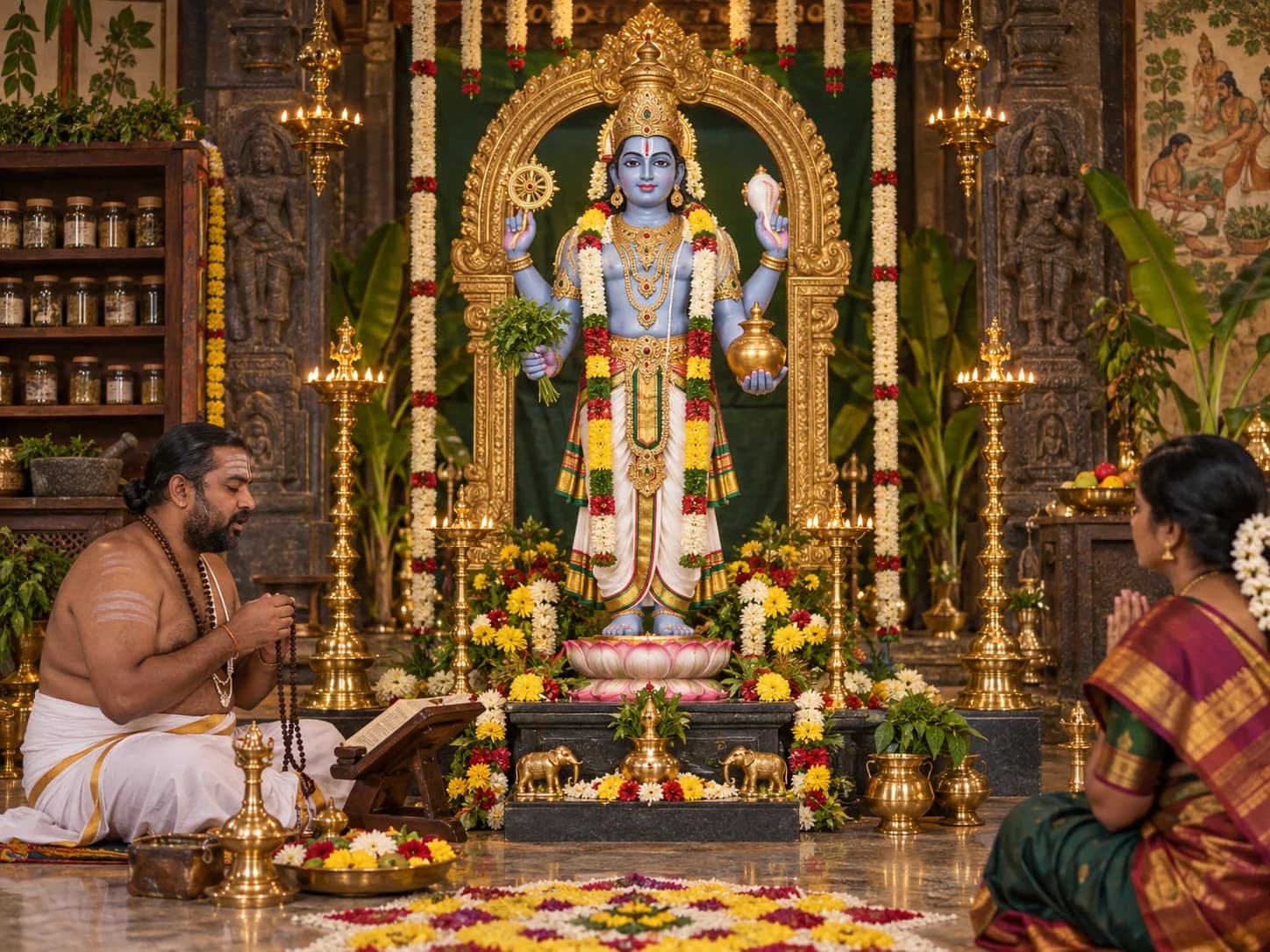
Dhanvantari Mantra Japam is a traditional devotional practice dedicated to Lord Dhanvantari, who is revered in Hindu traditions as the divine physician and is closely associated with Ayurveda.
At Anugraha Siddhi, Dhanvantari Mantra Japam can be arranged in Hyderabad with experienced Purohits and traditional ritual guidance. The mantra, japa count and procedure can be followed according to the selected sankalpam and applicable tradition.
Quick Overview
| Detail | Information |
|---|---|
| Service | Dhanvantari Mantra Japam |
| Deity | Lord Dhanvantari |
| Association | Ayurveda, health and traditional healing |
| Common mantra | Om Namo Bhagavate Dhanvantaraye |
| Extended mantra | Dhanvantari Maha Mantra |
| Common japa practice | 108 repetitions |
| Traditional occasion | Dhanteras / Dhanvantari Jayanti |
| Service location | Hyderabad and beyond based on requirement |
| Purohit guidance | Experienced Purohits |
| Experience | 5+ years of Pooja and Vedic ritual service experience |
| Languages | Telugu and English |
Dhanvantari Mantra Japam Service in Hyderabad
Dhanvantari Mantra Japam involves the repeated chanting of mantras dedicated to Lord Dhanvantari.
Lord Dhanvantari is traditionally associated with Ayurveda and healing, and is regarded in Hindu traditions as a form of Lord Vishnu. Traditional accounts describe Dhanvantari as appearing with the pot of Amrita during the churning of the cosmic ocean.
At Anugraha Siddhi, the service can be arranged based on:
- Preferred date and time
- Location
- Sankalpam
- Required japa count
- Selected mantra
- Pooja requirements
- Samagri arrangements
What Is Dhanvantari Mantra Japam?
Dhanvantari Mantra Japam is the repeated chanting of a mantra dedicated to Lord Dhanvantari.
A commonly used short mantra is Om Namo Bhagavate Dhanvantaraye. It is traditionally understood as a respectful invocation of Lord Dhanvantari.
The exact procedure can vary according to the tradition and sankalpam. Our editorial policy explains how traditional practices are described on this site.
Dhanvantari Mantra
Short Dhanvantari Mantra
ॐ नमो भगवते धन्वन्तरये
Om Namo Bhagavate Dhanvantaraye
Simple meaning: Salutations to Lord Dhanvantari.
Dhanvantari Maha Mantra
A longer traditional form is:
ॐ नमो भगवते वासुदेवाय धन्वन्तरये अमृतकलशहस्ताय सर्वामयविनाशनाय त्रैलोक्यनाथाय श्रीमहाविष्णवे नमः॥
Om Namo Bhagavate Vasudevaya Dhanvantaraye Amrita Kalasha Hastaya Sarvamaya Vinashanaya Trailokya Nathaya Shri Maha Vishnave Namah
The wording of longer Dhanvantari mantras can vary across textual and ritual traditions. Confirm the form with the performing Purohit before a formal japa.
Why Is Dhanvantari Mantra Japam Performed?
Dhanvantari worship is traditionally associated with prayer for:
- Health and wellbeing
- Strength and vitality
- Long life
- Protection and spiritual support
- Recovery-related prayers
- Respect for Ayurveda and traditional healing knowledge
- Peace and positive devotional focus
These are traditional spiritual purposes and are not guaranteed medical outcomes.
Dhanvantari Mantra Japam is not a replacement for medical diagnosis, treatment or professional healthcare.
When Is Dhanvantari Mantra Japam Performed?
Dhanteras
Dhanvantari is traditionally worshipped during Dhanteras, which is associated with the appearance of Dhanvantari and the Amrita Kalasha.
Dhanvantari Jayanti
Devotees may perform special prayers and mantra japa on Dhanvantari-related observances, according to their regional calendar and tradition.
Regular devotional practice
Dhanvantari mantra can also be included in regular devotional practice.
The appropriate date, timing and japa count for an organised service can be confirmed with the Purohit.
How Is Dhanvantari Mantra Japam Performed?
The exact procedure can vary according to the tradition and sankalpam.
Preparation
Clean and prepare the worship area, arrange the required pooja materials, place the image or representation of Lord Dhanvantari, and prepare the required samagri.
Sankalpam
The Purohit performs the sankalpam according to the devotee’s details and purpose of the japa.
Preliminary Prayers
Traditional preliminary prayers may be performed before starting the main mantra japa, which in many traditions begins with Ganapathi Pooja.
Dhanvantari Mantra Japa
The selected Dhanvantari mantra is chanted repeatedly. 108 repetitions are commonly used for mantra japa in many devotional practices. The exact count for an organised japa can vary according to the selected tradition and sankalpam.
Concluding Rituals
The japa is completed with the applicable prayers and offerings.
Final Prayer
The service concludes with prayers to Lord Dhanvantari according to the selected ritual procedure.
Importance of Dhanvantari Mantra Japam
Dhanvantari holds an important place in Hindu traditions associated with Ayurveda and healing. The importance of Dhanvantari worship is traditionally connected with:
- Reverence for Ayurveda
- Prayer for health and wellbeing
- Devotion to Lord Dhanvantari
- Spiritual discipline through mantra japa
- Seeking divine guidance during health-related concerns
- Respect for traditional healing knowledge
Traditional Hindu sources and devotional practices associate Dhanvantari with Lord Vishnu and the healing tradition of Ayurveda.
Benefits of Dhanvantari Mantra Japam
According to traditional devotional practice, Dhanvantari Mantra Japam may be undertaken for:
- Health-focused prayer — offering prayers for wellbeing
- Positive mindset — supporting a calm devotional practice
- Spiritual discipline — maintaining regular mantra chanting
- Inner strength — seeking spiritual support during challenging periods
- Devotion — strengthening connection with Lord Dhanvantari
- Wellbeing and longevity prayers — traditionally associated with Dhanvantari worship
These benefits are based on religious and spiritual traditions and are not guaranteed medical outcomes.
Dhanvantari Mantra Japam and Dhanvantari Pooja
These are related but different forms of worship.
| Dhanvantari Mantra Japam | Dhanvantari Pooja |
|---|---|
| Focuses mainly on repeated mantra chanting | Includes a broader worship procedure |
| Japa count may be specified | Includes offerings and pooja steps |
| Can be performed as a dedicated japa | May include mantra chanting as part of the pooja |
| Procedure depends on the selected japa | Procedure depends on the selected pooja tradition |
Additional pooja or rituals should not be assumed to be included unless confirmed during booking.
Where a fire ritual is wanted rather than mantra japa, that is arranged separately as a Dhanvantari Homam.
Dhanvantari Mantra Japam Samagri
The required materials can vary depending on the selected service. Common requirements may include:
- Dhanvantari idol or image
- Flowers
- Akshata
- Kalasham materials
- Water
- Incense
- Camphor
- Oil or ghee lamp
- Fruits
- Naivedyam
- Japa mala
- Other pooja materials as required
Lamp oil, ghee, wicks and camphor are grouped in the deepam section of the Pooja Store, which is the quickest way to check that list against what you already have.
Samagri arrangements
Depending on the selected package, Anugraha Siddhi may arrange the required materials, or the customer may arrange them.
Please confirm the exact samagri list before booking. Everything else is in the general Pooja Samagri Store.
Dhanvantari Mantra Japam Booking Checklist
| Requirement | Details |
|---|---|
| Preferred date | Share the required date |
| Preferred time | Confirm suitable timing |
| Location | Home or other suitable location |
| Sankalpam | Mention the purpose of the prayer |
| Mantra | Confirm the selected mantra |
| Japa count | Confirm the required count |
| Samagri | Confirm who will arrange the materials |
| Purohit | Experienced Purohit arrangement |
| Language | Telugu and English |
Dhanvantari Mantra Japam Cost in Hyderabad
The cost can vary depending on:
- Mantra and japa count
- Ritual requirements
- Number of Purohits
- Samagri arrangements
- Location
- Additional pooja requirements
No fixed package price is displayed here because the requirements can vary. Contact Anugraha Siddhi for current package details.
Why Choose Anugraha Siddhi for Dhanvantari Mantra Japam?
Anugraha Siddhi has 5+ years of experience in Pooja and Vedic ritual services. Dhanvantari Mantra Japam can be arranged with:
- Experienced Purohits
- Traditional ritual guidance
- Personalised sankalpam guidance
- Telugu and English communication
- Hyderabad service coverage
- Services beyond Hyderabad based on requirement
- Flexible samagri arrangements depending on the package
The exact ritual procedure and inclusions are confirmed before the service. Other mantra practices are listed under Japams.
Frequently Asked Questions
What is Dhanvantari Mantra Japam?
Dhanvantari Mantra Japam is the repeated chanting of a mantra dedicated to Lord Dhanvantari as a traditional devotional practice.
Who is Lord Dhanvantari?
Lord Dhanvantari is traditionally revered as the divine physician and is closely associated with Ayurveda. Hindu traditions identify him with Lord Vishnu.
What is the Dhanvantari Mantra?
A commonly used short mantra is Om Namo Bhagavate Dhanvantaraye. A longer traditional form is the Dhanvantari Maha Mantra.
How many times should the Dhanvantari Mantra be chanted?
108 repetitions are commonly used for mantra japa. The appropriate count for a specific sankalpam can vary according to the tradition.
When is Dhanvantari Mantra Japam performed?
It may be performed as a regular devotional practice, or during Dhanteras and other Dhanvantari-related observances.
Can Dhanvantari Mantra Japam be performed at home?
Yes. It can be arranged at home depending on the selected service and ritual requirements.
Can a Purohit perform Dhanvantari Mantra Japam?
Yes. A Purohit can conduct the japa according to the agreed mantra, count and sankalpam.
Is Dhanvantari Mantra Japam a substitute for medical treatment?
No. It is a traditional spiritual practice and should not replace medical diagnosis, treatment or professional healthcare.
What samagri is required?
The samagri depends on the selected ritual. Flowers, lamp materials, fruits, pooja materials and a japa mala may be required.
Can Anugraha Siddhi arrange the samagri?
Depending on the selected package, Anugraha Siddhi may arrange the required samagri, or the customer may arrange it.
Can Dhanvantari Pooja be performed along with the mantra japa?
It may be possible depending on the selected service. Additional rituals should be confirmed during booking.
Can Dhanvantari Mantra Japam be arranged in Telugu?
Yes. Telugu and English guidance can be provided, subject to service and Purohit availability.
Does Dhanvantari Mantra Japam guarantee recovery from illness?
No. Dhanvantari Mantra Japam does not guarantee recovery from illness, and no specific health outcome can be guaranteed. The practice is a traditional spiritual prayer.
Can the japa be performed for a family member?
This can be discussed with the Purohit while establishing the sankalpam and service requirements.
How can I book Dhanvantari Mantra Japam in Hyderabad?
Share your preferred date, location and service requirements with Anugraha Siddhi. The Purohit, mantra, japa count, samagri arrangements and package details can then be confirmed.
Related Japams and Services
Book Dhanvantari Mantra Japam in Hyderabad
Looking to arrange Dhanvantari Mantra Japam in Hyderabad? Anugraha Siddhi can help arrange the service with experienced Purohits and traditional ritual guidance. Telugu and English guidance available.