
Japam Service · Hyderabad
Hanuman Mantra Japam in Hyderabad
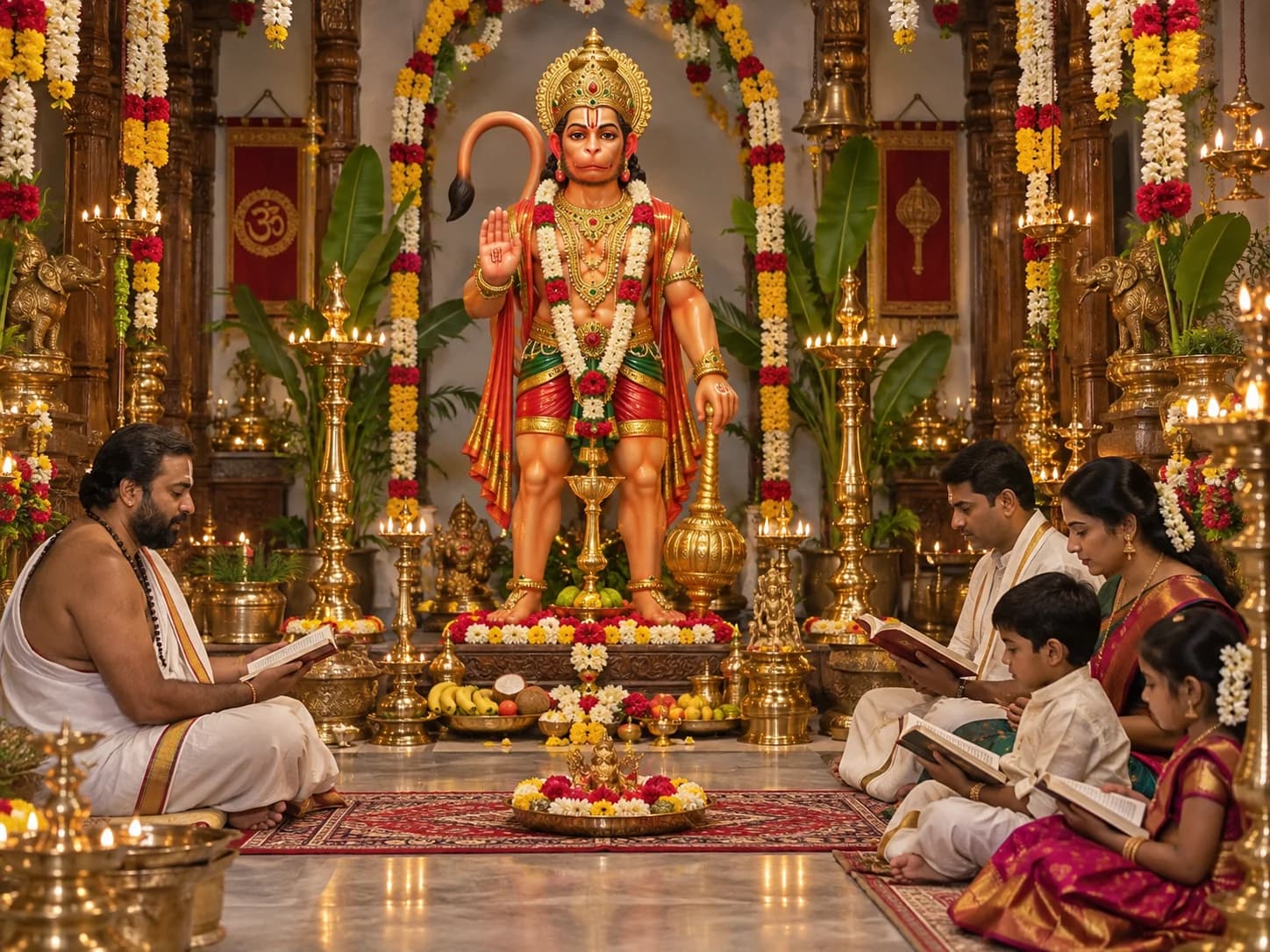
Hanuman Mantra Japam is a traditional Hindu devotional practice involving the repeated chanting of mantras dedicated to Lord Hanuman.
At Anugraha Siddhi, Hanuman Mantra Japam can be arranged with experienced Purohits for individuals and families in Hyderabad. The japa is performed according to the selected sankalpam, traditional practices, and the guidance appropriate for the devotee.
Quick Overview
| Detail | Information |
|---|---|
| Service | Hanuman Mantra Japam |
| Deity | Lord Hanuman |
| Purpose | Traditional prayer for courage, strength, devotion and protection |
| Common mantra | Om Hanumate Namah |
| Traditional japa count | 108 repetitions for a regular round |
| Special days | Tuesday and Saturday |
| Service location | Hyderabad and beyond based on requirement |
| Service type | Home, temple or other suitable arrangements depending on the service |
| Guidance | Experienced Purohits |
| Experience | 5+ years of Pooja and Vedic ritual service experience |
| Languages | Telugu and English |
Hanuman Mantra Japam Service in Hyderabad
Hanuman Mantra Japam involves repeated chanting of a Hanuman mantra with concentration and devotion. The practice is traditionally associated with qualities such as:
- Courage
- Strength
- Devotion
- Perseverance
- Fearlessness
- Protection
- Inner discipline
Hanuman worship is especially associated with Tuesdays and Saturdays in many Hindu traditions. A commonly used Hanuman mantra is Om Hanumate Namah, while Om Ham Hanumate Namah is also found in traditional mantra practices.
What Is Hanuman Mantra Japam?
Hanuman Mantra Japam is the repeated chanting of a mantra dedicated to Lord Hanuman.
The commonly used mantra Om Hanumate Namah means a respectful salutation to Lord Hanuman. Japa is traditionally performed using a mala, with 108 repetitions forming one commonly used round.
The exact mantra, count and procedure can vary according to the tradition, sankalpam and purpose of the japa. Our editorial policy explains how traditional practices are described on this site.
Common Hanuman Mantra
ॐ हनुमते नमः
Om Hanumate Namah
Pronunciation: Om Ha-nu-ma-te Na-mah
Meaning: Salutations to Lord Hanuman.
Hanuman Beej Mantra
ॐ हं हनुमते नमः
Om Ham Hanumate Namah
The appropriate mantra should be selected according to the tradition and the guidance of the Purohit, rather than assuming that one mantra is suitable for every sankalpam.
Why Is Hanuman Mantra Japam Performed?
Devotees traditionally perform Hanuman japa as part of their spiritual and devotional practice. Common traditional intentions include:
- Seeking courage during difficult situations
- Developing strength and determination
- Deepening devotion to Lord Hanuman
- Praying for protection
- Supporting spiritual discipline
- Seeking inner confidence and perseverance
- Performing Hanuman worship on traditionally significant days
These are traditional spiritual beliefs, not guaranteed outcomes.
When Is Hanuman Mantra Japam Performed?
Hanuman mantra japa can be performed on different days according to the devotee’s practice.
Tuesday
Tuesday is traditionally associated with Hanuman worship and is commonly selected for Hanuman mantra japa. The vara, or weekday, is one of the five Panchangam limbs used when selecting a ritual date.
Saturday
Saturday is also traditionally observed for Hanuman worship in many Hindu traditions.
Hanuman Jayanti
Devotees may also perform special Hanuman prayers and japa during Hanuman Jayanti, according to the regional calendar and tradition. The observance date is set from the Panchangam and differs between regions.
Other days
Hanuman mantra can also be included in regular daily devotional practice. The specific day, count and procedure can depend on the sankalpam.
How Is Hanuman Mantra Japam Performed?
The exact procedure may vary according to the tradition and type of japa.
Preparation
Clean the place of worship, keep the Hanuman image or deity ready, arrange the required pooja materials, and prepare for the sankalpam.
Sankalpam
The Purohit performs the sankalpam according to the devotee’s details and the purpose of the prayer.
Preliminary Prayers
Traditional preliminary prayers may be performed before beginning the main mantra japa, which in many traditions begins with Ganapathi Pooja.
Hanuman Mantra Japa
The selected Hanuman mantra is chanted repeatedly. A mala of 108 repetitions is commonly used for regular japa practice.
Completion
The japa is concluded according to the applicable tradition, followed by prayers and offerings.
Final Prayer
The devotee offers prayers to Lord Hanuman and concludes the sankalpam.
Traditional Benefits of Hanuman Mantra Japam
According to Hindu devotional traditions, Hanuman worship is associated with qualities such as:
- Courage — developing a stronger devotional mindset during challenges
- Strength — symbolically connecting with Hanuman’s strength and determination
- Fearlessness — prayer traditionally associated with overcoming fear
- Devotion — strengthening bhakti toward Lord Rama and Hanuman
- Perseverance — encouraging discipline and steady effort
- Protection — traditionally seeking divine protection
These should be understood as traditional spiritual beliefs, rather than medical, psychological or guaranteed results.
Hanuman Mantra Japam and Hanuman Chalisa
Hanuman Mantra Japam and Hanuman Chalisa are related devotional practices, but they are not the same.
| Hanuman Mantra Japam | Hanuman Chalisa |
|---|---|
| Repeated chanting of a selected mantra | Recitation of a devotional composition |
| Can be performed using a mala | Usually recited as a complete prayer |
| Japa count may be fixed according to the sankalpam | Traditionally recited as the complete Chalisa |
| Focuses on repeated mantra chanting | Describes and praises Hanuman’s qualities and devotion |
They may be performed separately or together according to the devotee’s practice.
If the composition itself is unfamiliar, what the Hanuman Chalisa is explains its structure and origin.
Where the Chalisa rather than mantra japa is what you want arranged, that is booked as a Hanuman Chalisa Parayanam.
Traditional Offerings for Hanuman Worship
Offerings can vary depending on the family tradition and type of worship. Commonly associated offerings include:
- Red flowers
- Sindoor
- Oil lamp
- Fruits
- Jaggery
- Traditional naivedyam
- Betel leaves and other pooja materials as applicable
The exact samagri should be confirmed before the service, because requirements can vary according to the selected procedure. A fuller Hanuman Pooja has its own list.
Hanuman Mantra Japam Samagri
The required materials may vary depending on the type and scale of the japa. A general list may include:
- Hanuman idol or photo
- Pooja cloth
- Flowers
- Sindoor
- Oil or ghee for lamp
- Incense sticks
- Camphor
- Fruits
- Naivedyam
- Akshata
- Betel leaves and nuts where applicable
- Water and kalasham materials
- Japa mala
Lamp oil, ghee, wicks and camphor are grouped together in the deepam section of the Pooja Store, which is the quickest way to check that list against what you already have at home.
Samagri arrangements
Depending on the selected package, Anugraha Siddhi may arrange the required pooja materials, or the customer may arrange them.
Please confirm the exact samagri list while booking. Everything else is in the general Pooja Samagri Store.
Hanuman Mantra Japam Booking Checklist
| Requirement | Details |
|---|---|
| Preferred date | Choose the required date |
| Preferred location | Home, temple or suitable location |
| Purpose | Mention the intended sankalpam |
| Devotee details | Required details can be shared during booking |
| Japa requirement | Confirm the mantra and count |
| Samagri | Confirm whether the customer or the service provider will arrange |
| Purohit | Experienced Purohit arrangement |
| Language | Telugu and English |
Hanuman Mantra Japam Cost in Hyderabad
The cost of Hanuman Mantra Japam can vary depending on:
- Type of japa
- Number of mantra repetitions
- Pooja requirements
- Samagri arrangements
- Number of Purohits
- Location
- Additional rituals, if specifically requested
Package inclusions and current pricing should be confirmed before booking. Contact Anugraha Siddhi for current package details.
Why Choose Anugraha Siddhi for Hanuman Mantra Japam?
Anugraha Siddhi has 5+ years of experience in Pooja and Vedic ritual services. For Hanuman Mantra Japam, the service can be arranged with:
- Experienced Purohits
- Traditional ritual guidance
- Personalised sankalpam guidance
- Telugu and English communication
- Hyderabad service coverage
- Home and other suitable service arrangements based on requirement
- Flexible samagri arrangements depending on the package
The exact ritual procedure and inclusions are confirmed based on the selected service. Where a fire ritual is wanted instead of mantra japa, that is arranged as a Hanuman Homam.
Frequently Asked Questions
What is Hanuman Mantra Japam?
Hanuman Mantra Japam is the repeated chanting of a mantra dedicated to Lord Hanuman as part of Hindu devotional practice.
Which mantra is commonly used for Hanuman japa?
Om Hanumate Namah is a commonly used Hanuman mantra. Om Ham Hanumate Namah is another traditional form.
How many times should the Hanuman mantra be chanted?
A commonly used japa count is 108 repetitions, which corresponds to one mala. The appropriate count can vary depending on the purpose and tradition.
Which day is suitable for Hanuman Mantra Japam?
Tuesday and Saturday are traditionally associated with Hanuman worship.
Can Hanuman Mantra Japam be performed at home?
Yes. Hanuman mantra japa can be performed at home, subject to the selected ritual procedure and arrangements.
Can a Purohit perform Hanuman Mantra Japam on behalf of a devotee?
Yes. A Purohit can conduct the japa according to the agreed sankalpam, mantra and ritual procedure.
Is Hanuman Mantra Japam the same as Hanuman Chalisa?
No. Mantra japa involves repeated chanting of a selected mantra, while Hanuman Chalisa is a separate devotional composition.
Is a specific number of repetitions compulsory?
There is no single universal count for every Hanuman japa practice. 108 repetitions is a common devotional count, while specific sankalpams may follow different counts.
What samagri is required for Hanuman Mantra Japam?
Samagri depends on the type of ritual. Flowers, sindoor, lamp materials, fruits, naivedyam and a japa mala may be used, but the exact list should be confirmed before the service.
Can I request a Hanuman Mantra Japam in Telugu?
Yes. Telugu and English guidance can be provided, subject to service and Purohit availability.
Can Hanuman Mantra Japam be performed on Saturday?
Yes. Saturday is traditionally observed as one of the days for Hanuman worship.
Can I book Hanuman Mantra Japam in Hyderabad?
Yes. Anugraha Siddhi can arrange Hanuman Mantra Japam services in Hyderabad based on date, location and Purohit availability.
Does Hanuman Mantra Japam guarantee protection or removal of problems?
No. Hanuman japa is a traditional devotional practice and does not guarantee protection or the removal of problems. Its spiritual significance is understood according to individual faith and tradition.
Can additional Hanuman Pooja be included?
Additional rituals should not be assumed to be included. Any additional Pooja, Abhishekam or other ritual should be confirmed while booking.
How can I book Hanuman Mantra Japam?
Contact Anugraha Siddhi with your preferred date, location and service requirements. The available package, Purohit and samagri arrangements can then be discussed.
Related Japams and Services
Book Hanuman Mantra Japam in Hyderabad
Looking to arrange Hanuman Mantra Japam in Hyderabad? Anugraha Siddhi can help arrange the service with experienced Purohits and traditional ritual guidance. Telugu and English guidance available.