Astrology · Matching

Marriage Muhurtham

Marriage Muhurtham fixes the wedding time from the panchangam read against both charts. It appears here as well as under Muhurtham because families most often ask for it during a matching consultation, and it is the same reading in both places.

A temple gopuram in silhouette at first light, its doorway glowing, brass kalashas along every tier against a sunrise sky.

How it works

From your details to the answer

1

Share your birth details

Date, exact time of birth and place — the time to the minute is what makes the chart usable.

2

The chart is cast and read

Your Janma Kundali, divisional charts, running dasha and current gochara are read together.

3

You receive the analysis

A written answer to the question you asked, with the placements it rests on stated plainly.

4

Talk it through

A call with the astrologer to go over the reading and the remedies, if you want one.

Guide

When is Marriage Muhurtham useful?

It is asked for two to six months ahead, once a venue shortlist exists and before the date is committed.

Astrologers differ on method — ayanamsa, dasha system and house division are all matters on which respected traditions disagree. A reading states which conventions it follows, and describes tendency and timing rather than settling a decision for you.

Scope

What the consultation covers

1

The five panchangam limbs — tithi, vara, nakshatra, yoga and karana — for each candidate date

2

The lagna rising at the proposed time, and the eighth house from it

3

The Moon's position, read against the birth stars of both parties

4

The windows that stand out, with alternatives and the reasoning stated

In the chart

What the astrologer reads for Marriage Muhurtham

The five limbs of the panchangam
Tithi, vara, nakshatra, yoga and karana are the five components a muhurtham is selected on. They are computed from local sunrise, so a timing taken from another city's calendar is simply wrong for your venue.
The muhurtha lagna
The sign rising at the chosen moment is read as the chart of the event itself, and classical practice requires the eighth house from it to be clear — which is often what rules out an otherwise good day.
The Moon at the chosen time
The Moon's sign and nakshatra at the muhurtham are read against the birth stars of both parties, which is why a wedding muhurtham needs both charts and not only a date range.
Excluded periods
Rahu kalam, yamagandam and gulika kalam are excluded as a matter of course, as are particular tithis and the intercalary adhika masam in most traditions.
12loss1self2wealth3effort11gains4home10work5children9fortune8change7marriage6debtLAGNAbhava 1 — the rising signhouses run clockwise
A muhurtham is read as a chart of the event: the lagna rising at that moment, the seventh for the marriage itself, and the eighth — which classical practice requires to be clear.

Sources

What is established, and what varies

The first list is what published practice describes consistently. The second is where schools, regions and sampradayams legitimately differ — and where the astrologer’s own tradition decides the answer rather than a general rule.

Consistently described

  • A muhurtham is selected on the five limbs of the panchangam: tithi, vara, nakshatra, yoga and karana.
  • Panchangam timings are computed from local sunrise, so they are specific to the place the event is held in.
  • Rahu kalam, yamagandam and gulika kalam are conventionally excluded, and the eighth house from the muhurtha lagna is required to be clear.

Varies by tradition

  • Which months are treated as unsuitable for a marriage. Practice differs between traditions, and the treatment of adhika masam is not uniform.
  • Whether a family's own sampradaya sets additional conditions, which frequently narrows an already short list.
  • Whether the bride's or the groom's chart takes precedence where the two indicate different windows.

In plain terms

The vocabulary of a wedding muhurtham

Marriage Muhurtham fixes the wedding time from the panchangam read against both charts. The five limbs — tithi, vara, nakshatra, yoga and karana — are selected for the day; rahu kalam, yamagandam and gulika kalam are excluded; and the muhurtha lagna is cast for the moment itself, with the eighth house from it kept clear and the Moon placed well for both parties. It is cast forward for a time being chosen, which is the opposite direction from every other reading on this site, and it is computed for the place the wedding is held in.
The five limbs
Tithi, vara, nakshatra, yoga and karana — the panchangam's five components for a day. A muhurtham is selected on all five, and the nakshatras the tradition holds for marriage are a specific, short list.
The excluded periods
Rahu kalam, yamagandam and gulika kalam — three windows in every day, conventionally avoided. They are computed from local sunrise, so they move with the place and the season.
The muhurtha lagna
A chart cast for the chosen moment itself, as if the moment were being born. The lagna rising then is read like a natal lagna, and it is the part of a muhurtham that needs the time to the minute.
The eighth from the muhurtha lagna
Conventionally kept clear of grahas. The eighth is read for the durability of what is begun at that moment — which for a wedding is the marriage.
The Moon, for both
Where the transiting Moon falls from each party's natal Moon on the chosen day. The third, sixth, seventh, tenth and eleventh are the classical preferences; both charts are checked, not one.
Tarabalam and chandrabalam
The strength of the day's nakshatra and Moon counted from each party's birth star and moon sign. The reason a muhurtham needs both charts and not a date range — the same day can be strong for one and weak for the other.
A brass kalasham bound with thread and dressed with mango leaves and a coconut, set on a kolam, against a sunrise glow, the subject set well to the left of the frame, drawn for this page's elements band.

Related consultations

Before and after the wedding time

The muhurtham is the last astrological step in a marriage, and the ceremonies around it each have a timing of their own.

The match, first

A muhurtham assumes the match is settled. If it is not, the matching reading comes first, and the muhurtham after.

Kundali Matching

The engagement

The nischitartham has a muhurtham of its own, cast on the same principles for an earlier date.

Engagement Muhurtham

The new home

The gruha pravesham — the couple's entry into a home — is the muhurtham families most often ask for next.

Gruha Pravesham

The whole muhurtham section

Every ceremony the site times, from naming to shasti purthi, cast on the same five limbs for different occasions.

Muhurtham

The panchangam itself

The day's tithi, nakshatra and excluded periods, computed for Hyderabad. The raw material a muhurtham is selected from.

Panchangam

The ceremony's ritual

Once the time is fixed, the wedding rites themselves are conducted by a purohit, and the guide to choosing one is here.

Choose a Purohit

Two directions

A muhurtham, and every other reading

 A natal readingA muhurtham
The momentOne that has already happened — a birth.One being chosen — the wedding.
The lagnaFixed by the birth time; the reading works from it.Selected — the astrologer chooses the hour so that a good lagna rises.
The placeThe birthplace.The venue. A muhurtham computed for another city is wrong for this one.
Whose chartOne person's.Both parties', for tarabalam and chandrabalam — and the moment's own.
What can be movedNothing. The chart is what it is.The time, within the day — but only within it. A window that is weak cannot be made strong by preference.

This is the one reading on the site that is cast forward rather than back. It borrows the natal chart's vocabulary — a lagna, houses, the Moon — and applies it to a moment not yet arrived, which changes what every term means.
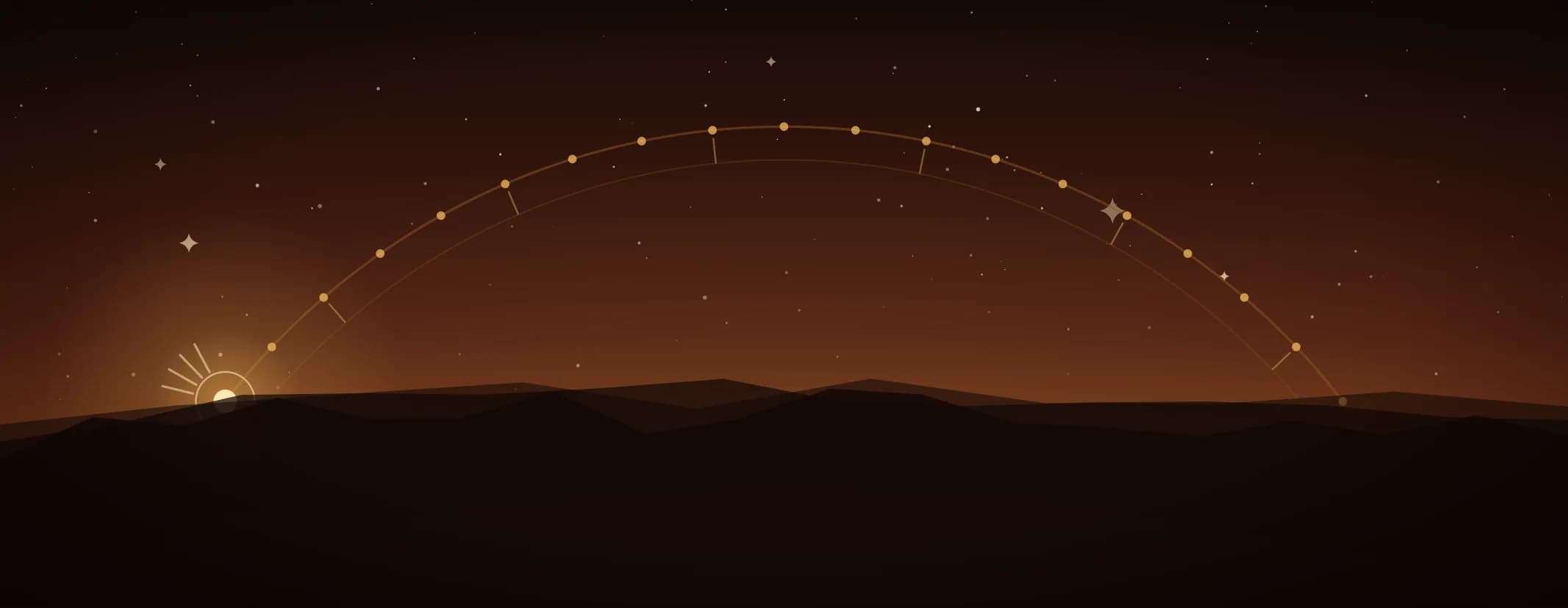
A brass arc of twenty-seven nakshatra points drawn across the sky above a dark ridge line, against a sunrise glow, the subject set well to the left of the frame.

Come prepared

Questions worth asking about a wedding muhurtham

A muhurtham is easy to receive as a date on a card. These are the questions that show how it was chosen — and whether it could honestly have been chosen otherwise.

  1. Which nakshatra and tithi is the day, and are they on the classical list for marriage?
  2. Which lagna rises at the chosen time, and what is in its eighth house?
  3. Where does the day's Moon fall from each of our natal Moons — and is it good for both, or better for one?
  4. What are the excluded periods on that day at the venue, and how far is the muhurtham from each?
  5. Was this computed for the venue's coordinates, or for a different city?
  6. If the time is inconvenient, how far can it move within the day before the lagna or the Moon changes?
  7. Were there stronger windows on other days within our range, and why was this one chosen over them?
  8. What in this muhurtham is doctrine, and what is your tradition's preference?

Suitability

Who this reading is for

  • The match is settled and the families want the wedding time fixed properly, for the venue.
  • A date range has been agreed and you want the strongest windows within it, with the reasoning.
  • A venue has been booked and you want to know what the day allows before committing further.
  • You have been given a time that is inconvenient and want to know how far it can honestly move.
  • Both families follow different traditions and you want a muhurtham that satisfies both.
  • You want the muhurtham chosen against both charts, not from a date list.
  • You would rather be told plainly that a day is weak than be given a time that merely sounds acceptable.

A muhurtham can only work within the day it is asked to work in. Once a venue is paid for, the reading is confined to that date, and if the windows on it are weak you should be told so rather than given a time that merely sounds acceptable — which is why the muhurtham is best asked for before the deposit, not after. It is computed for a place, so a time from another city is not a time for this one. And it times the ceremony; it does not bless the marriage, which is the couple's and the families' to make.

Before you book

What to have ready

  • Date of birth, time of birth as precisely as you know it, and place of birth.
  • Say so if the birth time is uncertain — it can be narrowed by rectification rather than guessed.
  • The specific question you want answered, which focuses the reading far more than a general request.
  • For a property or premises, the floor plan and the direction the main entrance faces.

Do not act on a reading alone where a decision also needs professional advice — medical, legal or financial. A consultation is one input, and it is offered as one.

Written and reviewed by the AnugrahaSidhi editorial team. Last substantive review: . How we source and correct this material is set out in our editorial policy.

Common questions

Before you book

How far ahead should we ask?

Before the venue is booked, and certainly before a deposit is paid. Once a date is committed the muhurtham can only work within it, and if the windows available that day are weak you will be told so rather than given a time that merely sounds acceptable.

Why do we need both charts and not just a date range?

Because the Moon at the chosen time is read against the birth stars of both parties, and both seventh houses bear on the choice. A muhurtham chosen from the panchangam alone is a good day in general rather than a good time for this marriage.

The muhurtham is at an inconvenient hour. Can it be moved?

The window is what the reading found, not a preference. Where it is genuinely impractical, ask for the alternatives and the reasoning — a good reading gives more than one window and says what each costs.

Does the city matter?

Yes. The five limbs are computed from local sunrise, so a muhurtham calculated for Hyderabad is not correct for a wedding held elsewhere. Say where the event will actually take place.

Related

Others in Matching

All Astrology

Ask about Marriage Muhurtham

Send your birth details and the question you want answered. You get the reading in writing, with the placements it rests on named, and a call to talk it through.